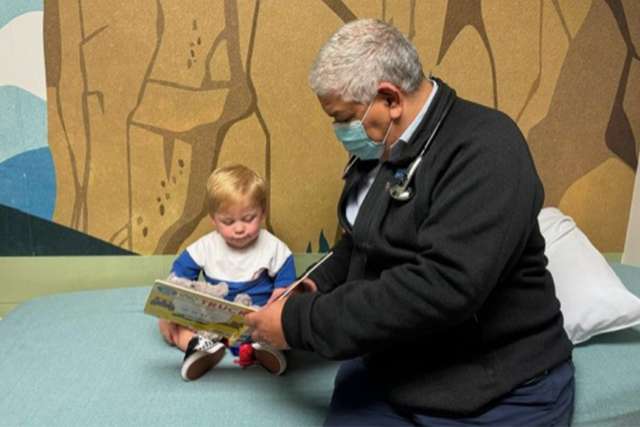
The UCLA Pediatric Cancer Predisposition Clinic is one of a few centers in the nation that offers advanced exome sequencing technology for clinical testing of children who may have a genetic predisposition to cancer. Because most pediatric cancers are not hereditary, the program focuses on children who have a strong family history of cancer; physical signs that suggest a potential predisposition to cancer (hemihyperplasia, macrocephaly); or have any of about 50 rare genetic syndromes that are associated with pediatric cancer predisposition such as Beckwith-Wiedemann syndrome, neurofibromatosis and Li-Fraumeni syndrome. Our team of geneticists, genetic counselors, pediatric oncologists and social workers provides children and families with state-of-the-art genetic tests, personalized cancer surveillance plans and compassionate psychosocial support.
Genetic testing offers several benefits
Diagnosing a genetic predisposition to cancer benefits children and their families in several ways. Cancer screening can result in earlier detection and improved outcomes. Genetic information enhances patient care by alerting pediatricians to the possible presence of other conditions known to accompany an underlying mutation. An accurate diagnosis can also suggest the presence of additional, often treatable, syndromes known to accompany the primary condition. Genetic information also helps couples plan their families and their future.
Exome sequencing is more efficient and less expensive than other genetic tests
UCLA has been a leader in advanced genetic testing techniques such as whole-exome sequencing, a technically challenging test that involves sequencing the protein-coding portions of a patient's genome. Vastly more efficient than older genetic testing options, exome sequencing allows physicians to determine which mutations might be leading to a patient's cancer using the results of a single blood test. The sequencing technology, which is more convenient and less expensive than sequential testing of individual genes, identifies changes or mutations in all of an individual's genes using bioinformatic tools. Members of our data genomics board, who have conducted more than 200 exome sequencing cases to date, review and interpret the data - which can include 22,000 variations in a single exome - looking for disease-associated mutations. UCLA is the only major medical center in California that
offers an exome sequencing service.
Services offered by the Pediatric Cancer Predisposition Clinic
When a child is referred to the UCLA Pediatric Cancer Predisposition Clinic, genetic counselors and geneticists perform an in-depth family history that includes the birth, developmental and medical histories of the child and any siblings. If there is a strong family history of cancer, the child's parents and other family members may be referred to our adult clinic for screening. Our geneticists also perform a thorough dysmorphology exam to determine if the child has any malformations or other physical findings that could be associated with a genetic syndrome.
With a single blood test, children who exhibit patterns that suggest a genetic predisposition to cancer can receive a genetic diagnosis through whole-exome sequencing. Genetic information helps our oncologists design a personal cancer surveillance program using advanced MRIs, ultrasounds and other tools to find the kinds of tumors the child is at risk for developing. When we diagnose a genetic condition, in addition to providing care for the child, we also help identify other family members who may be at risk for developing the same condition.
Genetic testing for high-risk children
Children with solid tumor cancers of the eye, kidney or liver and those with certain sarcomas or adrenal tumors are more likely to have hereditary cancer and should undergo genetic testing - especially if there is a strong family history of cancer.
"Young people typically don't get these kinds of cancer," says Julian A. Martinez-Agosto, MD, PhD, a pediatric medical geneticist. "If a young person is diagnosed with a solid tumor cancer, there may be a genetic reason for it."
The UCLA Pediatric Cancer Predisposition Clinic provides advanced whole-exome genetic sequencing to children at risk of hereditary cancer. It also offers children and their families excellent psychosocial support and a chance to participate in clinical trials designed to develop effective cancer surveillance programs for the pediatric population.
"Most of the studies about how to prevent cancer from developing involve adults," says UCLA pediatric oncologist Vivian Y. Chang, MD. "We want to learn what are the most effective cancer surveillance programs in children so that we can not only catch cancers early, but hopefully to prevent them altogether one day."
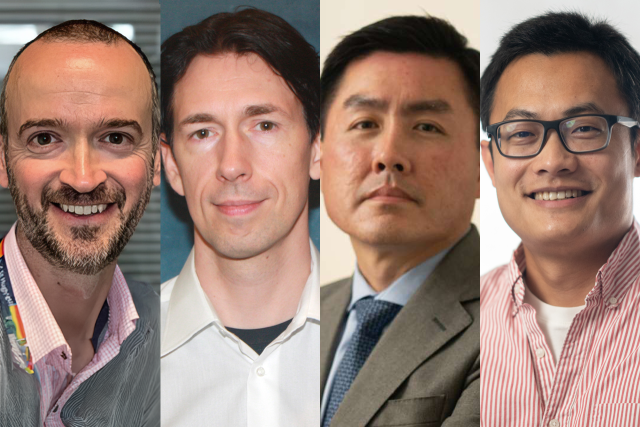
Team Members
Julian Martinez-Agosto, MD, PhD, FACMG, FAAP
Co-Director, Pediatric Cancer Predisposition Clinic
Medical Geneticist
Mattel Children's Hospital UCLA
Vivian Y. Chang, MD, MS
Co-Director, Pediatric Cancer Predisposition Clinic
Pediatric Hematologist-Oncologist
Mattel Children's Hospital UCLA
Tom Davidson, MD
Director of Pediatric Neuro-Oncology
Mattel Children's Hospital UCLA
Naghmeh Dorrani, MS, LCGC
Genetic Counselor
Mattel Children's Hospital UCLA
Erin O'Leary, MS, LCGC
Genetic Counselor
Jonsson Comprehensive Cancer Center
Margie Weiman, RN, MSN
Sarcoma Clinical Nurse Specialist
Pediatric Hematology-Oncology
Marla Knoll, MSW and Wendy Markovich, MSW
Social Workers
Pediatric Hematology-Oncology
Hillary Zebberman, MSW
Social Worker
Pediatric Medical Genetics
Contact Information
Please call (310) 206-6581 for questions or to schedule an appointment. Patient referrals can be faxed to (310) 206-8616.