While robotic surgery sounds like something out of a futuristic Hollywood
movie, the first generation of surgical robots is being used in operating rooms
around the world.
Although they can’t perform surgical tasks on their own, they are a useful
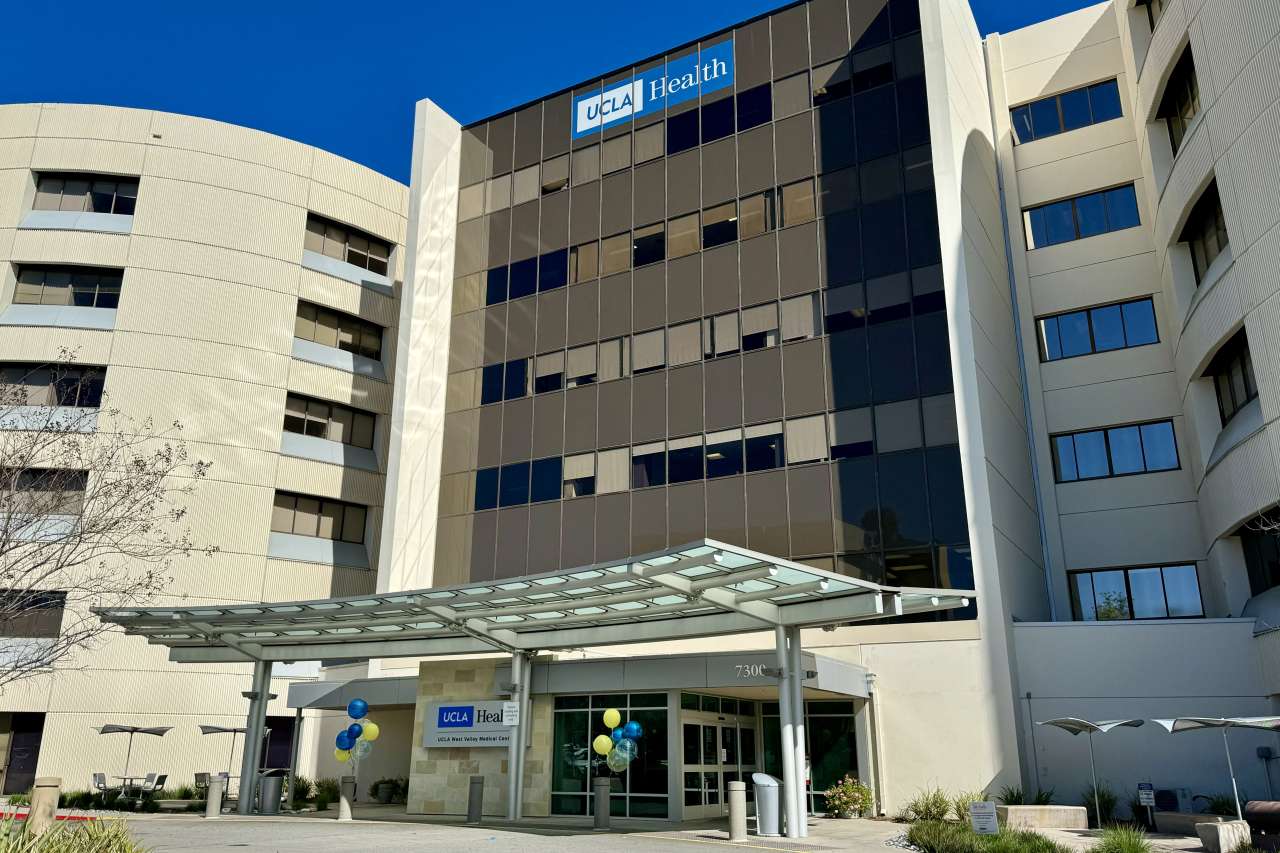
tool for surgeons. Peter Schulam, M.D., Ph.D, and director of laparoscopic
surgery at UCLA Medical Center, is a big fan of the efficiencies this technology
brings to the operating table.
“If I give you a robot and it helps you see better, then I know that the
variability for a particular task is going to decrease. Instead of having this
wide bell-shaped curve of outcome, it will be very narrow,” he says. “That’s the
goal of innovation and technology in the operating room.”
Smart Business spoke to Schulam about robotic surgery, the
importance of medical innovations and how physicians work hand-in-hand with
companies to bring new products to market.
How important are innovations such as robotic surgery in the medical
world?
Without innovation, there is no forward progression of the science of
surgery. At times, even though it may not be what we think is the most
cost-effective or efficient manner, if we don’t continue to explore these areas,
then we’ll be standing still and there will be no advances made within surgery.
If there is no one out there willing to explore, then unfortunately, it will
never be ready for prime time. It takes people with a certain amount of patience
and dedication to drive these technologies.
Who is typically involved in the development of these technologies?
Most of the medical innovations in the past have been driven by industry, but
now there seems to be more of a collaboration or cooperation between industry
and physicians. The two are working more closely, and, in fact, I think the more
successful ventures are those that have a better collaboration with the surgeons
and physicians involved in the workings of the technology.
What type of research and development processes are used?
A lot of it starts out with an idea. A prototype is developed, it’s usually
tested in an inanimate system — basically just being sure that it functions as
we suspect — then it may move into an animal system with a laboratory setting.
In order to actually bring something to the patient, it becomes much more
difficult.
Initially, it involves the internal review boards of hospitals, and then this
information is usually taken by the company back to the FDA in order to get
approval for use with humans.
How do you take something like robotic surgery from idea to practice?
We’ve learned that it’s difficult for surgeons or physicians on our own to
bring something to market. Usually, once an idea seems to be brought to
fruition, and we feel as though we have reasonable inanimate or animal testing,
then we may go out and look for industry to help us further test, and then
sponsor, its production. That’s if something comes as a pure idea from within
the hospital.
Other times, even from the outset, the idea may be generated by a physician
directly to a company. Then, working together with the company, the idea is
brought to fruition. Most of the time, especially if you talk about things like
robotics, industry is leading and we’re collaborating.
What changes in training will this type of technology require?
We don’t know. What we’re trying to do overall with innovation is we want to
improve the standard of care provided to the patient. The question is, how do
you improve the standard of care?
Instead of training people in the actual operating room when we’re operating
on patients, can we use innovations to train surgeons in more of a simulated
environment? That would improve skill sets so that when the patient and the
physician actually meet, the physician has a higher level of skill.
The presumed learning curve would have been addressed early on in a simulator
or inanimate model, much like how a pilot learns how to fly planes.
What efficiencies does robotics create in medical operations?
Robotics is what I like to refer to as an enabling technology. There are a
lot of surgeons who, without the robot, can perform a particular task, but it’s
not every surgeon. If you take 10 surgeons and ask them to perform a particular
task, some will do well on it and some may not do as well.
What the robot does is it levels the playing field and it allows all 10
surgeons to accomplish the task at an acceptable standard.
DR. PETER SCHULAM is director of laparoscopic surgery at UCLA Medical
Center. Reach him at (310) 825-1172.