
Brain & Spine Metastasis Program
Our program unites neurosurgeons, radiation oncologists, oncologists and researchers around one shared goal — the best possible outcome for you.

Understanding Your Diagnosis
What are brain and spine metastases?
A metastasis occurs when cancer cells from another part of the body — most often lung, breast, kidney, colon, or skin — travel through the bloodstream and form new tumors in the brain or spine. This is different from primary brain cancer, and it changes the treatment approach significantly.
Common symptoms
Headaches, weakness or numbness on one side, memory changes, speech difficulty, vision changes, balance problems, or seizures. Spinal metastases may cause back pain, arm or leg weakness, or bladder and bowel changes.
Why specialized care matters
The brain and spine's complexity — including the blood-brain barrier and the role of these structures in cognition and function — demands specialists who treat these tumors every single day. High-volume academic centers consistently show better outcomes.
Leptomeningeal disease
In some cases, cancer cells spread to the cerebrospinal fluid and the lining surrounding the brain and spine — called leptomeningeal disease (LMD). This requires specialized diagnosis and systemic treatment strategies distinct from localized metastases.
Want to Learn More?
Whether you are a newly diagnosed patient, seeking a second opinion, or a physician making a referral — our team is ready to help you move forward quickly and with clarity.
New Patient Appointment
Physician Referral
Second Opinions
Your First Steps
What happens after you reach out? New patient appointments typically available within 5–7 business days. Urgent referrals are prioritized and seen sooner.
Step 1
Contact Our Team
Call, submit online, or ask your physician to refer you. We respond within 1 business day — urgent cases within 24 hours.
Step 2
Nurse Navigator Call
A dedicated brain and spine tumor navigator gathers your records, answers your questions, and schedules your appointments.
Step 3
Multidisciplinary Consultation
You meet multiple providers from the treatment team, receive a coordinated treatment plan, and have dedicated time for every question you and your family have.
Step 4
Tumor Board Review
For complex clinical situations or upon patient request, your case is reviewed at our multidisciplinary tumor board to reach a consensus treatment plan.
One Team. Every Specialty.
Our neurosurgeons, radiation oncologists, neuro-oncologists, and neuroradiologists meet weekly to review your case together and reach a consensus treatment plan.
At UCLA Health, you receive the whole team's expertise in a single recommendation — not a series of disconnected referrals.
- Weekly multidisciplinary tumor board conferences
- Dedicated brain and spine metastasis nurse navigators
- Neuro-Palliative care embedded throughout treatment
- Second-opinion consultations available remotely

Neurosurgery
Craniotomy, advanced brain mapping guided resections, laser interstitial thermal therapy, brachytherapy
Radiation Oncology
Stereotactic radiosurgery, neoadjuvant radiation, hippocampal-sparing WBRT
Oncology
Targeted therapy, immunotherapy, blood-brain barrier crossing agents, clinical trials
Neuroradiology
Advanced MR perfusion, spectroscopy, AI-assisted tumor characterization
Palliative Care
Quality of life, symptom management, and caregiver support throughout treatment
Neuropathology
Molecular profiling to guide personalized therapy selection
Precisions Treatments, Tailored to You
No single treatment fits every patient. Our team selects — or combines — modalities based on your cancer type, number and size of metastases, neurological status, and overall health goals.
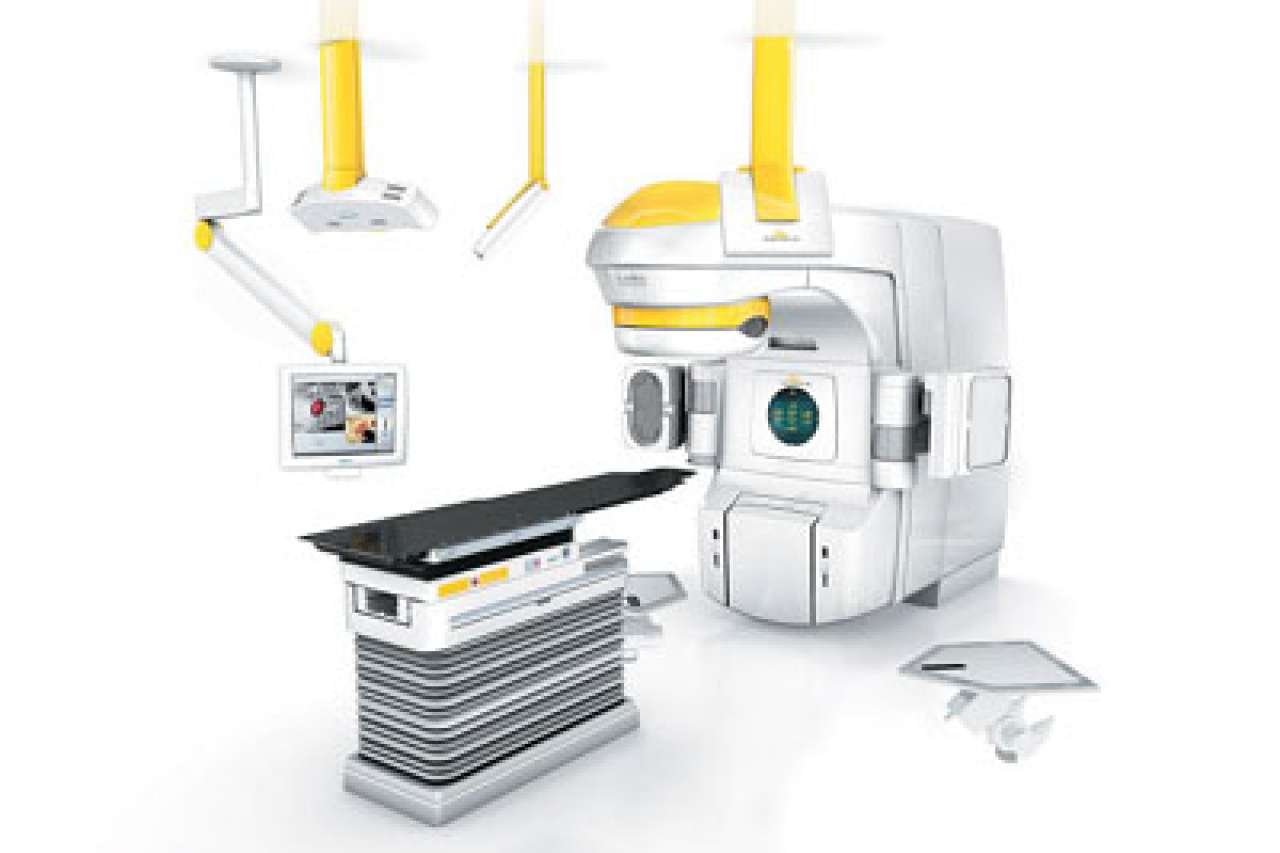
Stereotactic Radiosurgery (SRS)
SRS delivers highly focused beams of radiation from many angles simultaneously, converging with sub-millimeter precision on the metastases — with no incisions, no frame, no anesthesia, and minimal dose to surrounding brain tissue. Utilizing advanced MultiMet (BrainLab) planning software, we're able to treat up to 15 metastases in a single 30-minute SRS session, avoiding the neuro-cognitive side effects of whole brain radiation (WBRT). UCLA offers LINAC-based SRS.
- <1mm targeting accuracy
- 1–5 sessions
- Outpatient: no overnight stay
Neoadjuvant Radiation for Resection
A pioneering approach: delivering radiosurgery before surgical removal rather than after. This reduces the risk of leptomeningeal disease spread and radiation necrosis compared to post-operative SRS — particularly for larger tumors where surgery is required.
- Reduced leptomeningeal seeding risk
- Lower radiation necrosis rate post-surgery
- Preferred for large or eloquent-area lesions


Craniotomy
When surgery is required, our neurosurgeons use advanced brain mapping techniques, fluorescence-guided resection, minimally invasive port-based surgeries, and awake craniotomies to maximize tumor removal while protecting critical neurological functions.
- Minimally invasive port-based resection
- Awake craniotomy to protect language function
- Intraoperative brachytherapy
Laser Interstitial Thermal Therapy (LITT)
LITT (laser ablation) is a breakthrough option for tumors in deep or difficult-to-reach regions, or for tumors that have returned after radiation. A laser probe smaller than a pencil is guided through a tiny skull opening and uses precisely controlled heat — monitored in real time by MRI thermography — to destroy the tumor from the inside out. Most patients go home the following day.
- ~3mm incision size
- 1 night typical hospital stay
- Real-time MRI temperature monitoring
Best suited for: Deep-seated or eloquent-area tumors; recurrence after prior SRS; radiation necrosis treatment; high surgical risk patients
Spine Metastases
Spinal metastases require distinct expertise. Our spine specialists combine neurosurgery, spine oncology and radiosurgery to relieve pain, protect neurological function and maintain spinal stability with options from fully non-invasive radiation to minimally invasive stabilization surgery.
Spine SRS/SBRT
Stereotactic radiosurgery (SRS)/stereotactic body radiotherapy (SBRT) delivering ablative, precisely shaped doses to spinal tumors in 1–5 sessions while sparing the spinal cord.
Minimally Invasive Spine Surgery
Kyphoplasty, vertebroplasty, and percutaneous stabilization restore structural integrity with minimal tissue disruption and faster recovery.
Separation Surgery + SBRT
Surgical debulking creates safe distance between tumor and spinal cord, enabling high-dose postoperative radiosurgery — the "hybrid" approach for cord compression.
Additional treatment modalities
- GammaTile Brachytherapy
- Hippocampal-Sparing WBRT
- CNS-Active Systemic Therapy
- Clinical trial participation
- Supportive and palliative care
Treatment selection and combination are determined by your multidisciplinary team based on your specific case, cancer type and goals of care.
Research That Changes Lives
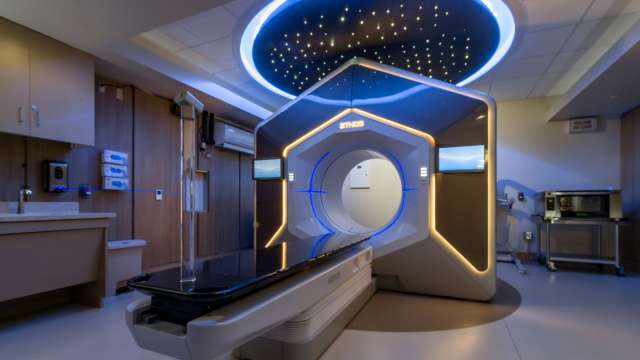
Distinguishing Radiation Necrosis from Tumor Progression
After radiosurgery, treated lesions can grow on MRI — but is it recurrent tumor or radiation-induced necrosis? These conditions look nearly identical on standard imaging yet require completely opposite treatments. Our team is developing advanced MR perfusion, spectroscopy, and AI-driven imaging biomarkers to differentiate them non-invasively, sparing patients unnecessary surgery.
Why it matters: Accurate non-invasive diagnosis avoids biopsy, guides therapy, and prevents mismanagement of a treatable condition.

Point-of-Care Assays for Leptomeningeal Disease
Leptomeningeal disease is devastating and notoriously hard to diagnose — standard CSF cytology misses up to 50% of cases. UCLA researchers are developing ultra-sensitive point-of-care liquid biopsy assays that detect tumor DNA and cells in cerebrospinal fluid at the bedside, enabling faster and more accurate diagnosis of LMD.
Why it matters: Earlier LMD diagnosis enables earlier intervention — a critical window when treatment can be most impactful.