
Philanthropy Fuels Cancer Breakthroughs
UCLA Jonsson Cancer Center Foundation

UCLA Jonsson Cancer Center Foundation (JCCF) was founded in 1945 by a group of dedicated volunteers committed to advancing cancer research at UCLA. Their initial vision was to raise private funds to support the work of young cancer researchers—an effort that became the Seed Grant Program. This program played a pivotal role in launching the UCLA Health Jonsson Comprehensive Cancer Center’s (UCLA Health JCCC) success in fighting cancer through research. The Center’s achievements today are the direct result of these early volunteers and their foresight in establishing the Foundation. While Seed Grants remain a vital part of the Foundation’s mission, the JCCF has expanded its fundraising efforts to support a wider range of priorities.
Today, the JCCF raises philanthropic support to advance cutting‑edge cancer research, support the training and education of the next generation of cancer researchers, and deliver exceptional patient care. Donations to the JCCF especially provide critical funding to empower more than 500 physicians and scientists to develop innovative methods, protocols, and therapies in the fight against cancer.
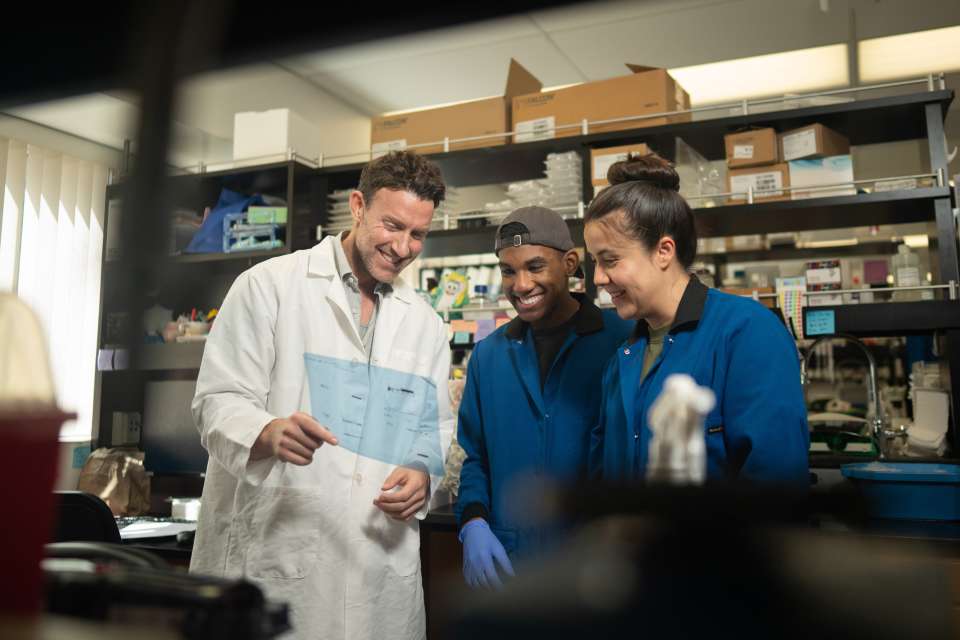
Research
Accelerating Food and Drug Administration (FDA) approvals for cancer-fighting drugs
For the past 50 years, philanthropy has accelerated research at the UCLA Health JCCC, driving discoveries that have become FDA‑approved cancer therapies and new standards of care. Since 2014 alone, UCLA Health JCCC research has led or meaningfully contributed to 27 FDA approvals for cancer‑fighting drugs or protocols—an extraordinary pace of innovation powered in large part by donor support. Below are just a few examples of how philanthropy directly enabled life‑saving treatments over the past 50 years.
Herceptin™
In 1990, philanthropist Lilly Tartikoff Karatz and Revlon Chairman and CEO Ronald O. Perelman established the Revlon/UCLA Women’s Cancer Research Program under the leadership of Dr. Dennis Slamon. That same year, they launched the Fire & Ice Ball, followed in 1993 by the Revlon Run/Walks in partnership with the Entertainment Industry Foundation. These efforts drew global attention and raised tens of millions of dollars to support UCLA’s breast cancer research. This philanthropic support directly sustained Dr. Slamon’s team as they advanced the scientific work that led to Herceptin™, the first targeted therapy for HER2‑positive breast cancer.
Before Herceptin™, HER2-positive breast cancer had a three-to-five-year life expectancy. Now, women with HER2-positive breast cancer have some of the highest survival rates of all women with breast cancer. As described in Dr. Siddhartha Mukherjee’s Pulitzer-prize winning book, The Emperor of All Maladies: A Biography of Cancer, the results achieved with Herceptin™ were “simply stunning… not evolutionary, but revolutionary.” Herceptin™ has helped sustain the lives of nearly 3.5 million women worldwide.
Keytruda™
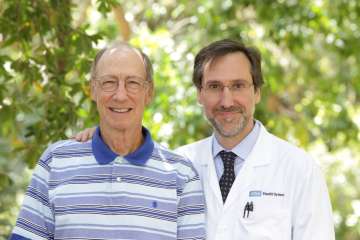
Beginning in 2010, the Melanoma Research Alliance has provided millions of dollars in philanthropic funding to UCLA melanoma researchers, including Dr. Antoni Ribas. This support was critical in advancing early immunotherapy research, clinical trials, and translational science that contributed to FDA approvals for several checkpoint inhibitors, including the landmark therapy Keytruda™.
In 2015, Keytruda™ was approved by the FDA as a first-line treatment for metastatic melanoma, providing better results than previously used treatments. Keytruda™ has since reshaped melanoma treatment and opened new possibilities for patients with multiple cancer types, including head and neck squamous cell carcinoma, Hodgkin lymphoma, and non-small cell lung cancer. Dr. Edward Garon, also of UCLA Health JCCC, led the clinical trial for the FDA approval of Keytruda™ for non-small cell lung cancer. His important work has also been accelerated thanks to philanthropy.
Improving radiation treatment
Philanthropic support directed by donors has driven major advancements in radiation therapy, increasing efficacy, helping to reduce side effects, decreasing treatment times, and significantly improving quality of life. Thanks to the generosity of donors and institutional partners, Dr. Amar Kishan’s research in radiation oncology is reshaping how prostate cancer is treated and how patients experience care. Dr. Kishan and his team demonstrated the safety and effectiveness of stereotactic body radiotherapy (SBRT), a highly targeted form of radiation that can shorten treatment from 45 days to just four or five.
Building on this success, further support is now accelerating clinical trials in MRI-guided radiotherapy, an innovative approach that uses real-time MRI imaging to deliver radiation with exceptional precision. Because of philanthropic commitments, researchers can more accurately target tumors, better protect healthy tissue, and offer patients safer, more effective treatment options. Together, advances in SBRT and MRI-guided radiotherapy bring donors’ vision to life—advancing highly precise, less toxic cancer care and improving outcomes for patients now and in the future.
Developing breakthrough therapies

As detailed above, philanthropy makes it possible for the UCLA Health JCCC to pursue bold, innovative research that is transforming cancer care. Further examples are: with the support of donors, UCLA has been at the forefront of advancing cell‑based therapies and immunotherapies for patients with solid tumors and blood cancers. UCLA‑led research helped secure FDA approval of the first chimeric antigen receptor (CAR) T‑cell therapy for patients whose blood cancers did not respond to traditional treatments. Since that landmark approval, five CAR T‑cell therapies have been approved to treat four types of lymphoma and multiple myeloma, with UCLA physicians and researchers playing a key role in these advancements beginning in 2017.
Today, UCLA researcher Dr. Yvonne Chen and physician Dr. Sarah Larson are leading pioneering efforts to expand the promise of CAR T‑cell therapy for patients with non‑Hodgkin lymphoma. With many patients experiencing relapse or not benefiting from existing approaches, Drs. Chen and Larson are developing innovative strategies designed to overcome treatment resistance that can occur when tumors evade single‑target therapies.
Early results from their first‑in‑human clinical trial are extremely promising, demonstrating a strong safety profile, reduced treatment resistance, and durable remissions in patients with relapsed or refractory non‑Hodgkin B‑cell lymphoma. As one participant shared, “I honestly believe I could be dead by now if it wasn’t for this therapy. It’s such a potential game‑changer for so many people.”
Philanthropy has been essential to advancing this high‑risk, high‑reward research—supporting the development of the bispecific CAR T‑cell platform and helping launch the early clinical trials that are now shaping the future of lymphoma treatment.
Cancer Center Initiatives
In addition to the groundbreaking research led by physician-scientists at the UCLA Health JCCC, the Center advances a wide range of initiatives that further accelerate progress in cancer research. Unrestricted philanthropy plays a critical role in supporting these Center-wide efforts, providing flexible funding that can be directed to the UCLA Health JCCC's most pressing priorities and emerging opportunities. Below are a few of the ways unrestricted support is generated and used to advance the mission of the Center:
Lifeline Connection
Philanthropic support through the JCCF’s unrestricted annual fund, Lifeline Connection, gives the UCLA Health JCCC the flexibility to respond immediately to emerging scientific opportunities and urgent research needs. With gifts of $1,000 or more, this flexibility accelerates breakthroughs, fosters the next generation of cancer researchers, and ensures that the UCLA Health JCCC remains at the forefront of life‑saving cancer research.
Taste for a Cure
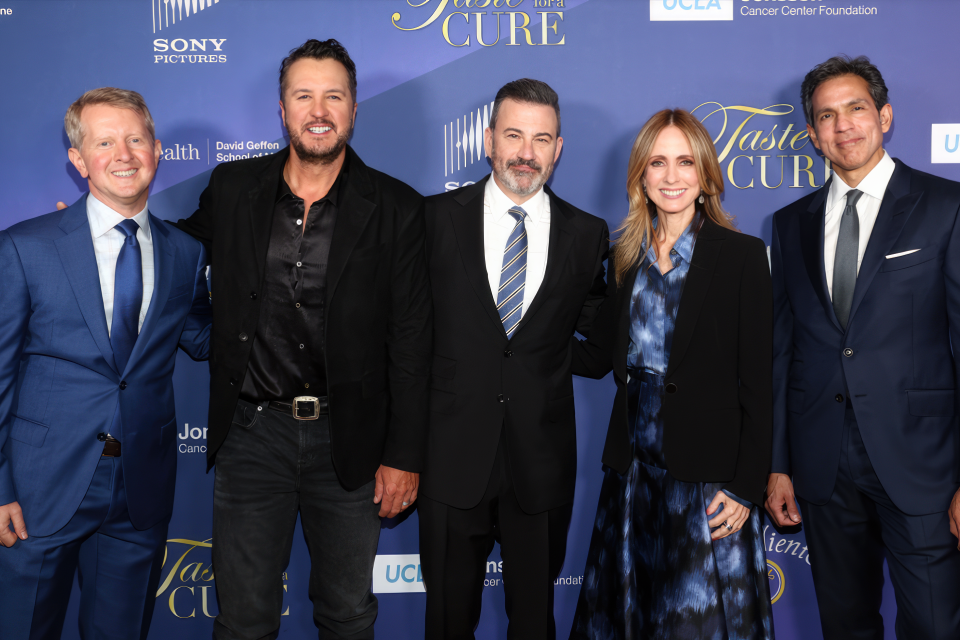
The JCCF’s annual fundraising event, Taste for a Cure, brings together the entertainment and epicurean communities, as well as other JCCF supporters, for an evening dedicated to advancing cancer research. Through the generosity of attendees and sponsors, Taste for a Cure helps fuel the most promising research where support is needed most.
Direct Mail
The JCCF’s direct mail program provides supporters with an accessible way to make a meaningful impact at any giving level. Every gift contributes unrestricted funding that helps advance innovative cancer research, supports emerging opportunities, and accelerates progress.
Estates
Estate gifts create a legacy in the fight against cancer by ensuring future generations benefit from continued advancements. By including JCCF in their estate plans, donors make a transformative impact with a gift of any level, providing unrestricted support that allows the UCLA Health JCCC to respond to emerging opportunities and invest in the most promising cancer research.
These sources of unrestricted support are pooled together to help sustain the impactful programs and initiatives at the UCLA Health JCCC that advance and accelerate groundbreaking cancer research. These programs include:
Providing researchers with the tools they need to succeed
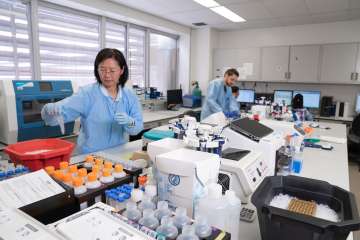
Shared resources at the UCLA Health JCCC provide the essential equipment, advanced technologies, and specialized facilities that cancer researchers would otherwise be unable to access on their own. These resources empower investigators to make groundbreaking discoveries by offering centralized access to critical tools such as flow cytometry, molecular screening, genomics, biostatistics, analytical support and evaluation, and the Translational Pathology Core Laboratory.
Philanthropic commitment to these shared resources has enabled the acquisition of state‑of‑the‑art equipment, the development of first‑rate research facilities, and the recruitment of highly trained technical staff. Together, these investments support more than 500 scientists conducting transformative investigations across more than 100 laboratories at UCLA.
Providing Seed Grants and Impact Grants to explore innovative ideas
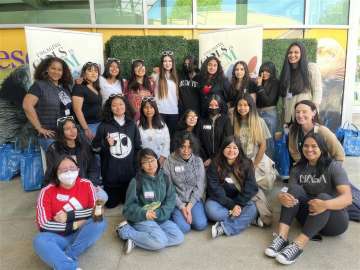
Philanthropy has been essential in training the next generation of cancer researchers by providing the resources needed to support their education and career development. Seed Grants empower early‑career investigators to pursue bold, innovative ideas that can attract future foundation and federal funding and fuel breakthroughs in treatment. Similarly, established researchers can receive Seed Grants to pursue a new lane of inquiry against cancer.
The best example of the value of Seed Grants is proven by the return on investment these transformative philanthropic dollars generate. A $50,000 Seed Grant to test combinations of immunotherapy treatments for brain cancer recently led to an additional $13 million in funding through two external grants. Similarly, a $50,000 Seed Grant to study gene-environment interactions in pancreatic cancer resulted in $6.1 million in external support. These exemplify the value of the Seed Grants model. All Seed Grant submissions are peer-reviewed, with high-scoring individual applicants receiving $50,000 for the year, and teams of two or more investigators with no prior history of collaborating receiving $100,000 for the year. The requirement for no prior collaboration for the team science awards encourages investigators with different areas of expertise to share ideas and develop innovative approaches to long-standing challenges.
These philanthropy-funded grants create the essential foundation early-career researchers need to build impactful work and the leverage established physician-scientists need to collaborate on new avenues of exploration that will shape the future of cancer research.
Funding Fellowships for early-career researchers
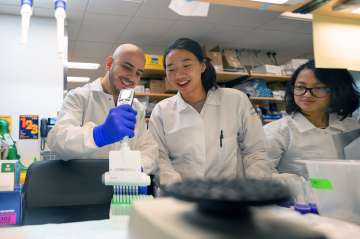
Philanthropy funds fellowships for recent MD and PhD graduates, serving as a critical launchpad that equips early-career scientists with the support required to begin independent research careers dedicated to advancing cancer care and treatment.
One group of fellows funded by philanthropy includes recent MD graduates conducting research across several critical areas of cancer investigation. One fellow is studying how the fallopian tube becomes pre-cancerous, with the goal of interrupting cellular transformation, enabling earlier diagnoses for ovarian cancer, and ultimately reducing lives lost. In head and neck cancer, a fellowship recipient is exploring how surgically deliverable topical implants can reduce the side effects associated with traditional chemotherapy that prevent patients from completing their full course of treatment. Another fellow is working to understand the biology of pancreatic tumors in order to combine treatment approaches for long-term disease control.
Thanks to philanthropic support for fellowships, early-career researchers are empowered to begin to make a meaningful impact on the UCLA Health JCCC community and far beyond. This investment both advances critical cancer research today and launches careers that will contribute to cancer discovery for years to come.

Patient Care
Simms/Mann UCLA Center for Integrative Oncology
Through the philanthropy of Dr. Victoria Mann Simms and Ron Simms, the Simms/Mann UCLA Center for Integrative Oncology was founded to provide whole‑person care for cancer patients at UCLA — supporting their mind, body, and spirit. Donor support, in addition to that of the Simms/Mann Family Foundation, ensures that essential services such as psychological counseling, psychiatry, nutritional guidance, spiritual care, financial and logistical assistance, and support groups remain available free of charge to patients and their families throughout our cancer care enterprise. Thanks to the continued generosity of our donor community and institutional support, patients receive comprehensive, compassionate care that nurtures their emotional, physical, and spiritual well‑being.
Learn More
When you donate to the JCCF, your gift provides critical funding that empowers more than 500 physicians and scientists to develop innovative methods, protocols, and therapies in the fight against cancer, as well as advance the best in patient care. Your gift may be directed to support a specific physician or researcher whose work is meaningful to you—whether they cared for you or a loved one, or are advancing research in an area that has touched your life. Donations can also support cancer research in specific disease areas; fund Seed Grants, Impact Grants, and fellowships that train the next generation of cancer researchers and enable new and established investigators to pursue bold, innovative ideas; or help sustain high‑touch patient care and supportive services at the Simms/Mann–UCLA Center for Integrative Oncology.
To learn more, please contact:
Kate Throneburg
UCLA Jonsson Cancer Center Foundation
424-440-0039
[email protected]