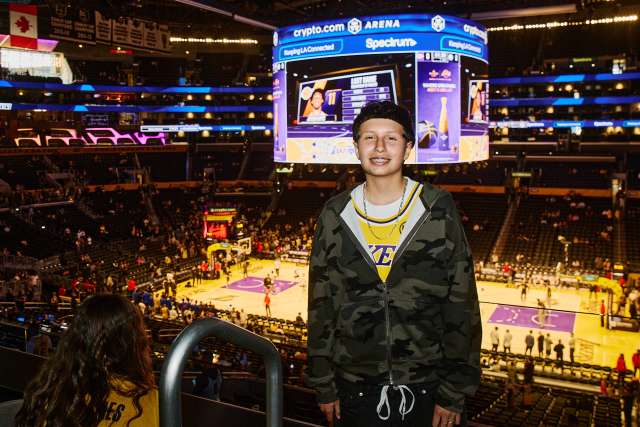
Basketball was more than a sport for Ava Hernandez — it was an integral part of her daily life.
But when she was diagnosed at age 13 with osteosarcoma — a rare, aggressive bone cancer caused by the uncontrollable growth of abnormal bone cells — she was forced to shift her focus.
“At first, the diagnosis was very shocking,” says Ava, who began playing basketball at age 4. “I didn’t believe it when I was first diagnosed, and it didn’t really process in my head that I actually had cancer.”
Balancing the start of eighth grade with the weight of this diagnosis quickly changed her life. Hospital visits replaced basketball games, and in-person classes soon gave way to homeschool learning.
“The biggest change was not being able to do the things that other kids are able to experience,” explains Ava. “I was just starting the basketball season when I found out, and I had to take a break. Having the flexibility to do anything was taken away from me, and that was really hard.”
Yet, Ava was determined to return to the activities she loved.
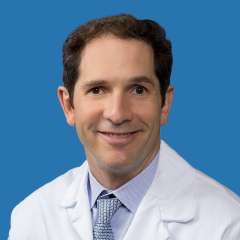
Under the care of Nicholas Bernthal, MD, chair and executive medical director of the Department of Orthopedic Surgery at the David Geffen School of Medicine at UCLA, Ava found a team committed to helping her regain her strength and independence. UCLA Health became a place where she could focus on healing while continuing to pursue her long-term goals.
“Ava was so determined to get back out to play basketball and do the activities that mean the most to her,” says Dr. Bernthal, who is also a member of the UCLA Health Jonsson Comprehensive Cancer Center. “That is one of the most exciting aspects of our work in orthopedic oncology — we tailor our implants and rehabilitation protocols to help patients return to what is important to them. From the very beginning, Ava knew exactly what she wanted to get back to doing.”
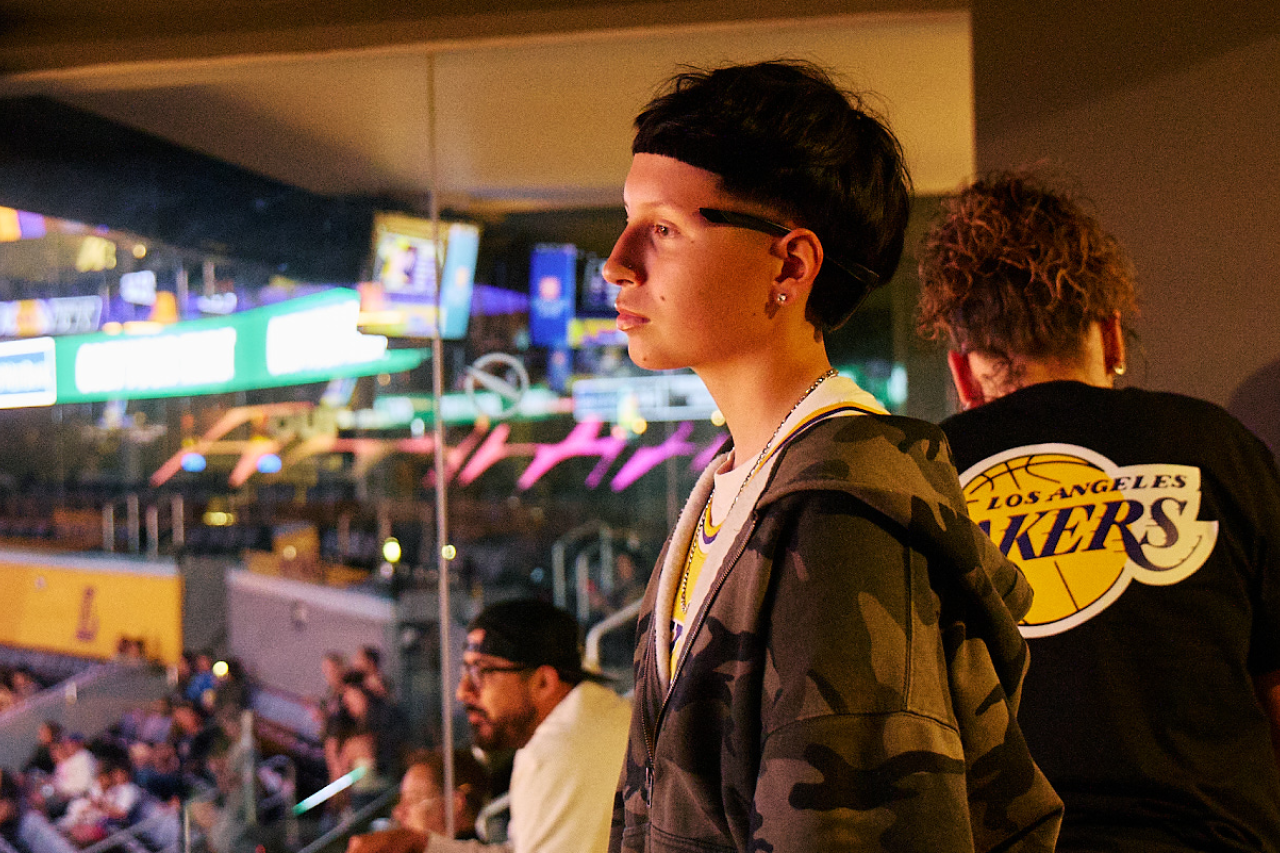
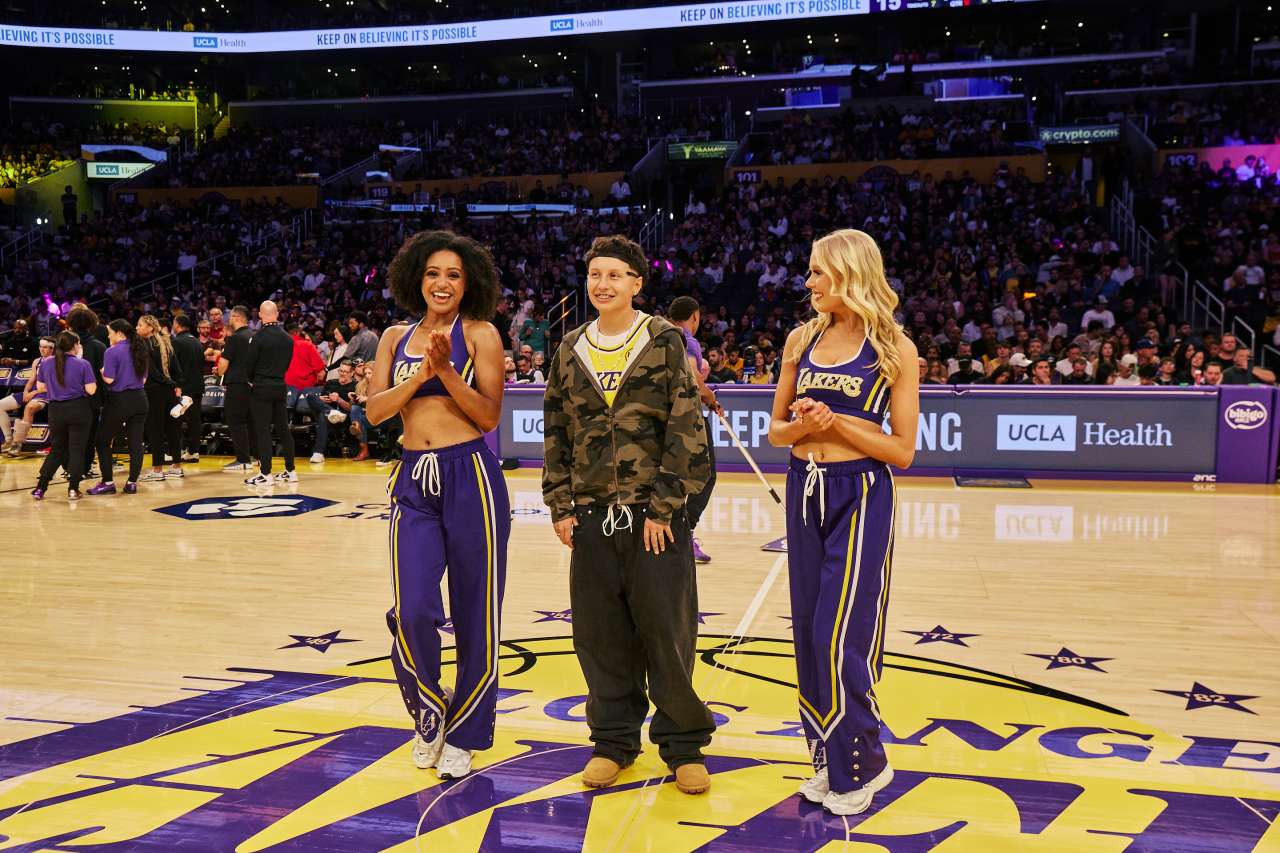
That determination took center court on March 27, when Ava stepped onto the floor at Crypto.com Arena as part of the UCLA Health Laker for a Day program. Wearing a Lakers jersey, she had the opportunity to shoot baskets on the court and share the experience with her family.
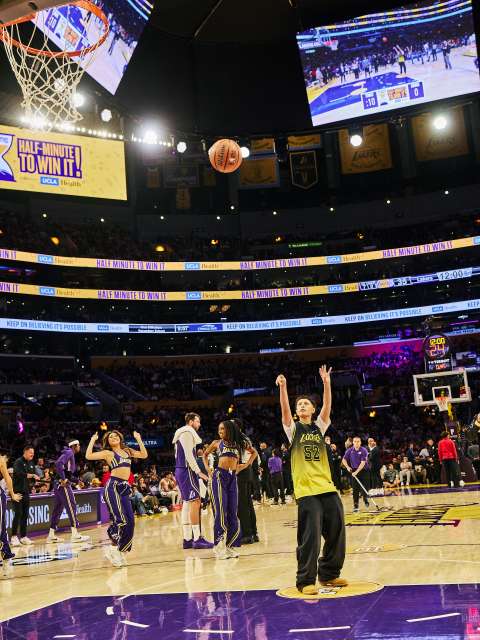
“My experience with the Lakers was definitely one of the best days of my life and a day that I will never forget,” says Ava, now 15. “Having the chance to go on the court where my favorite basketball team plays is something that I’ve been dreaming to do since I was a little kid.”
A rare diagnosis
Ava’s osteosarcoma diagnosis followed months of sharp pain, swelling and redness in her right leg.
At first, she attributed the discomfort to a minor basketball injury. But when the pain intensified and led her to urgent care, Ava was referred to UCLA Health for further evaluation. There, in November 2023, she received a diagnosis of osteosarcoma in her right femur.
Osteosarcoma accounts for approximately 2%-3% of all childhood cancers, most commonly affecting children and young adults ages 10 to 30, according to the American Cancer Society.
“Osteosarcoma is a difficult diagnosis because it generally presents itself as a dull, achy pain among kids, and it’s often assumed to be growing pains,” says Dr. Bernthal. “These symptoms tend to persist for some period of time and are often initially dismissed by both parents and patients.”
He explains that once the pain becomes more frequent, patients are often referred for X-ray imaging, which can lead to further testing through an MRI and biopsy.
“One of the toughest parts about osteosarcoma is that when I meet families, there is always a little bit of guilt in parents who question, ‘Should I have brought this up sooner?’” he says. “It’s hard, because their children may have been complaining for weeks or months, but this is a rare disease. And most of the time those dull aches really are just growing pains.”
An individualized approach to care
Through every step of treatment, Ava says, she had a clear understanding of her diagnosis and was actively involved in making decisions about her care.
“I initially didn’t know anything about bone cancer,” she says. “But the doctors explained to me that the cancer was eating away at my bone, making it hollow on the inside. They told me that at any moment, my bone could break or the disease could spread to my lungs, so we needed to start treatment right away.”
To shrink the tumor before surgery, Ava first underwent chemotherapy. In March 2024, the UCLA Health care team removed the tumor from her right femur and reconstructed the bone with an internal prosthetic, connecting her remaining femur to her lower leg. After surgery, she completed six months of additional chemotherapy to eliminate any remaining cancer cells, finishing treatment in October 2024.
Ava says her care team carefully explained every step when it came to choosing the surgical approach that best aligned with her goals.
“The doctors gave me two choices,” she says. “One option meant that I would be able to walk on my leg right away, and the other meant that I would have to wait about a year before I could start putting pressure on it.”
Determined to return to her sport, Ava spoke with her parents and chose the option that would allow her to be active sooner. While the procedure Ava chose aligned with her goal of returning to basketball as quickly as possible, the second option offered a more cautious and gradual recovery plan.
“After my surgery, the physical therapist came into my room, and I was already up and walking the next day,” she says. ‘I’m so grateful that I was empowered to take an active role in my care and can’t wait to play basketball again.”
Lifelong and interdisciplinary care at UCLA Health
From diagnosis to recovery, Ava’s cancer journey was guided by the UCLA Health Sarcoma Program's lifelong, interdisciplinary approach to care.
“Unlike other places that transition patients to a different team once they turn 18, we care for patients throughout their entire lives,” says Dr. Bernthal. “Between chemotherapy and surgery, our team gets to know these patients and families extremely well because we follow them for life.”
That long-term perspective shapes every treatment decision with a holistic focus on each patient’s quality of life.
“One of the joys of my practice is seeing patients I operated on years ago return for follow-up visits with their own children,” says Dr. Bernthal. “This lifelong continuity gives us a real appreciation of how cancer and its treatments affect patients beyond simply beating the disease — we think about their quality of life, the activities they want to return to, raising a family, and future genetic questions.”
Equally important is the Sarcoma Program’s interdisciplinary model of care.
From the moment a patient arrives, orthopedic oncologists, radiologists and pathologists work together to streamline the diagnostic process and coordinate every step of treatment.
“It starts on day one — a family arrives to our clinic on one of the hardest days of their life,” Dr. Bernthal says. “We can’t change whether the diagnosis is cancer, but we can make sure that their experience in getting to a diagnosis quickly is as smooth and coordinated as possible.”
This approach is reflected in UCLA Health’s same-day biopsy process. Following consultation with the attending orthopedic oncologist, a radiologist meets the family in the clinic, performs the biopsy and delivers the tissue sample directly to the pediatric pathologist for evaluation the same day.
“It demonstrates to patients within the first hour that we are a unified team,” says Dr. Bernthal. “Our job is to communicate and coordinate with one another so that families can focus on their child.”
Looking ahead
Ava is now preparing to be a junior in high school, having returned to in-person classes midway through freshman year. As she continues to recover, she has begun training, with hopes of playing on the Pacifica High School basketball team soon.
She also enjoys playing video games and spending time with her three older siblings.
“Through this process, Ava has grown up so much, and she has learned how to be very responsible and considerate for herself and her body,” says her mother, Carrie Hernandez. “This process was a tragedy, but overall, it was a great experience with everybody we encountered throughout the journey.”
Ava said after high school she hopes to attend UCLA and become a pediatric anesthesiologist, inspired by the care she received at UCLA Health.
“When I went in for my surgery, the anesthesiologist was really funny,” says Ava, who is originally from Lompoc. “She asked me what artists I liked, and instead of counting down until I went to sleep, she told me to sing my favorite lyrics until I went to sleep.”
For Dr. Bernthal, seeing Ava’s career aspirations evolve has been one of the most fulfilling outcomes of her cancer journey.
“If our team can shape a patient’s cancer experience in a positive way — helping them become who they want to be and fostering a greater appreciation for life — that is the dream,” he says. “Ava is a perfect example of that.”
Care beyond the cure
For UCLA Health’s pediatric sarcoma team, success extends far beyond curing patients of cancer. It also entails restoring their confidence to return to the activities that bring them joy.
“Cancer, by definition, is a loss of control,” says Dr. Bernthal. “So, we focus on giving these children control wherever we can — that might mean talking them through their treatment schedule, building flexibility around important milestones or involving them in decisions about their care.
“When you understand what is important to a child and meet them in the middle, that gives them a feeling of empowerment during this scary time,” he adds. “For someone like Ava, who is incredibly motivated, we can support her by tailoring her treatment to reach those goals and explaining the limitations. Restoring control is central to helping patients navigate cancer.”
Related articles
Teen athlete’s rare cancer began with a painful bump
A young boy’s fever and knee pain prove to be first signs of cancer