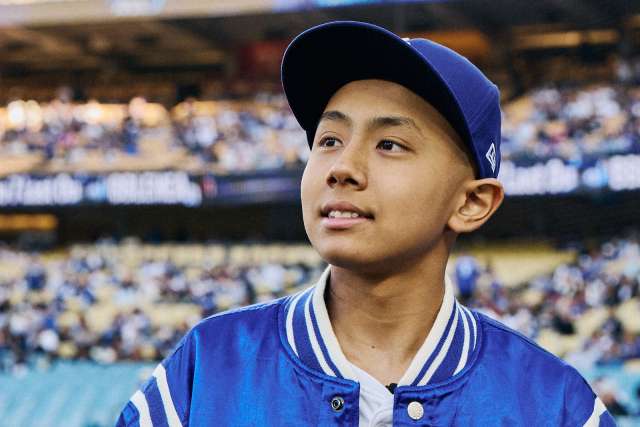
Thirteen-year-old Kai Kothari’s jaw dropped when he walked into Dodger Stadium for the first time.
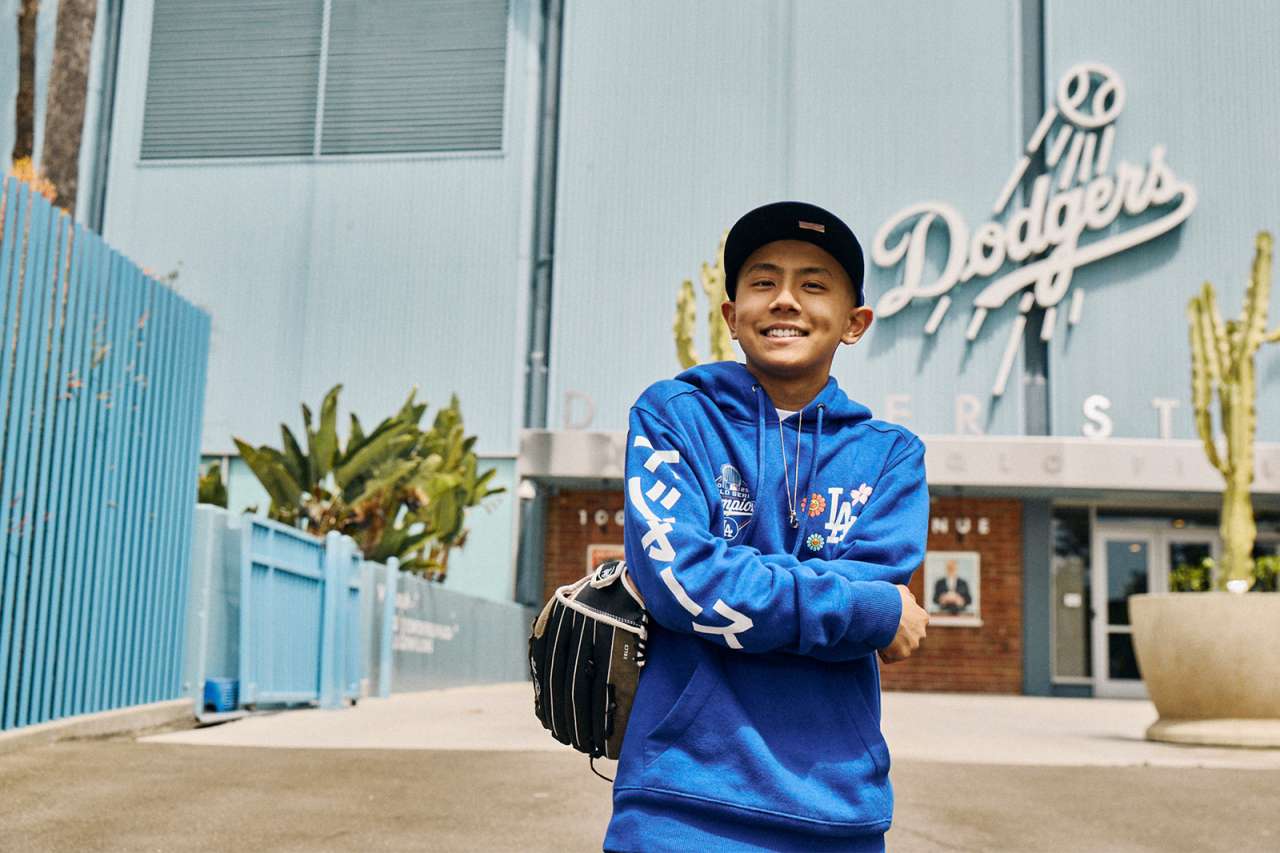
“It’s so much bigger than I expected,” he said as he looked out onto the field. It was hours before game time, so the 56,000-seat arena was empty, except for employees.
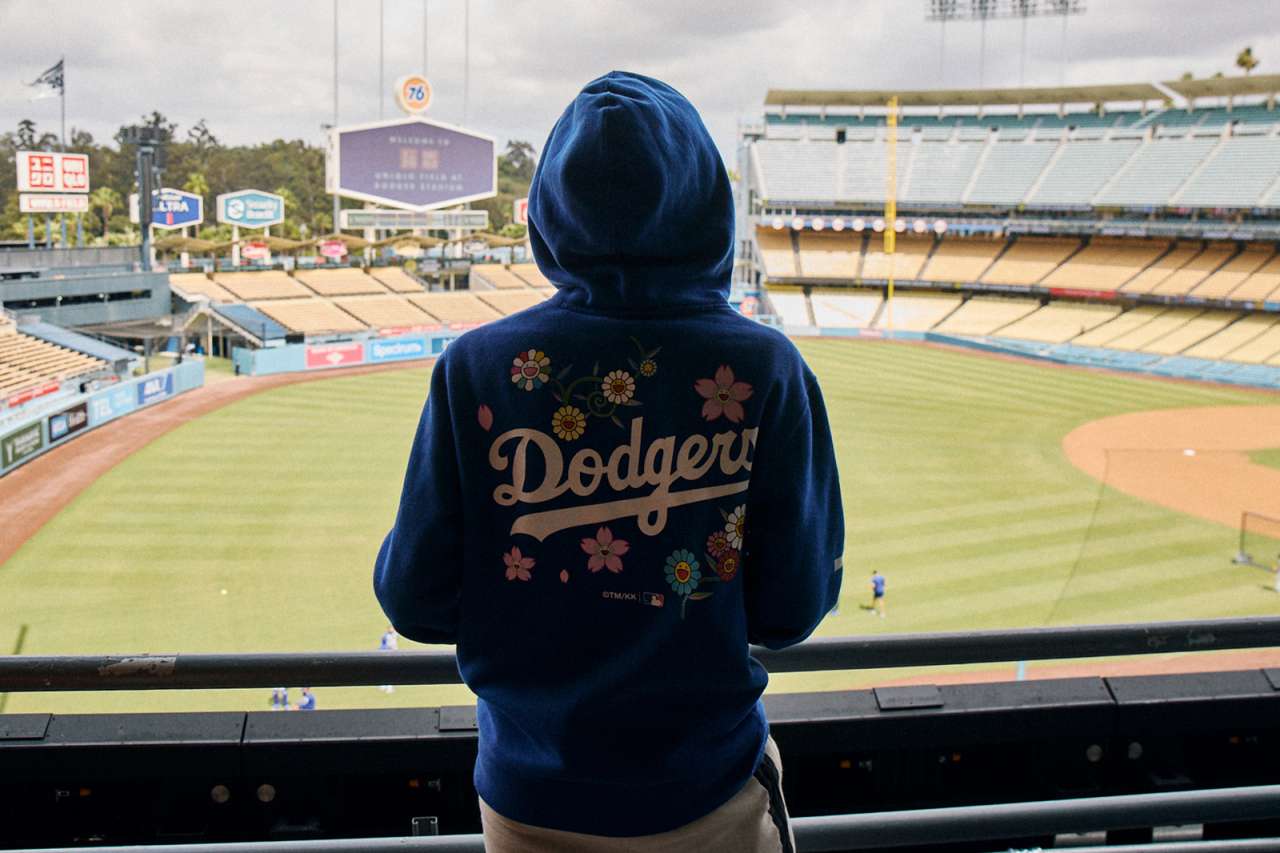
Despite being a Los Angeles native, Kai had never been to Chavez Ravine – he and his family were living between Tokyo and Hawaii for most of his life.
But they returned to LA in the fall of 2025 after Kai was diagnosed with synovial sarcoma, a rare soft-tissue cancer that often affects young people. The trip to Dodger Stadium was part of the team’s Blue Wishes partnership with UCLA Health, which provides once-in-a-lifetime experiences to people facing serious medical conditions.
Kai and his family knew they would be spending the day at the ballpark but had no idea what surprises were in store.
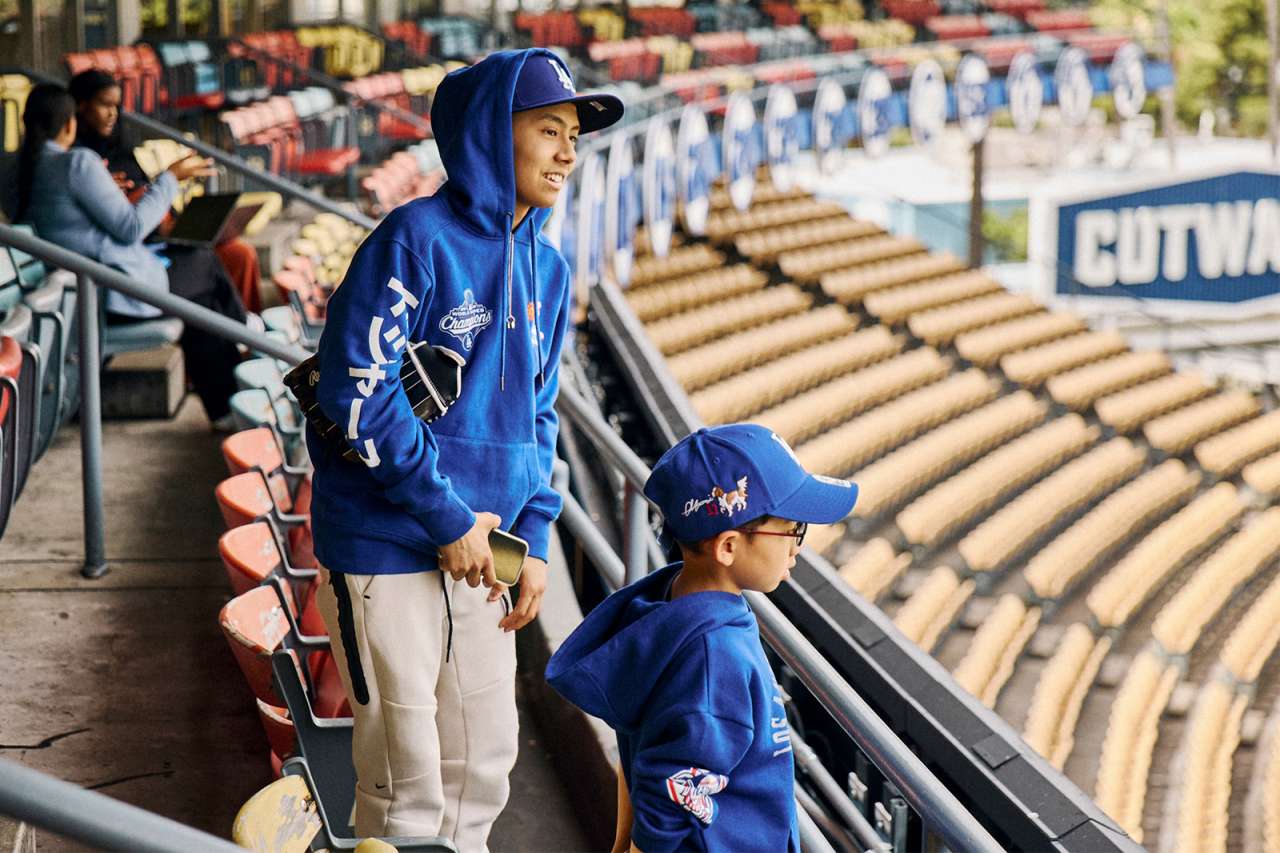
Coming from Japan
The Kothari family – mom Yuka, dad Ankur and Maltipoo Tiffany – was happily living in Japan when they suddenly noticed a bump on Kai’s neck.
“It literally just popped up out of nowhere,” Ankur recalled. “One day it wasn’t there and the next day it was huge.”
They saw their family doctor, then a specialist who advised keeping an eye on the lump for a few months. Ankur didn’t want to wait and insisted it be removed. Kai was admitted to the hospital the day after he turned 13. Surgeons extracted a tumor the size of a golf ball. Initially misdiagnosed as benign, a biopsy later confirmed it was cancer.
His parents were devastated. But Kai was unflappable.
“I just couldn’t pull it together. I was up all night crying,” Ankur said. “Kai actually sat us down, my wife and I, a week after the biopsy results. He’s like, ‘Look, guys, I know it’s been really tough for you, but you’ve got to stop crying now. I’m going to make it. I’m going to be the first cancer survivor in our family. But you have to gather yourselves.’”
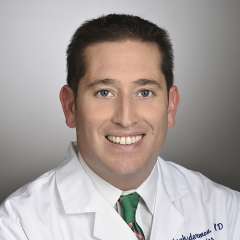
Ankur’s childhood best friend is now a doctor at UCLA Health, and the two talked frequently after the lump appeared (“I mean like bawling on the phone with him every day,” Ankur clarified). The friend recommended they see Noah Federman, MD, director of the pediatric bone and soft tissue sarcoma program, part of the UCLA Health Jonsson Comprehensive Cancer Center.
The family landed in Los Angeles, and seven days later, Kai started receiving chemotherapy at UCLA Health. He would undergo six months of chemo infusions, followed by a second operation to remove any cancerous tissue left behind after the misdiagnosis.
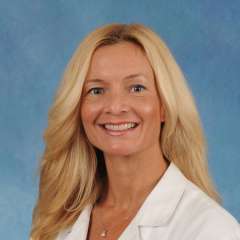
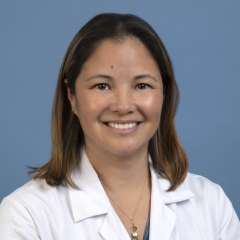
Ankur said that within minutes of meeting Dr. Federman and surgeons Alisha West, MD, and Veronica Sullins, MD, they knew they were in the right place: “He was in the best hands. We were so, so lucky.”
Kai inspired his doctors and nurses with his upbeat attitude throughout the ordeal, said Marla Knoll, LCSW, a social worker in pediatric oncology and hematology.
“He’s one of the most positive kids I’ve met,” Knoll said. “He’s just amazing. He never seemed to hesitate about getting any of the medicine. He never complained about the side effects and he was always just happy to see people. He’s just a good kid.”
He also remembered all of his providers’ names and was an active participant in treatment discussions, Knoll added, “which is pretty impressive for a kid his age.”
Kai’s last treatment was April 21, 2026. A little more than a month later, he was at Dodger Stadium, having a night of a lifetime.
Meeting his favorites
Kai rattles off his favorite Dodgers without prompting, changing the order every time: Mookie Betts, Shohei Ohtani and Yoshinobu Yamamoto. Sometimes Ohtani comes first. Sometimes it’s Yamamoto – a highlight of Kai’s hospital stay was watching game seven of the 2025 World Series from his room, with his whole family and several nurses by his side, he said. Yamamoto was the winning pitcher that night.
The Kothari family and pup Tiffany — along with Kai’s aunt and cousin, who flew in from Japan to join them — were treated to a backstage tour of the stadium. They passed the Golden Glove awards and World Series trophies, Vin Scully’s championship rings, and assorted memorabilia from the team’s 136-year history with the National League.
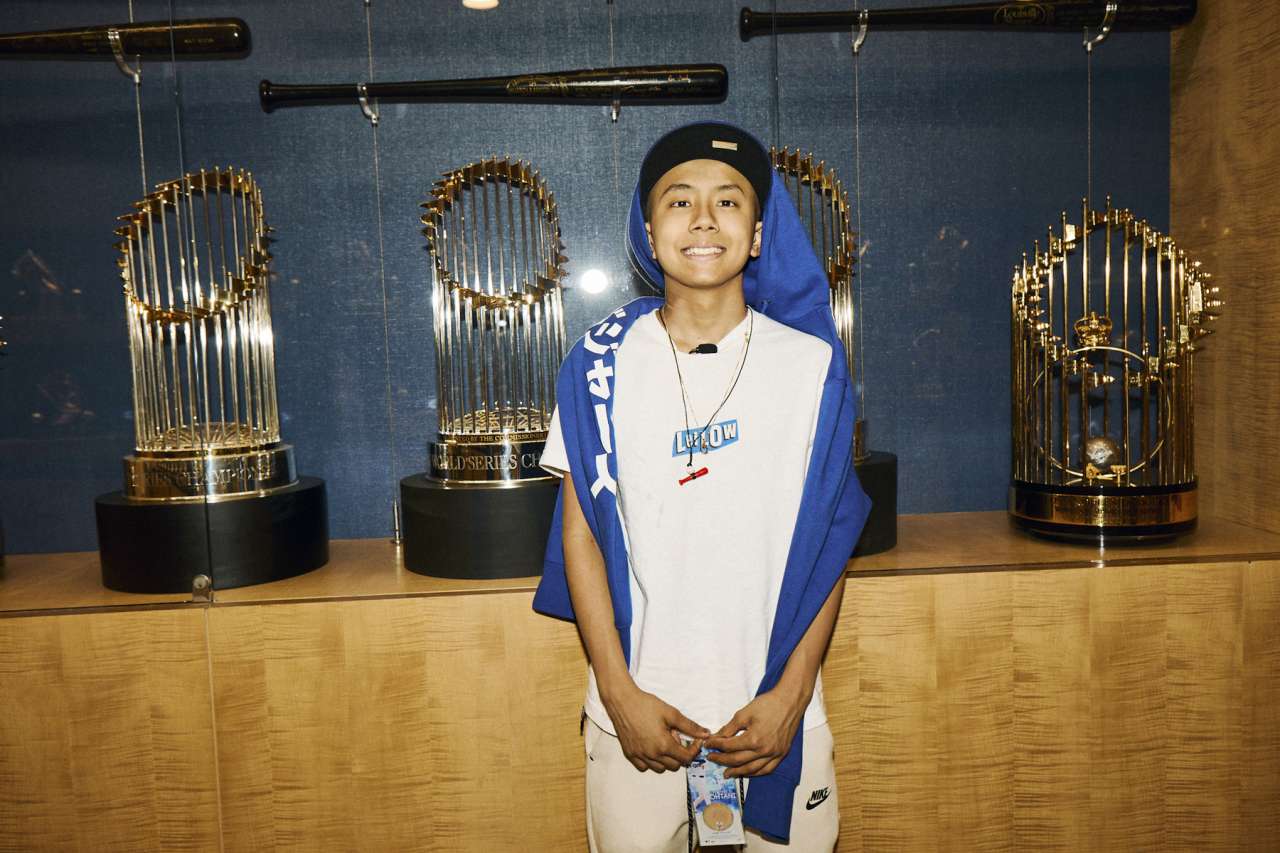
Along the way, Kai received gifts from Dodgers employees: a Betts necklace with a bat-and-ball pendant, a medallion filled with game-used dirt from a historic Ohtani game, and a certificate marking his first visit to Dodger Stadium.
Finally, the family was led to the press room for a mock news conference. Kai sat at the dais behind the microphone as employees of the Dodgers and UCLA Health peppered him with questions. What did he think of the stadium? Who were his favorite players again?
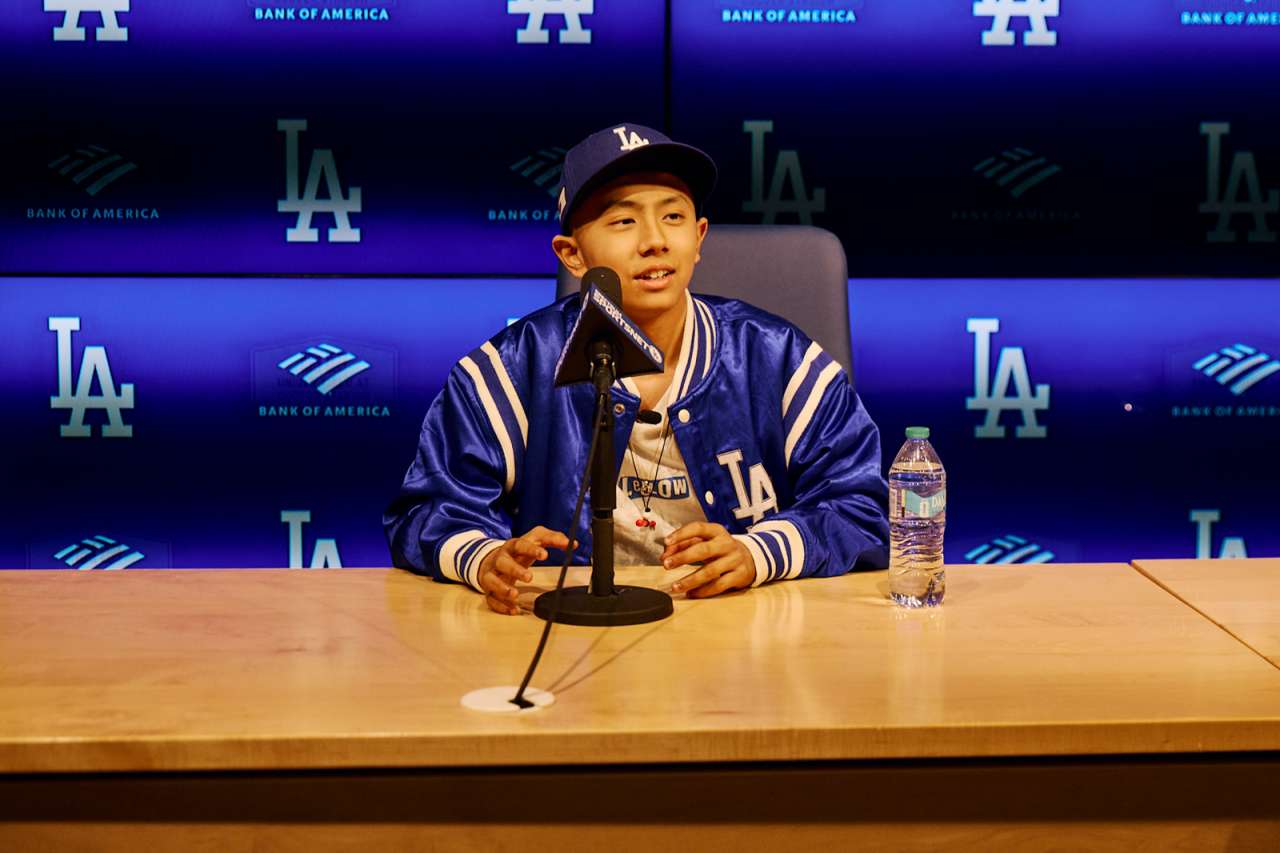
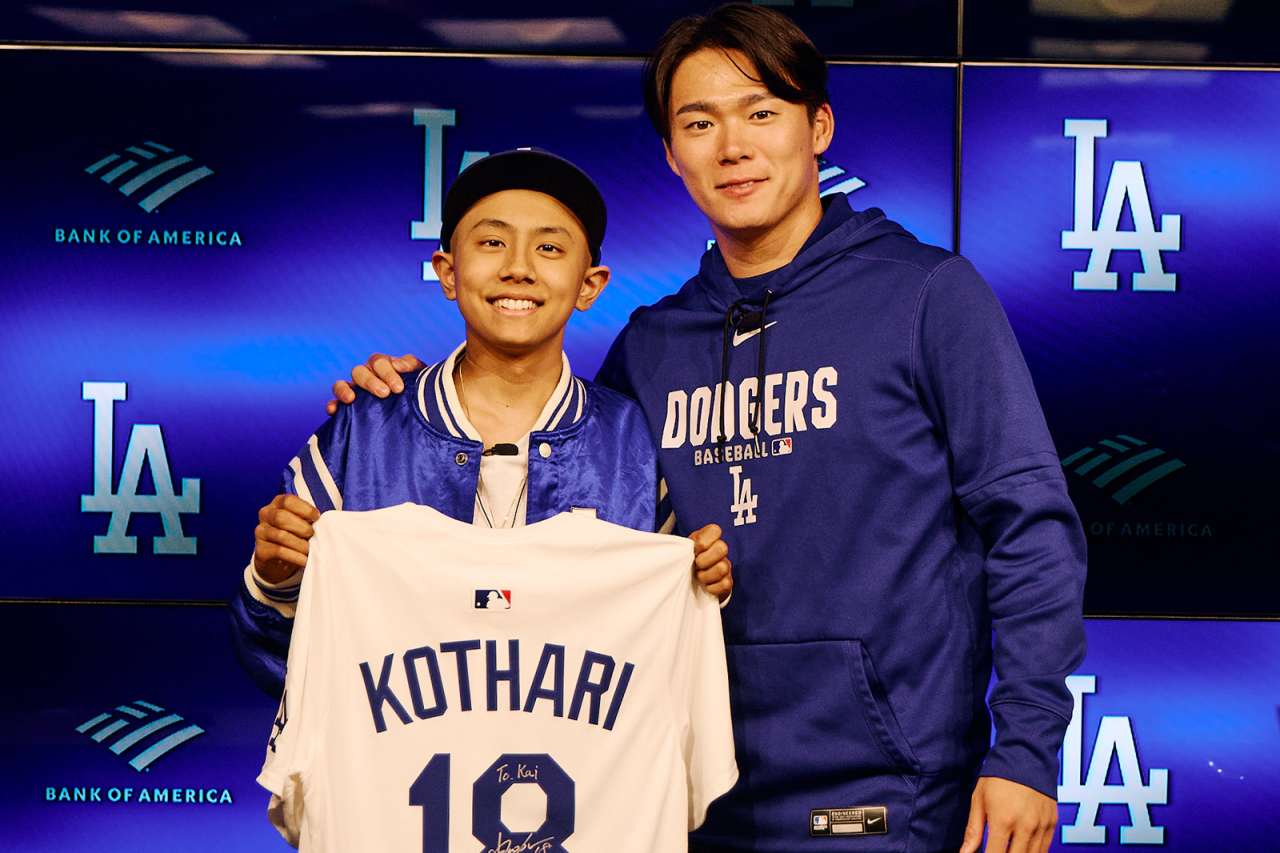
That’s when Yamamoto walked into the room unannounced. Kai’s eyes appeared to double in size. He shook the star pitcher’s hand and immediately hugged him. Yamamoto greeted Kai in Japanese. Then he handed the teen a personalized, autographed jersey.
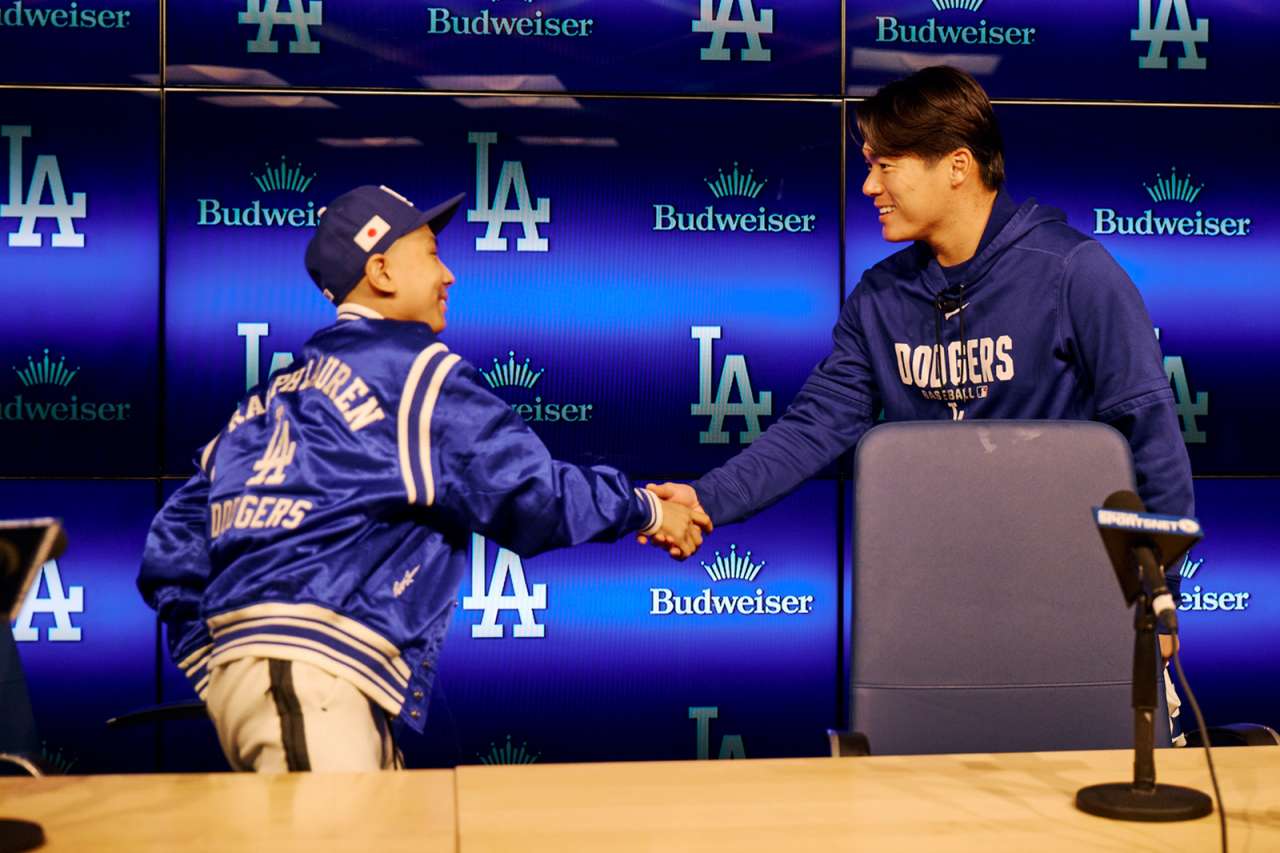
“Oh my God, thank you so much,” Kai said. “It says ‘To Kai’ on it!”
“Are you ready to throw out the first pitch?” Yamamoto asked in Japanese. “Are you nervous?”
Kai admitted that he was but said he’d been practicing.
The two snapped a quick selfie.
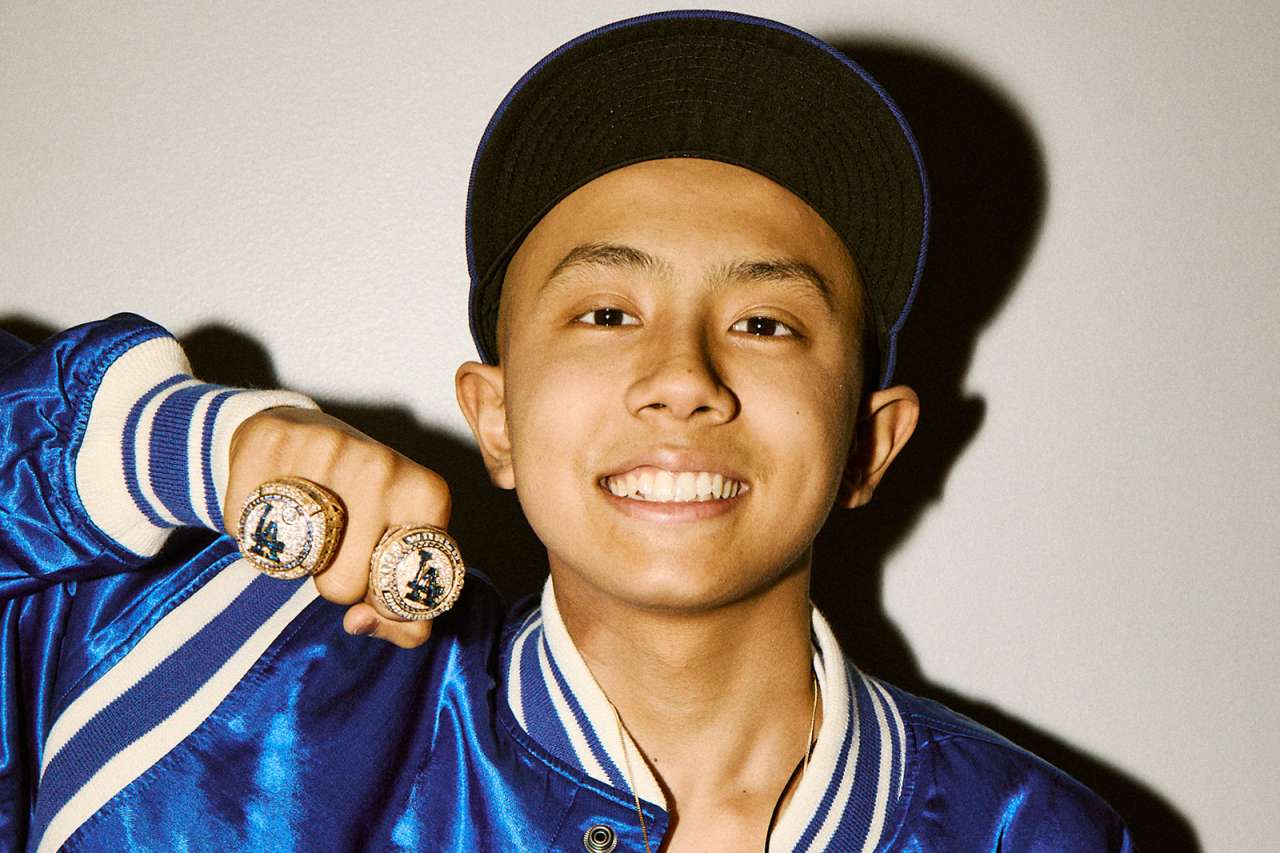
The pitcher left but his translator stayed behind to show Kai Yamamoto’s two championship rings: huge, diamond-encrusted baubles that dwarfed the teen’s hand.
“They’re so heavy, my fingers hurt,” Kai said.
Taking the field
After dining in the Dugout Club, the family was escorted onto the field. (At this point, dog Tiffany was also wearing a Yamamoto jersey.)
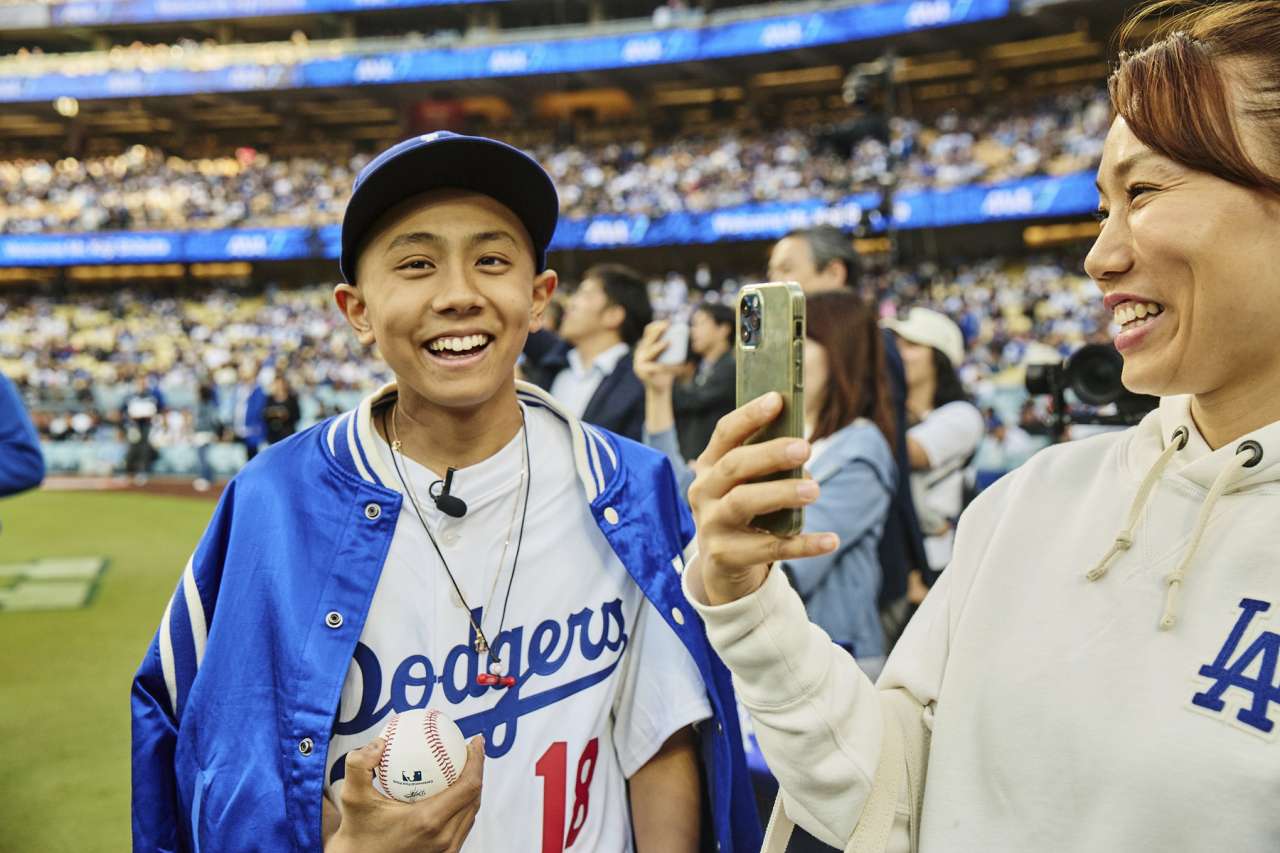
Kai grabbed his baseball glove and warmed up on the field, playing catch with a member of the ball crew.
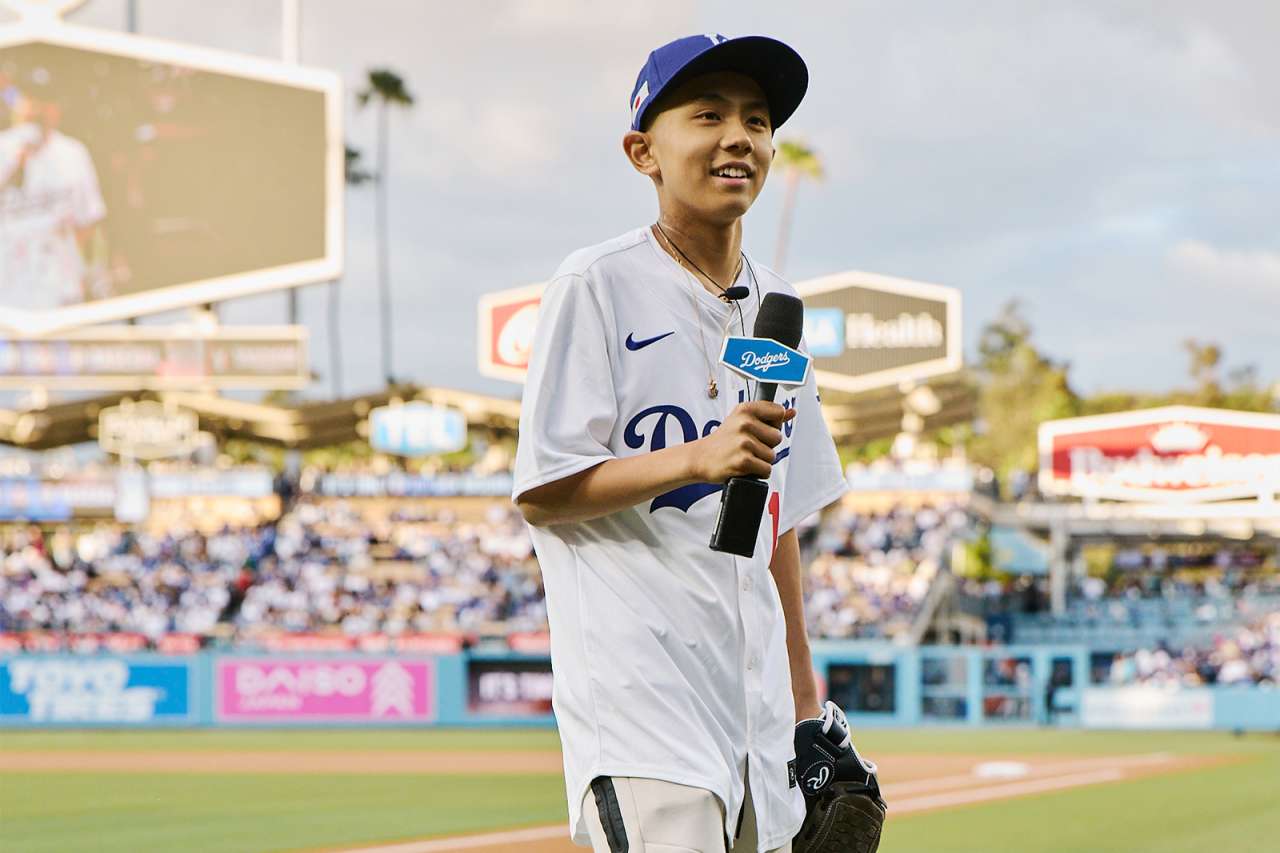
And then it was time. Kai threw off his blue satin Dodgers jacket and stood on the field in his new Yamamoto jersey as images from his health journey played on the DodgerVision screen. When the announcer said, “Kai is now cancer-free,” the audience cheered.
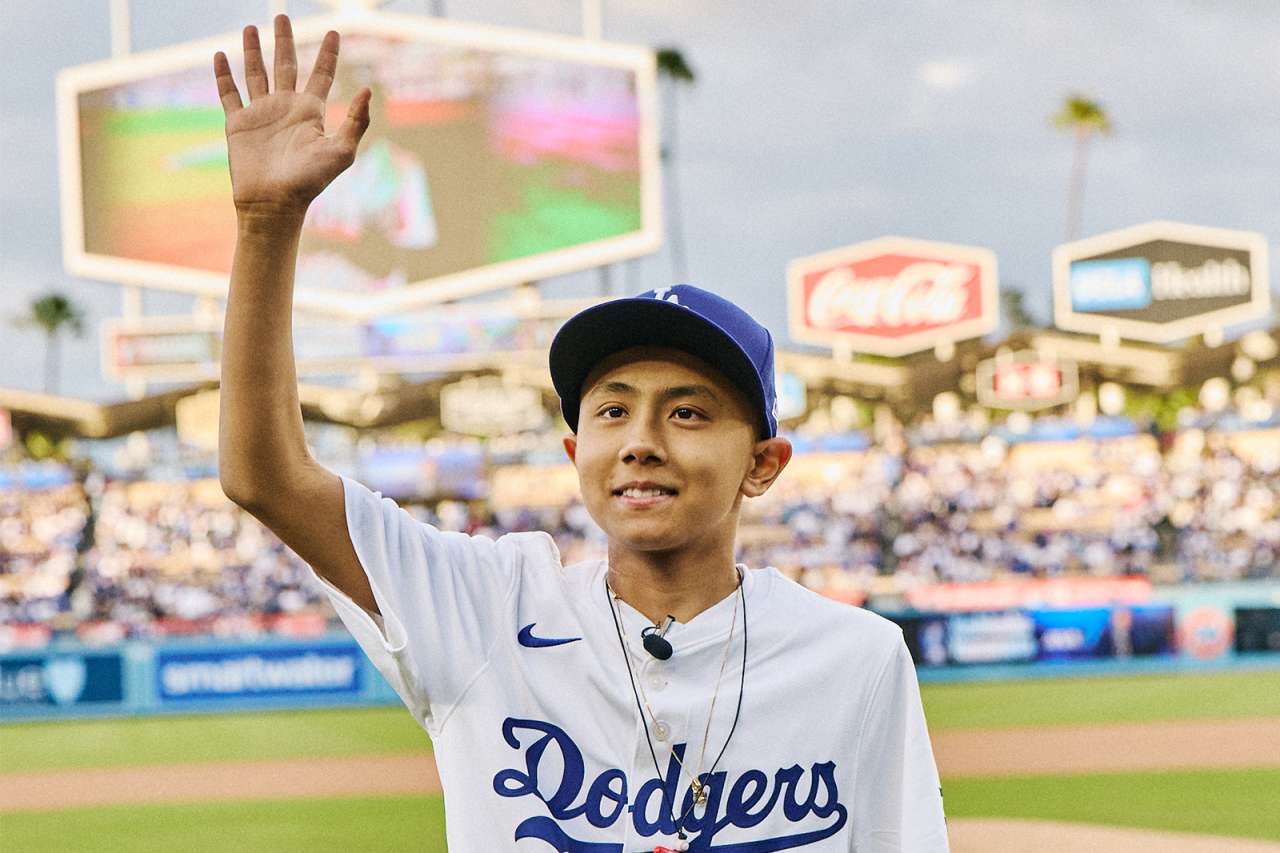
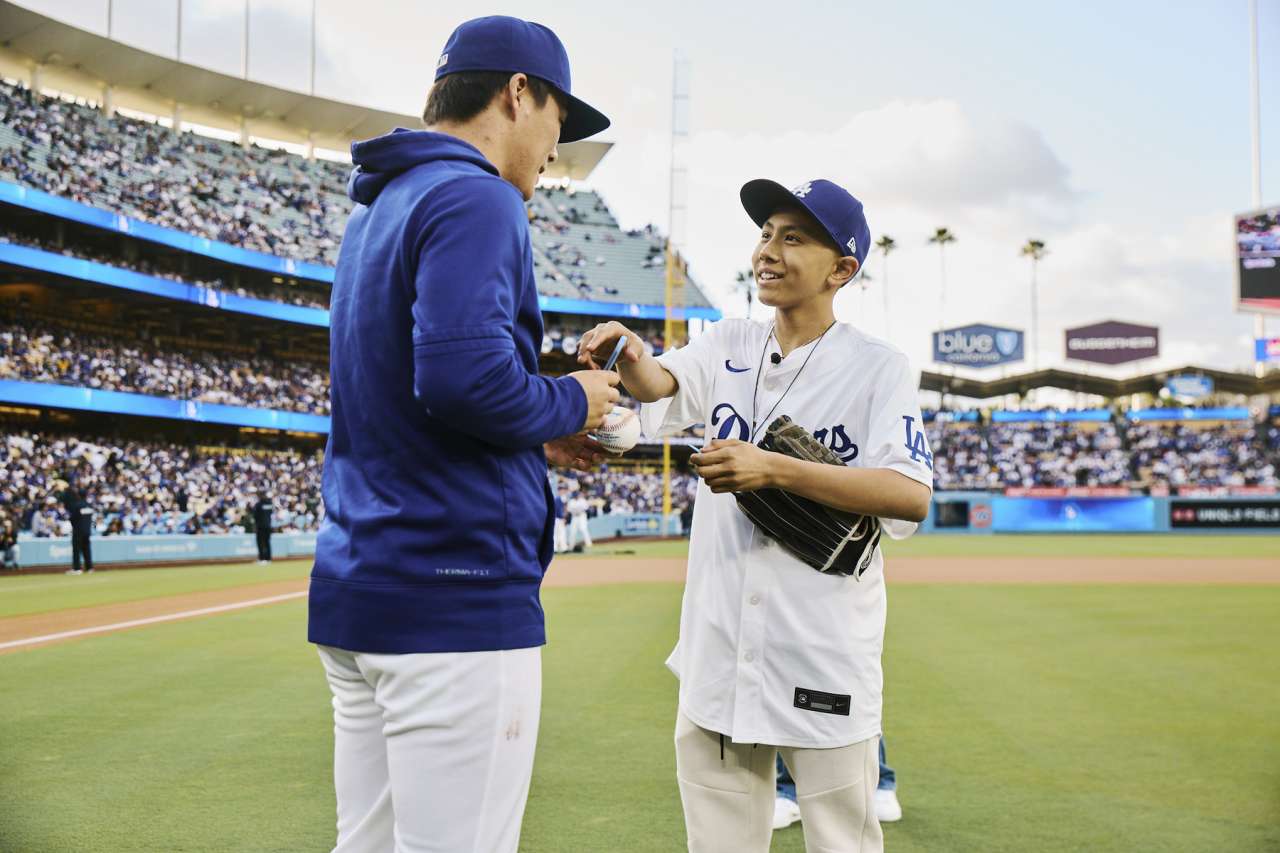
He stepped onto the mound. Yamamoto ran out to play catcher and the crowd cheered again.
There was still one more pinch-me moment to come.
On-field producers handed Kai a microphone and he said those legendary words: “It’s time for Dodger Baseball.”