“Hey world, hey America, hey TikTok, it’s your boy, Brandon …”
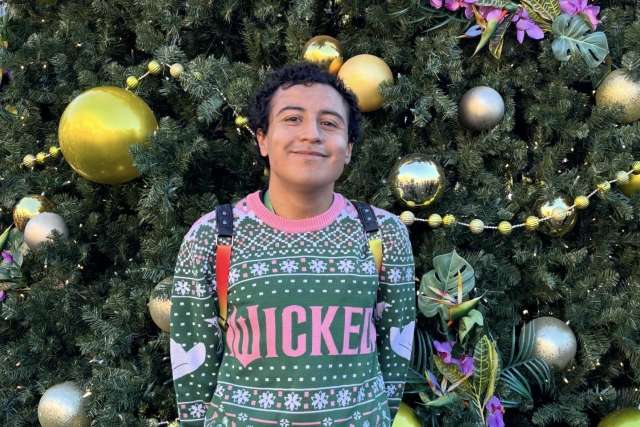
Like millions of people around the globe, Brandon Chico started posting on TikTok during the COVID-19 pandemic, mostly out of boredom.
Then, a few months into lockdown, the 22-year-old was diagnosed with Hodgkin lymphoma, a form of blood cancer.
Though he lived with family, social distancing protocols meant he’d face his doctor’s appointments and treatment visits alone. So Brandon found a way to bring not only his family, but hundreds of people around the world, with him. He posted about his experiences on TikTok, sharing details about his diagnosis and treatment alongside videos of him lip-syncing to Rihanna, dancing to Lady Gaga, unboxing Disney collectibles and explaining the Marvel Universe to his dog, Julio.
“I just wanted to share my journey, because during the pandemic, I wasn't even allowed to have my mom or my siblings in the room with me,” Brandon says.
His mix of posts on cancer and pop culture have collected more than half-a-million likes to date.
Creating community
Cancer can be isolating even when surrounded by friends and loved ones, patients say. Using social media as a video diary, Brandon expanded his support network to include anyone with Internet access.
“It’s time for another cancer update!” he says with the enthusiasm of a DJ announcing a hot new track. This is how Brandon introduced posts about being hospitalized for shortness of breath and his chemotherapy symptoms (anxiety, exhaustion, hiccups that continue for hours).
He documented his treatment and remission. When the cancer recurred, he posted about it. He shared his fears and frustration. He celebrated when he was cleared for a bone marrow transplant and chronicled the procedure and recovery.
Along the way, he made connections with other people experiencing similar diagnoses – people he’d never met, but who’d seen his content online. They were worried about chemo, they told him in direct messages on TikTok, or wanted a pep talk before an upcoming transplant.
“I started shifting to a mentality of, like, I can start showing people who have never experienced this, or maybe for people who just got diagnosed,” Brandon says. “I’ve always liked being a helpful person.”
Dispelling myths
He also uses his platform to dispel myths.
Being a young person with cancer, he says, is nothing like “The Fault in Our Stars,” the bestselling John Green novel and popular 2014 film about two teenagers with cancer who fall in love, that shaped Brandon’s perceptions of the disease before he was diagnosed.
The movie isn’t like real life, he says.
“They’re out and about, going to Paris,” he says in a post. “I can’t do that. My doctor said I can’t even have a salad.”
In a recent interview, he said media depictions like these skew perceptions of what experiencing cancer is really like.
“Diagnosis and treatment are such a big thing that affect the person and their family so much,” he says. “And then once you are in remission, everyone thinks like, oh, it's sunshine and rainbows; life's back to normal. And it's not.”
More than eight months after his bone marrow transplant, Brandon, now 28, is still navigating life in survivorship. In a recent post, he contemplates his shirtless reflection in the mirror, a large scar down the center of his chest.
TikTok is just one way Brandon expresses himself. He also receives counseling through the Simms/Mann UCLA Center for Integrative Oncology, which provides free psychosocial support for people undergoing cancer treatment at UCLA Health, from diagnosis through survivorship.
The bright side of social media
While a recent review study found a correlation between social media use and depression in young people, research also shows that a significant number of adolescents and young adults find belonging and community through social media.
Aditi Wahi-Singh, LCSW, a clinical oncology social worker with the Simms/Mann Center who has been working with Brandon, says his use of TikTok appears adaptive and supportive.
“Some patients benefit from journaling, arts, yoga as their therapeutic outlets, and others use their creativity in different ways,” she says. “I feel like TikTok is very therapeutic for Brandon. It allows him a space to share his cancer journey while being his authentic self, which I love. It gives him that outlet to release whatever he's feeling, but also gives him a space to be a normal young adult and do things outside of cancer.”
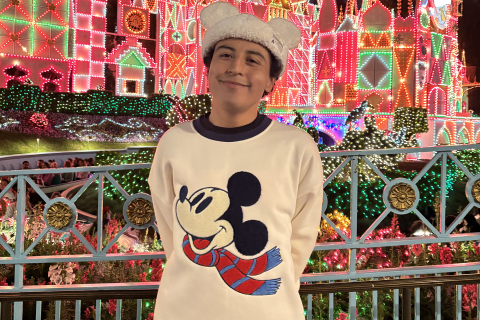
Brandon says it’s cathartic to share his emotions online and to show the full spectrum of who he is.
“I want to be as transparent as I can,” he says, “because I want people to know that this is my life. This is literally what I’m going through.”
He continues to post regularly about his life, his health and the things he loves. He doesn’t strategize about going viral, he says – he just wants to share who he is with the world.
He did, however, get a comment from Lady Gaga. The 2025 post showed Brandon dancing in his hospital room to one of her songs.
“Love you,” she wrote. “Cheering you on.”