
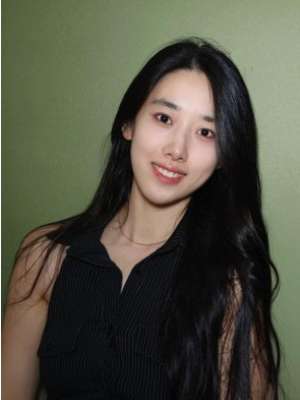
Shuyi Wang
Shuyi Wang is a Master’s candidate in Global Health at the School of Public Health, Fudan University. Her academic work is centered on a unifying question: how to advance mental health and holistic well-being through the integration of empathetic, person-centered care and equitable health systems. Her commitment to mental health began with an early interest in what it means to care for the whole person—not only the illness. This curiosity deepened during her undergraduate studies, when she investigated empathetic care models in clinical settings and authored the case study, “ Don ’ t Let Healthcare Treat the Disease but Not the Person.” Through this project, she came to appreciate the vital role of emotional connection and dignity in healing— a realization that continues to guide her research and professional outlook. As her perspective broadened, Shuyi turned to public health to better understand the social and systemic dimensions of well-being. She participated in studies focused on rare disease communities, examining the barriers they face in healthcare access and social support. Her subsequent research on insurance mechanisms for orphan drugs further revealed how policy design and social values shape health outcomes and quality of life. These experiences affirmed her belief that mental health cannot be separated from the policy and social environments in which people live. Currently, her research focuses on women’s health in sub-Saharan Africa, with an emphasis on intimate partner violence, maternal and child health, and gender inequality. She approaches mental health as deeply interconnected with social and structural conditions—particularly in contexts of resource limitation and gender-based marginalization. Through cross-cultural analysis, she seeks to identify systemic interventions that support women’s agency, safety, and long-term psychological well-being. Being selected as a Tang Scholar represents a meaningful opportunity for Shuyi to deepen her engagement with integrative and culturally grounded approaches to health. She looks forward to exploring the connections between traditional wisdom and contemporary mental health practice, and to reconnecting with her own cultural heritage through this lens.