Manual Therapy for Dysphagia Following Head and Neck Cancer
Manual Therapy for Dysphagia Following Head and Neck Cancer
Courtney Lynch, M.S., CCC-SLP
January 20, 2027
8:00 am to 9:00 am Pacific Time
Zoom Webinar
Course Description: Head and neck cancer treatment can result in persistent dysphagia, radiation-associated fibrosis, lymphedema, scar adhesions, reduced tissue mobility, trismus, pain, and cervical and hyolaryngeal movement restrictions that negatively impact swallowing function and quality of life. Traditional swallowing exercises and compensatory strategies remain essential components of dysphagia rehabilitation; however, tissue and biomechanical restrictions may limit the effectiveness of exercise-based approaches alone.
This course introduces Speech-Language Pathologists to the clinical application of manual therapy as an adjunct to evidence-based dysphagia rehabilitation following head and neck cancer treatment. Participants will explore the effects of radiation, surgery, fibrosis, and tissue restriction on swallowing biomechanics and learn how findings from instrumental swallowing assessments can guide individualized hands-on treatment.
Emphasis will be placed on clinical reasoning rather than memorization of techniques. Participants will learn to assess tissue and scar mobility, cervical and hyolaryngeal movement, oral opening, and other biomechanical contributors to swallowing impairment in order to determine which manual therapy approach may be appropriate for a specific patient. The course will provide an overview of techniques targeting the cervical fascia, suprahyoid and infrahyoid musculature, floor of mouth, buccal tissues, TMJ, and scar tissue, with opportunities to learn application via case studies.
Current and emerging evidence, including findings from the MANTLE trial, will be reviewed to provide a foundation for incorporating manual therapy into comprehensive head and neck cancer rehabilitation. Safety considerations, contraindications, precautions, patient education, and integration with swallowing exercises will also be addressed.
By the conclusion of the course, participants will have a framework for using manual therapy to address identified biomechanical restrictions and to support functional swallowing rehabilitation in appropriately selected head and neck cancer patients
Learning Outcomes: By the end of this class, the participants will be able to:
• Identify common structural, tissue, and biomechanical changes following head and neck cancer treatment that may contribute to dysphagia, including radiation-associated fibrosis, scar adhesions, reduced tissue mobility, lymphedema, trismus, and reduced cervical or hyolaryngeal mobility.
• Describe the relationship between tissue mobility and key components of swallowing physiology, including hyolaryngeal excursion, laryngeal elevation, airway protection, UES opening, and bolus clearance.
• Explain the role of manual therapy as an adjunct to traditional evidence-based dysphagia rehabilitation and distinguish clinical manual therapy from general massage or wellness-based approaches.
• Apply clinical assessment findings from MBSS/FEES and physical/tissue assessment to identify biomechanical restrictions that may contribute to an individual patient's swallowing impairment.
• Analyze patient-specific findings to determine appropriate manual therapy targets and select techniques based on anatomy, tissue restrictions, swallowing physiology, and functional goals.
• Demonstrate appropriate application of selected manual therapy techniques targeting the cervical fascia, scar tissue, suprahyoid and infrahyoid musculature, floor of mouth, buccal tissues, TMJ, and related structures.
• Evaluate patient response to manual therapy through immediate reassessment of tissue mobility, range of motion, symptoms, and functional swallowing measures and determine appropriate treatment progression.
• Recognize contraindications and precautions for manual therapy following head and neck cancer treatment and identify situations requiring medical or surgical clearance.
• Integrate manual therapy, swallowing exercises, instrumental assessment, and patient education into a comprehensive, individualized dysphagia rehabilitation plan.
Course Schedule/Agenda:
8:00-8:05 | Introduction and clinical rationale
Course objectives; persistent dysphagia and treatment-related impairments following head and neck cancer
8:05-8:13 | Impact of cancer treatment on swallowing
Radiation-associated fibrosis, reduced tissue compliance, scar adhesions, lymphedema, trismus, and reduced cervical mobility
8:13-8:21 | Swallowing biomechanics and tissue mobility
Suprahyoid and infrahyoid musculature, floor of mouth, cervical fascia, hyolaryngeal excursion, airway protection, UES opening, and bolus clearance
8:21-8:29 | Evidence for manual therapy
Rationale for treatment, current and emerging evidence, MANTLE trial findings, and limitations of the evidence
8:29-8:39 | Clinical assessment and treatment principles
Connecting MBSS/FEES findings with tissue assessment; identifying biomechanical restrictions; selecting individualized treatment targets
8:39-8:45 | Overview of techniques and safety
Cervical fascia, scar tissue, suprahyoid region, floor of mouth, buccal tissues, TMJ; contraindications and precautions
8:45-9:00 | Questions, discussion, and clinical application
Case-based discussion, participant questions, and integration of manual therapy with comprehensive dysphagia rehabilitation
Instructional Methods: Lecture
Target Audience: Speech-language pathologists, Head and Neck/ENTs, Radiation Oncologists, PT/OT, Hematologist Oncologists
Educational Level: Intermediate
Prerequisites: None
Completion Requirements: To earn a certificate of completion, participants must:
- Attend the entire duration of the professional development activity.
- Actively participate in the Q&A session.
- Complete the post-course evaluation no later than 48 hours after the class. A link to the evaluation will be emailed to you following the class.
- Achieve a minimum score of 80% on the post-test.
- No partial credit will be awarded.
Cancellation Policy:
Provider Cancelation: The Rehab Education Committee reserves the right to cancel a course due to low enrollment, unforeseen circumstance, or instructor availability. In such cases, participants will be notified via email as soon as possible.
Participant Cancellation: If you are unable to attend, please email [email protected] at least 7 days before the course date.
Complaint Policy: UCLA Rehabilitation Education Committee strive to provide professional development that highlights today’s best practices. If you have complaints, please contact [email protected] no later than a week after the event and the Education Committee will review your concerns and respond to you as soon as possible.
Accommodation Request: For questions and accessibility request, contact Joan Vicente at [email protected] or at 424-440-0369 seven days before the course date.
Speaker:
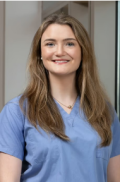
Courtney Lynch M.S., CCC-SLP, is a speech-language pathologist with over 12 years of clinical experience specializing in dysphagia management and head and neck cancer rehabilitation across both inpatient and outpatient settings. Her clinical expertise includes instrumental swallowing assessments such as modified barium swallow studies (MBSS) and fiberoptic endoscopic evaluation of swallowing (FEES), as well as comprehensive management of complex airway, voice, and swallowing disorders.
Throughout her career, Courtney has played a key role in developing and expanding specialized lymphedema/manual therapy services for patients with head and neck cancer. She established an evidence-based lymphedema clinic at a previous hospital system and later helped develop the Speech-Language Pathology Head and Neck Cancer Lymphedema Clinic at UCLA. Her clinical interests include head and neck lymphedema/manual therapy treatment, swallowing preservation therapy during cancer treatment, Passy-Muir Valve (PMV) assessment and treatment, tracheoesophageal prosthesis (TEP) management and changes, and multidisciplinary rehabilitation for medically complex patients. She is passionate about advancing clinician education and improving functional outcomes and quality of life for patients through specialized, patient-centered care.
Instructor Disclosure: Courtney Lynch, M.S., CCC-SLP, is an employee of UCLA Health. She has no other relevant financial or non-financial disclosures.