
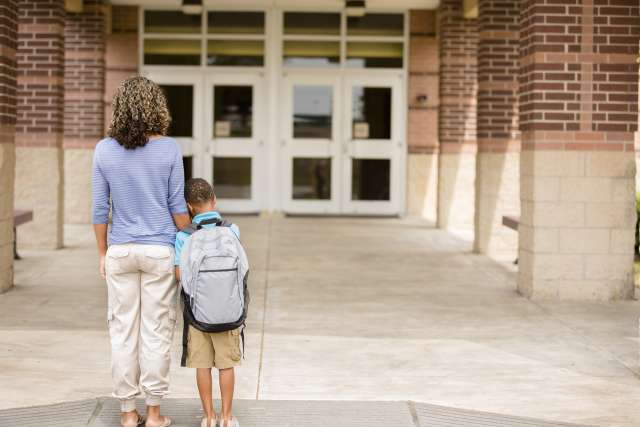
Returning to the classroom at the start of the school year can bring heightened anxiety for many students, but for some, these feelings can become particularly overwhelming.
“This can often lead to school refusal, which is when a child expresses reluctance to attend or stay at school due to anxiety, emotional distress or feelings of being overwhelmed,” says Stephanie Violante, PhD, a child and adolescent psychologist at UCLA Health.
According to Dr. Violante, an estimated 12% to 20% of children experience anxiety severe enough to interfere with daily functioning. As rates of child and adolescent anxiety rise, experts emphasize the importance of recognizing school avoidance early and understanding the reasons behind a child’s reluctance to attend school.
“Children with anxiety are more likely to see things as threatening in ways that people without anxiety would not,” says John Piacentini, PhD, director of the UCLA Center for Child Anxiety Resilience Education and Support (CARES), child and adolescent psychologist and professor at UCLA Health.
“At school, this can include being afraid of meeting new people, not being smart or athletic enough or feeling humiliated,” he says. “For some children, it can even involve fears related to immigration issues.”
Identify signs of school refusal
School-related anxiety and avoidance is most common during major school transitions, says Dr. Violante. For many students, these transitions may occur between ages 5 and 6 when they are starting elementary school, ages 11 to 12 when entering middle school, and around age 14 when starting high school.
Children who are predisposed to anxiety or other psychiatric disorders, as well as those with neurodevelopmental disorders, may also be more likely to experience school-related anxiety.
“School refusal, if left untreated or not intervened early on, is often associated with poorer academic achievement, a higher risk of school dropout and long-term social and occupational functioning challenges,” says Dr. Violante. “School is a place where children grow academically, but they also learn about social dynamics, consistency and skills such as showing up on time and being responsible. Missing these learning opportunities can be quite detrimental, so it is important to recognize school refusal signs early on.”
These signs can be physical, cognitive, behavioral or psychological reflections of underlying anxiety.
Physical signs may include headaches, stomachaches, increased heart rate, shortness of breath, fatigue and dizziness — particularly when these symptoms occur in a particular pattern, such as the night before or morning of school.
Behavioral symptoms among younger children may include pleading to stay home, non-compliance, hiding or stalling, while tweens and teenagers may exhibit irritability, anger and mood swings. Emotional symptoms can include crying, screaming or throwing tantrums, as well as difficulty regulating strong emotions.
On a cognitive level, Dr. Piacentini says, school-related anxiety can manifest as persistent worries that something bad will happen. Children may seek reassurance by asking questions such as, “Am I going to be OK?” “What time will you pick me up?” or “Is my teacher going to be nice?”
Dr. Violante adds that it is important to consider each child’s unique needs. In some cases, learning accommodations may help make the school environment less stressful and more manageable.
“The first step is understanding what is driving the school avoidance, as children often experience relief from intense distress or anxiety when they avoid school,” she says. “Rather than asking why they do not want to go to school, parents can ask what feels difficult about school or what could be changed to make it easier, helping them identify the underlying worry and method to best support them.
“Depending on the severity, there are many tips and strategies parents can implement to make that transition to school easier,” she says.
Dr. Violante’s main recommendation is for parents to avoid reinforcing school avoidance and instead help their children gradually face the situations that cause anxiety.
“Approaching a feared situation is much better than avoiding it,” she says.
“If you allow your children to stay at home, they immediately calm down because they got out of having to do something scary or dangerous,” Dr. Piacentini explains. “That reinforces and rewards their behavior when trying to get out of school, and it makes it more likely to happen again in the future. The problem is that when we give in to our children’s anxieties, they learn that all they need to do is express more opposition, and they will be allowed to stay home.”
For children who do not want to participate in a full school day, this approach may involve gradually increasing the amount of time they spend at school, with the goal of progressing toward full attendance.
“Parents can work with their child to ask, ‘What are we going to do today? What is our next step for tomorrow?’” says Dr. Violante. “They can also add rewards through verbal praise, treats or special family activities, reinforcing the behavior when they do approach their fears of attending school.”
If a child does stay at home, Dr. Violante recommends limiting activities that could make staying home more appealing, such as napping, watching TV or playing video games. Instead, children can complete schoolwork, chores or other activities that do not reinforce avoidance.
“Over time, they are not going to learn that school is actually OK unless they are actually attending school,” says Dr. Piacentini.
Acknowledge common worries
Dr. Piacentini encourages parents to share their own experiences with anxiety — such as feeling nervous about attending a new school or making friends — to help children understand that anxiety is a normal part of navigating unfamiliar situations.
“Normative anxiety means that most kids may feel nervous about going back to school but eventually they will gradually get over it and still feel pretty excited,” he says. “The most important thing is for schools, parents, children and clinicians to recognize that anxiety is quite common and a very natural emotion. Everyone experiences anxiety, and the critical piece is being able to distinguish between anxiety that is normative and anxiety that is significantly impacting a child’s life.
“The difference is that while a child with normative anxiety may think, ‘I’m a little bit nervous, but I guess I’ll find out — it’ll be OK,’ a child with anxiety may become so overwhelmed by those fears that they try to avoid school altogether,” he says.
With early support, children can learn that their concerns are valid while also recognizing that they are capable of working through them, he says.
UCLA CARES resources
UCLA CARES offers resources to help parents and educators recognize the signs of anxiety-driven school avoidance.
“As part of the CARES mission, we develop trainings for teachers, school administrators, and education policymakers to shape better systems and procedures at the classroom and national level,” says Kate Sheehan, LCSW, managing director of CARES. “Our goal is to interrupt anxiety’s interference on learning and achievement.”
For parents, Dr. Piacentini recommends visiting the UCLA CARES website for handouts and information sheets on student anxiety. The team also offers a free online training for K-12 families and schools centered on managing classroom anxiety, with customizable programs available for schools, districts, mental health clinicians, primary care providers and families.
For educators, Dr. Violante recently developed a training for LA County educators focused on addressing anxiety-related school avoidance. The training provides an overview of school refusal, outlines strategies for addressing it and walks participants through examples to help teachers, school staff and administrators apply these approaches.
Dr. Violante says collaboration is essential to helping children move beyond avoidance and gain confidence in the school environment.
“Addressing school refusal needs to be a collaboration among educators, mental health professionals and caregivers,” she says. “It really comes down to education — we need to ensure that schools and parents have a strong understanding of how to recognize school refusal and manage student anxiety.”