
Open
Actively Recruiting
Evaluation of Xaluritamig in Adults, Adolescents and Children With Relapsed or Refractory Ewing Sarcoma (EWS)
About
Brief Summary
The main objectives of this trial are to determine the recommended dose for expansion of xaluritamig (dose confirmation part only) and to determine the safety and tolerability of xaluritamig in adult, adolescent and pediatric participants with relapsed or refractory EWS.
Primary Purpose
Study Type
Phase
Eligibility
Gender
Healthy Volunteers
Minimum Age
Maximum Age
Inclusion Criteria:
- Part 1: evaluable disease as defined by RECIST v1.1, as determined by the site investigator. Part 2: measurable disease as defined by RECIST v1.1, as determined by the site investigator.
- Histologically or cytologically confirmed EWS with molecular evidence of an EWSR1 translocation with an E26 transformation-specific (ETS) family gene, eg, FLI1, ETS-related gene [ERG]) via next generation sequencing (based on local testing).
- Relapsed or refractory EWS following at least 1 line of chemotherapy (including treatment with an anthracycline and at least 1 alkylating agent).
- Performance status:
- Karnofsky ≥ 70% for participants ≥ 16 years of age.
- Lansky ≥ 70% for participants < 16 years of age.
- Adequate organ function, defined as follows:
a. Hematological function: i. Absolute neutrophil count ≥ 1.0 x 10⁹/L, provided that:
- the participant has not received short-acting growth factor support within 7 days before screening assessment, and
- the participant has not received long-acting growth factor support within 14 days before screening assessment. ii. Platelet count ≥ 75 x 109/L, provided that:
- the participant has not received a platelet transfusion within 7 days before screening assessment, and
- the participant has not received a platelet stimulating agent within 14 days before screening assessment. b. Renal function: i. Estimated glomerular filtration rate based on Modification of Diet in Renal Disease (MDRD) calculation ≥ 30 mL/min/1.73 m^2 for participants ≥ 18 years of age. ii. estimated glomerular filtration rate based on Schwartz (2009) calculation ≥ 30 mL/min/1.73 m^2 for participants < 18 years of age. c. Hepatic function: i. Aspartate aminotransferase (AST) and alanine aminotransferase (ALT) ≤ 3 x upper limit of normal (ULN) (or ≤ 5 x ULN for participants with liver metastases). ii. Total bilirubin (TBL) ≤ 1.5 x ULN (unless related to Gilbert's or Meulengracht disease). d. Pulmonary function: i. Baseline oxygen saturation > 92% in room air at rest and no oxygen supplementation. e. Cardiac function: i. Left ventricular ejection fraction ≥ 50%. If left ventricular ejection fraction cannot be measured, then left ventricular fractional shortening ≥ 28%.
- Participants of childbearing potential must use protocol-specified contraception to prevent pregnancy during treatment and for an additional 6 months after the last dose of xaluritamig.
Exclusion Criteria:
- Untreated central nervous system (CNS) metastases or leptomeningeal disease. Participants with a history of treated CNS metastases are eligible if there is radiographic evidence of improvement upon the completion of CNS-directed therapy and no evidence of interim progression between the completion of CNS-directed therapy and the screening radiographic study.
- History of other malignancy within the past 2 years, except for malignancy treated with curative intent with low risk for recurrence (approximately < 10%) and with no known active disease present for >1 year before enrollment.
- Active autoimmune disease that has required systemic treatment (except physiologic adrenal hormone replacement therapy) within the past 2 years or any other diseases requiring immunosuppressive therapy while on study. Participants with Type 1 diabetes, vitiligo, psoriasis, hypo- or hyper-thyroid disease not requiring immunosuppressive treatment are permitted.
- Participants who received anti-cancer therapy administered within the following minimum washout periods prior to first dose of xaluritamig:
- Cytotoxic chemotherapy: 21 days.
- Small molecules including tyrosine kinase inhibitors: 7 days or 5 half-lives, whichever is shorter.
- Monoclonal antibodies, immune checkpoint inhibitors, bispecific antibodies and other biologic agents: 28 days or 5 half-lives, whichever is shorter.
- Cellular therapies including Chimeric Antigen Receptor T-cell therapy (CAR-T), adoptive T-cell therapy: 56 days.
- Radiotherapy: 14 days for focal therapy, 28 days for large field therapy or involving > 30% of the bone marrow.
- Stem cell transplant: 12 weeks for autologous, 6 months for allogeneic, with no active graft-versus-host disease.
- Any other therapy or investigational agent: 28 days or 5 half-lives, whichever is longer.
- Requirement for chronic systemic corticosteroid therapy (prednisone dose > 10 mg/day [> 0.25 mg/kg/day if < 40 kg] or equivalent) or any other immunosuppressive therapies (including anti-tumour necrosis factor α (TNFα) therapies) unless stopped (with adequate tapering) within 28 days before first dose of xaluritamig.
- Currently pregnant (confirmed with positive pregnancy test) or breastfeeding or planning to become pregnant, donate eggs, or breastfeed while on trial until an additional 6 months after the last dose of trial intervention.
- Unwilling to abstain from donating sperm during treatment and for an additional 6 months after the last dose of xaluritamig.
Join this Trial
Contact our clinical trial navigators for opportunities that may be suitable for you
Share:
Study Stats
Protocol No.
25-2441
Category
Sarcoma
Principal Investigator
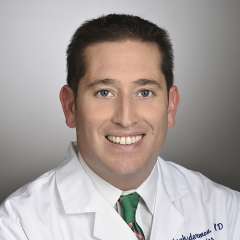
Contact
- Margie Weiman
- Margaret Bradley
- Gregory Ellis
Location
- UCLA Westwood