
Open
Actively Recruiting
Pivotal Study of Voro Urologic Scaffold
About
Brief Summary
The objective of this study is to compare safety and effectiveness of the Voro Urologic Scaffold in adult men undergoing robotic assisted radical prostatectomy as compared to control arm.
The study is a multi-center, single blind, randomized, controlled trial. Up to 266 participants will be treated at up to 30 centers in the United States. The study will consist of a Baseline visit, implantation during robotic assisted radical prostatectomy (RARP), catheter removal, 6 weeks, 6 months, 12 months, 18 months, and 24 months.
Primary Purpose
Study Type
Phase
Eligibility
Gender
Healthy Volunteers
Minimum Age
Maximum Age
Inclusion Criteria:
- Male >= 45 years of age of any race and ethnic group
- Diagnosed with prostate cancer and scheduled for radical prostatectomy
- Gleason Grade Group 4 or lower
- Prostate size less than 80 grams, as measured by Magnetic Resonance Imaging (MRI)
- Able and willing to provide written consent to participate in the study
- Able and willing to comply with study follow-up visits and procedures
- Willing to forego any other procedures for stress urinary incontinence (SUI) during the study
Exclusion Criteria:
- Malignant tumors with known bladder neck or urethral sphincter invasion or metastatic disease confirmed via baseline assessments (example [e.g.,] Multiparametric magnetic resonance imaging [mpMRI], bone scan)
- History of urinary incontinence, including stress or urge urinary incontinence
- Demonstration of SUI, such as positive 1 hour pad weight test or participant reported incontinence episodes
- Currently treated with medications to treat overactive bladder (OAB)
- Post void residual >200 milliliter (ml) or > 25 percentage (%) total volume(= voided volume + residual volume)
- Presence of urethral stricture or bladder neck contracture
- History of urethral stricture
- Current or chronic urinary tract infection
- Prior urologic outlet surgical or minimally invasive procedure (e.g., Transurethral resection of the prostate [TURP], Holmium laser enucleation of the prostate [HoLEP,] Rezum, etc.).
- Prior pelvic radiation or anticipated need for radiation after radical prostatectomy
- History of neurogenic lower urinary tract dysfunction
- History or current need for intermittent urinary catheterization
- Body mass index >40
14. History of cancer (excluding prostate cancer meeting the inclusion criteria) which is not considered in complete 5 year remission (excluding squamous and basal cell skin carcinoma)
- History of bladder malignancy
- Diagnosed or suspected primary neurologic conditions known to affect voiding function
- History of clinically significant congestive heart failure (i.e., New York Heart Association [NYHA] Class III and IV)
- Current uncontrolled diabetes (i.e., hemoglobin A1c [glycated hemoglobin or glycosylated hemoglobin] >=7.5%)
- Current overactive bladder defined as a score of > 8 on the Overactive Bladder Questionnaire (OAB-8) administered at the baseline visit
- History of immunosuppressive conditions or on medications which modulate the immune system
- Any significant medical history that would pose an unreasonable risk or make the participant unsuitable for the study per investigator discretion
- Participant with planned concomitant surgery
- Anterior fascial sparing radical prostatectomy
- Retzius sparing radical prostatectomy
- Participant currently participating in other investigational studies unless approved by the Sponsor in writing
- Participant is, in the investigator's judgement, part of a vulnerable population, including but not limited to:
- Prisoners
- Individuals pending incarceration
- Individuals experiencing any cognitive or psychiatric condition that interferes with or precludes direct and accurate communication with the study investigator regarding the study or affects the ability to complete the study quality of life questionnaires
- Planned adjuvant radiation therapy
Join this Trial
Contact our clinical trial navigators for opportunities that may be suitable for you
Share:
Study Stats
Protocol No.
25-2626
Category
Bladder Cancer
Principal Investigator
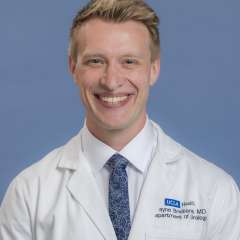
Contact
- Ankush Sachdeva
Location
- UCLA West Hills
- UCLA Westwood