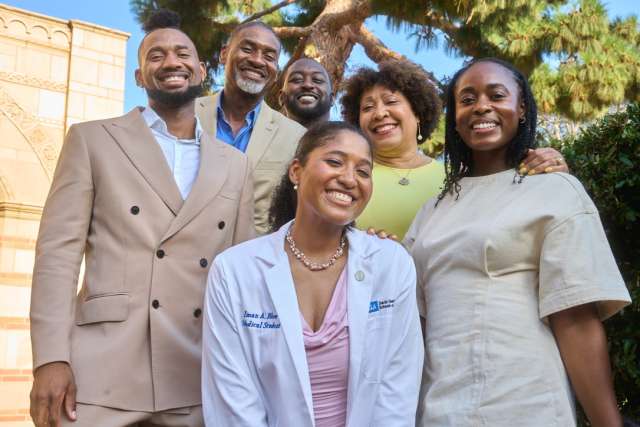
Iman Blow, 28, a first-year medical student at the David Geffen School of Medicine at UCLA, says her early life was defined by two goals: to become an Olympic fencer and to get into medical school so she could help others improve their health.
Being an athlete who performed at a high level — constantly honing her skills with mental and physical training, practice and competition — informed her interest in medicine.
“The reality of health and the human experience and medicine was cultivated in me through the student athlete experience. I discovered the biopsychosocial model of health for myself before I had the name for it,” she says, referring to the approach of addressing biological, psychological and social dimensions of illness and well-being.
In this way, she says, “Before I went to college, I was already kind of pre-med.”
Born and raised in Brooklyn, New York, Blow fenced competitively for 17 years. She chose to attend Columbia University because “they had the best fencing team in the collegiate circuit at that time,” she said.
Her college schedule was one of constant high pressure. While on the pre-med academic track, she helped her Columbia fencing team win Ivy League Championships in 2016, 2018 and 2019, and NCAA Championships in 2016 and 2019. She was also a three-time All-American, two-time Regional Champion, and Individual NCAA Champion in 2018.
In addition to working at a part-time job, practicing with a fencing club and the college fencing team, and meeting regularly with a sports psychologist, she competed in World Cups and later Olympic qualification events as part of Team USA. She recalls one time she had three exams right before a qualifier in Asia and had to negotiate with her professors to make sure she could do it all.
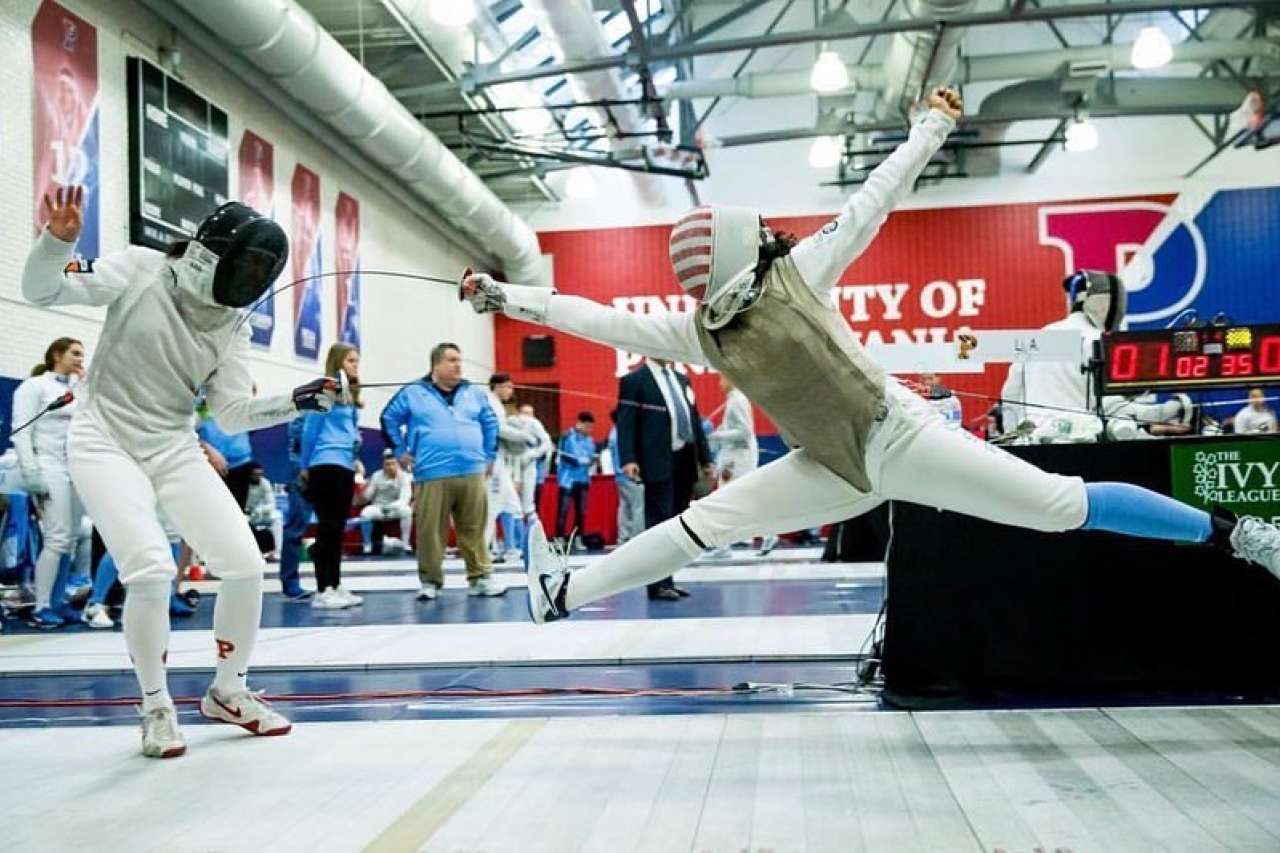
Blow graduated with a bachelor’s degree in biological sciences in 2019. She was named an alternate for U.S. fencing for the 2020 Olympic Games in Tokyo, but did not make the team.
Then an injury forced her to retire from fencing at age 21. As disappointing as this was, in the process of healing Blow discovered the field of physical medicine and rehabilitation (PM&R).
Change of direction
Without fencing, Blow had time and energy to focus on new projects. She started a company called Aspire to Inspire Initiative, to inspire athletes through community engagement, performance education and mental health awareness.
“My first project was a series of student athlete panels in 2020,” she says. Since then, she’s conducted workshops, panels and other events focused on mental health awareness and performance, including five national mental health events in collaboration with USA Fencing. As part of these events, Blow has interviewed medical students, clinicians and national and Olympic-level athletes.
This work was a logical transition from her athletic career to her future career in medicine and led her to work in a private practice in psychiatry and psychology. She volunteered in the pediatric oncology department at Memorial Sloane Kettering Cancer Center and coached with the Peter Westbrook Foundation, where she had trained and been supported as a young athlete.
Psychiatry and overall health
Now in her first year at the David Geffen School of Medicine, Blow’s approach to her goals has changed.
“Being a high-level athlete taught me how to make a decision, but I didn't have as much experience in choosing,” she says. “I was not as good at really asking myself, ‘What do I want to do?’”
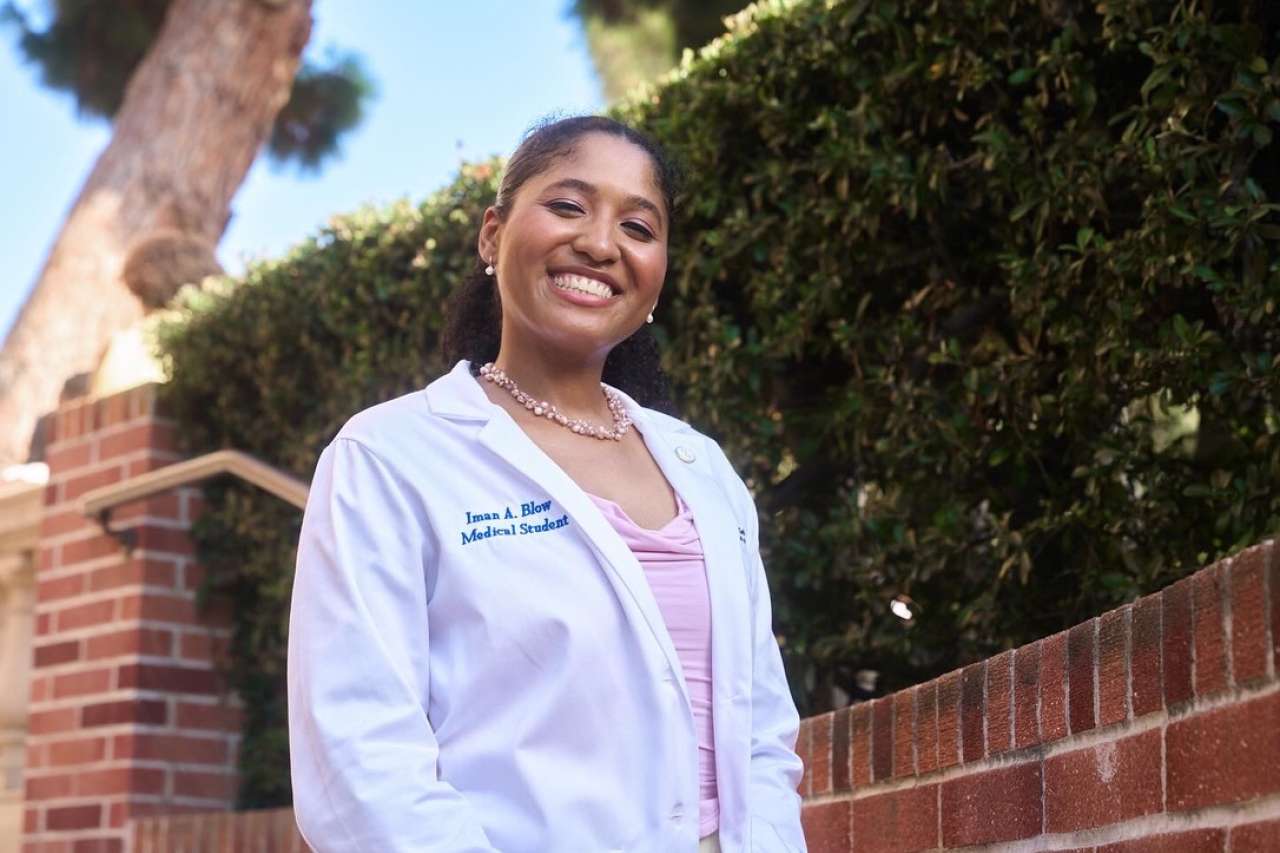
She’s learning to ask, and answer, that question. Her main interest now is psychiatry and how it relates to overall health. “I like the biopsychosocial model because it considers health as not just one issue,” she says.
Blow says she’s thrilled at the range of opportunities open to students at the David Geffen School of Medicine.
“It is all a game of how courageous I am to take those opportunities,” Blow says. “Every week you can go to a panel of residents talking about an area of interest. You can go to research presentations, physically or virtually, every week. We're learning different body systems, but in that we get exposure to different areas of medicine.”
Though the onslaught of information can be daunting, Blow says, the support from teachers is ever-present.
“Any teacher you talk to is willing to help you get the opportunity that you want or connect you with someone who could help you,” says Blow. “So really, the limit to me just feels like my capacity to do the activities beyond learning the medicine and the courage to continue to gain more information to make my choices.”