
Bodybuilder and actor Arnold Schwarzenegger had a hip replacement at age 55. Olympic gymnast Mary Lou Retton had hers at 37. And at age 51, basketball player Shaquille O'Neal underwent his surgery.
Like these professional athletes, a growing number of people under age 65 are getting a hip replacement to alleviate chronic pain and immobility and resume active lifestyles.
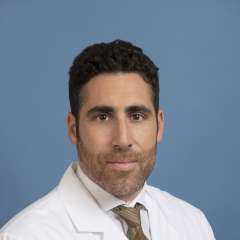
“For patients suffering from severe hip disease, a hip replacement is a very reliable way to get them back to a pretty high level of activity, and can really improve quality of life,” said Adam Sassoon, MD, MS, an orthopedic surgeon in the adult reconstruction division at UCLA Health.
Dr. Sassoon has treated patients from 12 to 101 years old, but his practice skews to the young and middle-aged. These are the groups projected to get hip replacements in much higher numbers.
Total hip arthroplasty (THA) is expected to grow 60% in the 45-64 age group, and about 45% in those younger than 45, in the years 2030 to 2040.
“They might avoid meeting with a surgeon because they think a hip replacement is only for older patients,” said Dr. Sassoon, also a professor of orthopedic surgery at the David Geffen School of Medicine at UCLA.
“It isn’t about their numerical age but rather the status of their joint and the quality of their lives.”
Stress and strain on the hip
The hip joint is protected by cartilage. If this flexible connective tissue wears out, it can lead to direct friction between bones, and severe pain, stiffness and swelling.
Age-related wear and tear, called osteoarthritis, is the main reason. But injury or autoimmune diseases can also result in inflammation.
In addition, a person’s genetic makeup can predispose the cartilage to earlier degeneration. Developmental conditions, like hip dysplasia, can also lead to early wear because the bones of the joint are not aligned properly.
Add in regular running, cycling, tennis or other sports and severe joint pain can affect younger people, whether dedicated amateur or competitive athlete.
“High levels of activity may not completely dictate how fast someone's going to wear their hip out,” Dr. Sassoon explained. “But a slightly misaligned hip in someone who’s extremely active could lead to the cartilage wearing out earlier.”
Another issue is obesity, which is seen in a high proportion of Dr. Sassoon’s caseload.
“Arthritis and obesity go hand in hand, especially for younger patients,” he said. “The amount of force on the cartilage and the loads it’s being put under, over time, is going to encourage degradation of the joint and the cartilage.”
A BMI over 40 can increase the risks for improper wound healing, blood clots and fractures after receiving a THA. Dr. Sassoon counsels his patients to lower their weight, oftentimes through the guidance of a bariatric center, before performing the elective procedure.
Revision
THA is usually an outpatient surgery, and up to 80% of Dr. Sassoon’s patients go home without needing a stay in the hospital.
Younger patients require long-term follow-up after the hip’s ball-and-socket joint is replaced with metal, ceramic or plastic hardware. In a good case, a hip replacement could last 30 years, Dr. Sassoon said.
“You're putting in implants that you hope will last them the rest of their lives,” he said. “But they're also putting the implants under higher demand. The activities of a 30-year-old with a hip replacement are, for the most part, higher than someone in their 60s or 70s.”
Dr. Sassoon uses a posterior approach in his THA procedures, in which he makes an incision over the side of the hip. This widely used technique is comparable to the anterior approach when it comes to recovery time.
A posterior approach may also lower the risk of needing an early revision procedure, which can be as simple as swapping out a plastic liner or as complex as replacing metal hardware into which the pelvic bone has grown.
While some surgeons may shy away from taking care of younger patients, Dr. Sassoon equates the higher risks with higher rewards.
“I derive a lot of satisfaction for physically improving my patients' quality of life,” he said.
“To see a patient get up and walk for the first time in a while without pain or be able to take their spouse dancing again – that is super rewarding.”