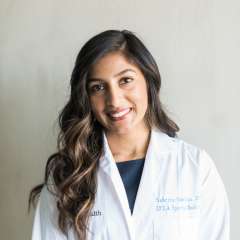

Two UCLA Health doctors, both faculty in the Department of Orthopaedic Surgery at the David Geffen School of Medicine at UCLA and team physicians for UCLA Athletics and professional sports teams, accompanied the 2026 USA Basketball Women’s National Team on their championship run at the 2026 FIBA Women’s World Cup in Berlin.
Sharon Hame, MD, is a professor of clinical orthopedic surgery and a board-certified orthopedic surgeon with a subspecialty certification in sports medicine. She is the team doctor for the Los Angeles Sparks, as well as USA Basketball and UCLA football, men’s tennis, and women’s basketball, volleyball and beach volleyball.
Sabrina Sawlani, DO, is an assistant clinical professor in the Department of Orthopaedic Surgery in the division of primary care sports medicine. She is a team physician for the Los Angeles Dodgers, Los Angeles Sparks, Coachella Valley Lakers (formerly South Bay Lakers) and UCLA women’s basketball.
The two doctors have collaborated many times in their care of top athletes, as they did during the FIBA World Cup, which culminated with a gold medal win for the USA Basketball team on Sunday, Sept. 13. The team includes WNBA stars such as Aliyah Boston, Paige Bueckers, Caitlin Clark and Angel Reese.

Dr. Hame and Dr. Sawlani explained what’s involved in caring for a team of elite athletes in a competitive tournament.
Q: What is your role with the women’s basketball team as they play in this 2026 FIBA Women’s World Cup?
Dr. Hame: Overall, our role is to make sure the athletes are healthy and if they do have issues, to take care of them. Our model at UCLA is really to provide both orthopedic care and primary care. We work in collaboration with each other and with the athletic trainers to accomplish this.
Q: How do you know the needs of each athlete?
Dr. Hame: We know a lot of the athletes from previous competitions and so we are well-versed in their health care needs. We also have the opportunity to review those needs before and during the training camp and competition.
Q: Do the athletes know their limitations?
Dr. Hame: I think the athletes are very knowledgeable about what their bodies need and how to deal with chronic injuries. With an acute injury we play a big role in evaluating the injury, explaining what it is and what the expectations are, and what may need to be done to treat it moving forward.
Dr. Sawlani: When they have a musculoskeletal or medical issue, they take our recommendations seriously and understand the importance of protecting their health. They want to remain healthy and continue to play safely.
Q: How important is nutrition and sleep in their training?
Dr. Hame: When they get to this level, they’re cognizant about nutrition and the importance of sleep. Some of them will bring their own pillows to help them sleep.
Dr. Sawlani: Nutrition and sleep are essential for recovery and performance. The athletes follow individualized fueling plans that include carbohydrates, different sources of protein, as well as fruits and vegetables every day. They know what they need to fuel their bodies to perform at their best on the court. Sleep is extremely important. You can consider healthy sleep an athletic performance enhancer.
Q: How do you prepare for a possible medical emergency?
Dr. Hame: Every venue we cover has an emergency action plan. When we get to a venue, we learn where EMS is located and where the AED (automated external defibrillator) is in the facility. We look at access to the court so we’re well-prepared to provide care if needed.
Q: What are the most common injuries for the basketball players?
Dr. Hame: One of the most common injuries we see is an ACL (anterior cruciate ligament) tear. Women are at a higher risk of tearing their ACL in basketball and it’s, unfortunately, a season-ending injury. We also see a lot of muscle strains and sprains. Ankle sprains are very common, so the athletes do some preventive work for this, such as ankle taping or bracing, and some prep work with our strength and performance coaches.
Dr. Sawlani: From the primary care side, acute issues we may evaluate include concussions and eye injuries such as corneal abrasions. You can imagine that when several players are going for a rebound or hustling for a ball, a finger can accidently scratch the cornea.
Q: How do you help the athletes not get injured?
Dr. Hame: Injury prevention is a constant goal. The team has access to physicians, athletic trainers, massage therapists and sport performance coaches and we’re all working to prevent injuries.
Dr. Sawlani: Before every practice and game, the sport performance coach leads the athletes through a comprehensive warm-up, individualized according to each athlete’s needs.
Q: Are you ever awestruck by these athletes?
Dr. Sawlani: Yes, they are among the best athletes in the world and exceptional role models for young women and athletes everywhere. Beyond their extraordinary accomplishments, they are some of the most humble and grounded people you could ever meet.
Dr. Hame: We are constantly awestruck with their performances and ability to push their bodies as far as they can. We’ve had athletes who’ve come back stronger from pregnancy and other challenges and it’s amazing to see what they can accomplish through basketball.