Dear Doctors: Our two kids are vaccinated for measles, but some of their friends are not. They're protected even if their friends get sick, right? Also, can you please discuss immune system amnesia? I read that it happens with measles, but I don't really understand what it does.
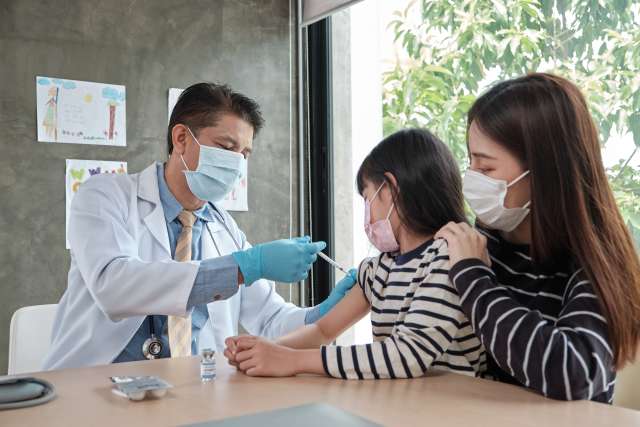
Dear Reader: If your children are fully vaccinated against measles, they are very well protected from becoming ill. This holds true even if they come into direct contact with someone who has an active infection. Two doses of the measles vaccine are about 97% effective at preventing the disease. In the rare event that a breakthrough infection does occur, being vaccinated typically results in milder illness.
That said, there are a few caveats. If someone has had just one injection of the two-dose series, protection is still high, but not as strong as when fully vaccinated. Vaccinated individuals with weakened immune response, whether due to a medical condition or medical treatment, may also have less robust protection.
Your question about immune amnesia highlights why measles is more than just a childhood illness. As the virus triggers the classic symptoms of high fever, runny nose and itchy rash, it also mounts a direct attack on the immune system. More specifically, it targets memory B cells and T cells. These are specialized immune cells that remember past infections and vaccinations. This attack erases important parts of the immune system's memory, leaving it less able to recognize and respond to pathogens it had already learned to fight.
Immune system amnesia leaves the person more vulnerable to ordinary infections that they had previously fought off or easily handled. These include ear and sinus infections, gastrointestinal infections and diarrheal diseases. Health records also show that respiratory illnesses hit harder and progress more often to pneumonia.
After a bout of measles, the immune system must rebuild its memory. It does so by creating new memory B and T cells, which learn from future infections and vaccinations. Depending on the individual, recovering this important memory bank can take several months or several years.
People who have had measles have robust lifetime immunity. Unlike influenza and COVID-19, which continually mutate, the measles virus is remarkably stable. This means the immune system continues to recognize it, even decades after the initial infection. The measles vaccine targets that same stable virus, which is why immunity from vaccination is also long-lasting.
In most cases, it's not too late to get the measles vaccine. The first dose is routinely given at 12 months of age, and there is no upper age limit to begin vaccination. Someone who has never had measles and has not been vaccinated should check with their healthcare provider about how to proceed. If they decide to move forward, they must get both doses to be fully vaccinated against the disease.
And a final note of caution -- infants younger than 12 months are too young for the vaccine. That makes them vulnerable to this highly transmissible virus.
(Send your questions to [email protected], or write: Ask the Doctors, c/o UCLA Health Sciences Media Relations, 10960 Wilshire Blvd., Suite 1955, Los Angeles, CA, 90024. Owing to the volume of mail, personal replies cannot be provided.)