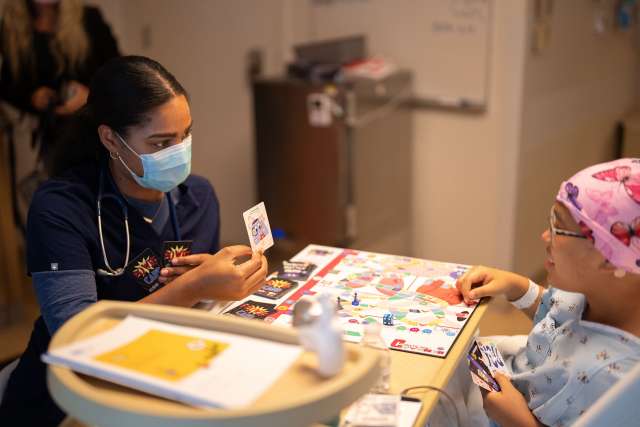
She should have been learning long division and chasing her friends on the playground. Instead, Tae-León Butler was stuck inside, playing Monopoly all day long.
The classic board game gave the fourth-grader a sense of control at a time of great uncertainty: eight months of treatment at UCLA Medical Center for acute myeloid leukemia, a blood and bone marrow cancer.
Her head was shaved, her meals and medications monitored, and “I didn’t have a say in anything.
“Playing the game was a way for me to make decisions, pick a strategy and decide how I'm moving forward,” recalled Dr. Butler, now in her third year of pediatric residency at UCLA Health, the same place she was treated 20 years ago.
That childhood experience inspired Dr. Butler to create Cancer Crusher, a board game that aims to empower and educate children undergoing treatment for cancer.
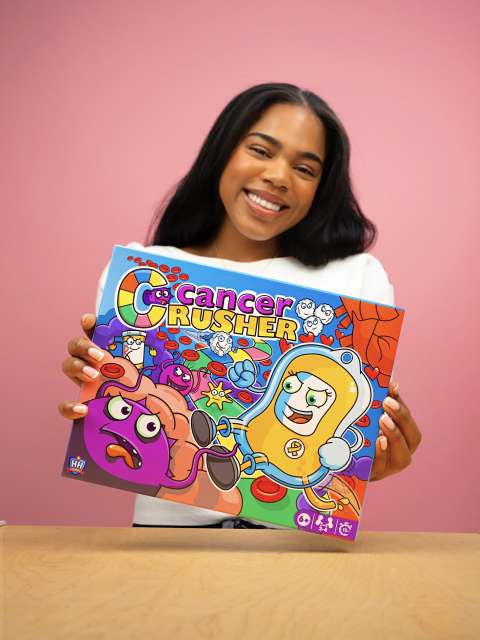
The game not only helps children to understand medical terms and the biology of what’s happening in their bodies, but it takes them on an adventure that mirrors their journey with cancer.
Play is a vital part of healing, Dr. Butler believes, so she designed the game that she wished she could have played in the hospital.
“As someone in the medical field now, we focus so much on the therapies and the medical innovation,” said Dr. Butler. “Every time I see this board, it’s a reminder that we're treating a child with cancer, not just cancer in a child.”
Game play
Something new pops out with every look at the vivid colors and jumble of illustrations in Cancer Crusher. Dr. Butler’s design is meant to immerse players in its world.
A path winds its way up the board, passing over the body’s major organs drawn in the background. Using skills from a graphic design class, Dr. Butler sprinkled original, animated characters representing aspects of cancer and treatments throughout the board.
Players roll the die and move their tokens up the pathway in a race to the finish line (similar to Chutes and Ladders). No one loses the game.
“Everybody gets to have their celebration moment,” Dr. Butler explained, “but the object of the game is not to become cancer-free or totally beat cancer. It's just to navigate the challenges as best as you can.”
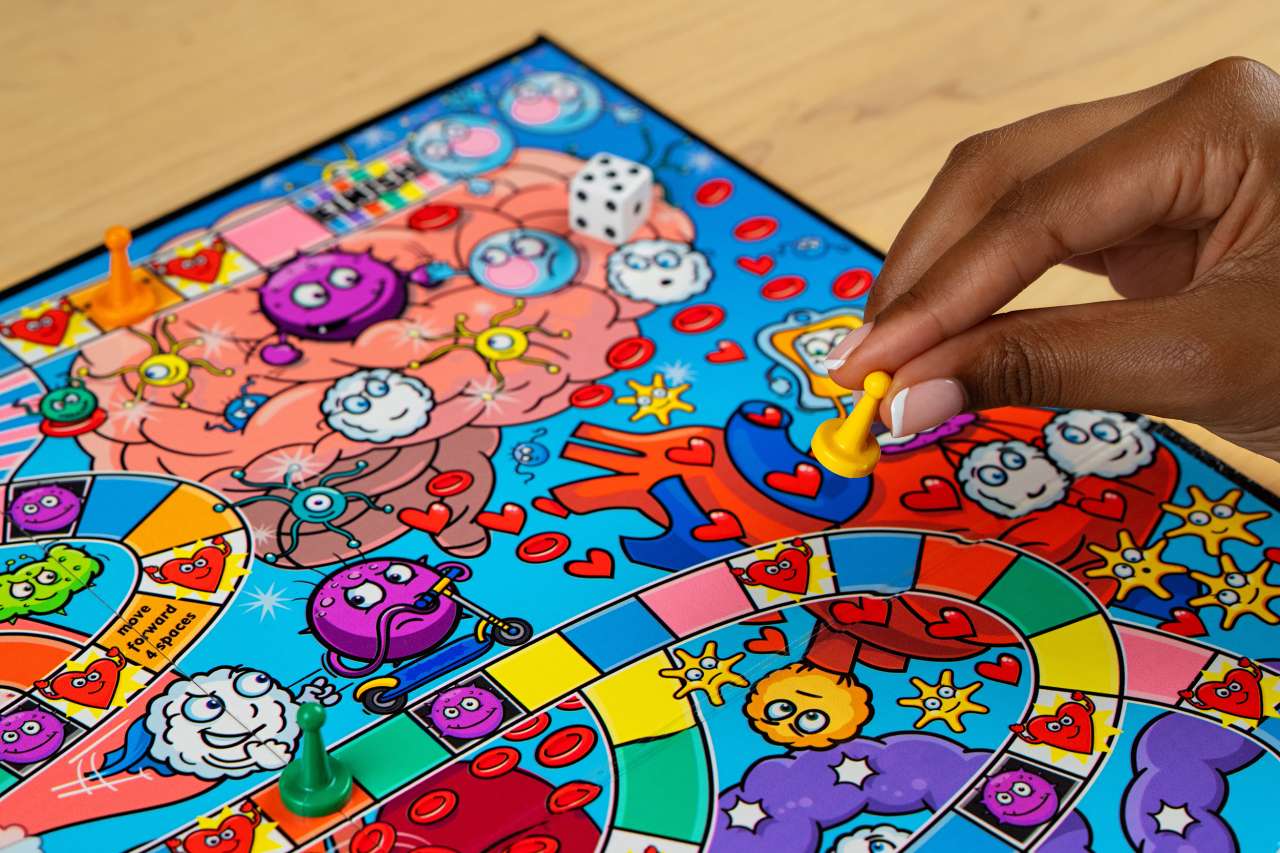
Every few spaces, players encounter a Cancer Battle or Power Up, and draw a card from those respective decks. The battles are similar to what patients may experience, such as cancer depleting healthy blood cells.
They can fight those battles with power cards representing treatments, including chemotherapy or a bone marrow transplant or blood transfusion. And the instruction booklet has a glossary with kid-friendly explanations of medical terms.
But without the right power card, players may have to move back a few spaces or lose a turn – setbacks that Dr. Butler remembers helped her when she was playing Monopoly or Sorry as a little girl.
“You are essentially forced to learn a little bit of resilience,” she said. “Resilience through gameplay mirrors real life and the cancer experience.”
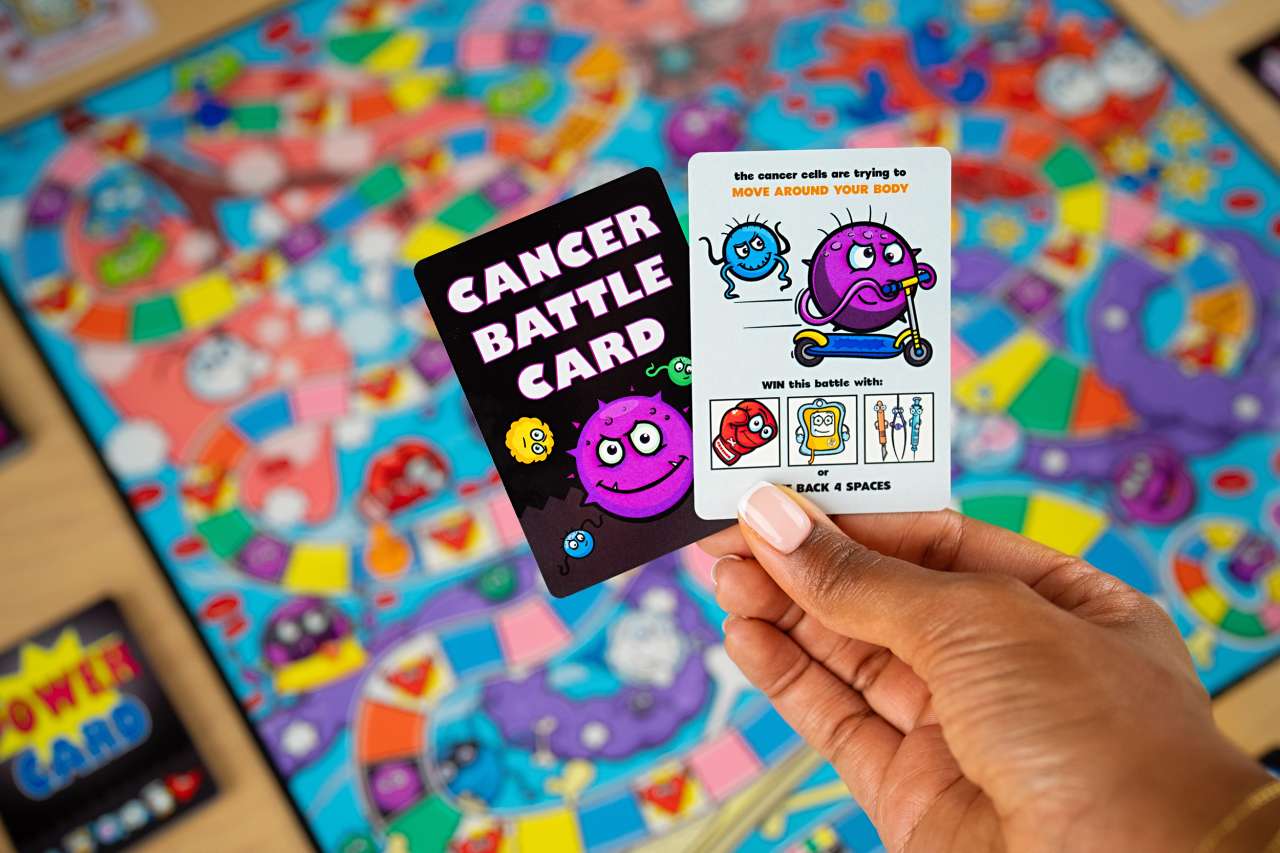
Dr. Butler was meticulous about the details of the game.
The purple monsters, which are cancer cells, had to be evil-looking enough without scaring children. And they are far more numerous at the bottom of the board, reducing as players advance through treatments.
Even the shades of the individual game spaces are intentional. Dr. Butler chose a mix of pastels to make sure they did not remind players of the colors of cancer medications.
As she worked through iterations of the game, Dr. Butler played with friends and family and a few patients. A conversation with a fellow cancer survivor resulted in a later addition to the cancer battles deck: treatment side effect cards.
They introduced nuance to the effect of treatments such as chemotherapy. Though they are killing cancer cells, they can also make the patient feel very sick. A player loses a turn when drawing a side effect card.
“This forces them to rest,” said Dr. Butler. “It's part of getting better and it's framed as such. It's teaching them that there are some parts of the journey that you just have to sit through.”
Dr. Butler will release Cancer Crusher on Sept. 8, exactly 20 years since her diagnosis.
And beyond cancer, she hopes to create additional board games that address other conditions children live with, such as asthma, diabetes and sickle cell disease.
In the meantime, Dr. Butler is conducting a pilot study to validate the game as a therapeutic tool. The study not only measures children’s learnings from the game and whether it improves their knowledge about their disease and treatment, but also uses special scales to assess its psychosocial impact, such as feelings of hope and empowerment.
Passion project
Cancer Crusher is a decade in the making.
Dr. Butler was home during winter break in her second year of college. She was relaxing in bed and looked over at the photos her mother had put up in her room.
A few were from her months in the hospital. That’s when it hit her that she wanted to find a meaningful way to help children with cancer. And she could combine her love of board games with a way to talk about cancer that felt approachable.
Within six months she sketched out the board, printed it out and began playing with family and friends. The game evolved over the next several years.
It’s the “passion project” that Dr. Butler came back to whenever she had a free moment during college and then earning her medical degree at the David Geffen School of Medicine at UCLA in 2024.
Dr. Butler is now looking for ways to get Cancer Crusher into the hands of children with cancer. She hopes to partner with hospitals and clinics to offer the game to their patients.
And though she designed the game with the child patient at its heart, she has seen how it helps parents and siblings too. So families may want to have the game at home.
“This is something that's needed,” said Dr. Butler. “The game doesn't have to be so serious, but that doesn't take away from the gravity of illness. It just allows kids a way to engage with cancer that makes sense to them.
“I have such a strong gut feeling that it can help so many people.”