
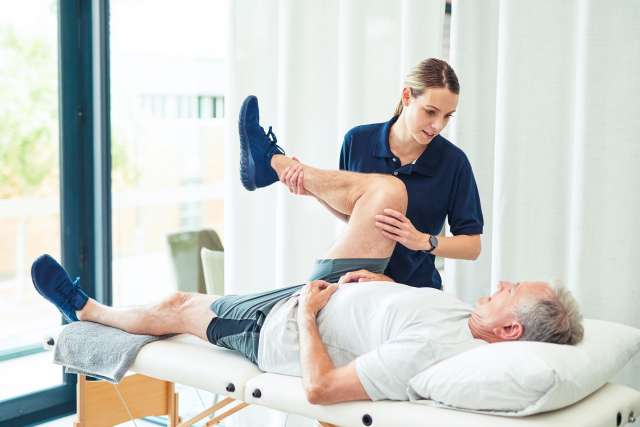
Dear Doctors: My 80-year-old mother had a successful hip replacement after a fall. What are the accepted best practices for caring for older adults after hip replacement? When is supervision recommended, and how does that change during recovery?
Dear Reader: Recovery from hip replacement surgery can be challenging at any age. Hip joints are involved in almost every movement we make. They act as a hinge, help push off the ground and keep our bodies steady. This makes it hard to protect the area during healing. The healing process itself is also complex. It involves bone repair, muscle healing and careful pain control.
Advanced age can make recovery even harder. This is even more true when a hip fracture is involved. Older adults often have lower bone density. This can make the new joint less stable and increase the risk of future fractures. They also often have less muscle mass and strength. This can impair balance and limit physical therapy. Soft tissue and bone heal slower in older age, which can make recovery longer. Other medical problems, such as high blood pressure, diabetes, breathing problems or frailty, can also delay healing. All of this makes rehab after hip replacement even more important for older adults.
Many older adults healing from a hip fracture need extra support along the way. A stay in an inpatient rehab facility is often an important step in that process. The goal is to provide a safe, structured environment where patients can rebuild strength, regain movement and recover independence. Rehab care teams include more than doctors and nurses. Physical therapists guide strength and movement work. Occupational therapists help patients return to daily tasks. Dietitians support healing through nutrition.
One of the rehab team's key jobs is gauging when a patient is ready to do certain tasks alone. These tasks range from something as simple as sitting up in bed without help to something as hard as standing or walking alone. Several factors determine when it is safe for a patient to go solo. Physical strength, balance, stamina and overall health all come into play. So does cognition, which shapes judgment and the ability to follow directions. As patients improve, the care team adjusts supervision to match their changing needs.
As strength and stamina increase, so does the person's confidence. This sets the stage for a more active role in everyday life. Before someone is discharged, the rehab team checks how they are doing. Are they ready to return home alone, or do they need more help? Some people will be able to manage on their own. Others may find they need assistive devices, such as grab bars, a raised toilet seat or a shower chair. Ongoing outpatient physical therapy is also common. The goal is not just a successful recovery from surgery; it is also a safe return home, with as much function and independence as possible.
(Send your questions to [email protected], or write: Ask the Doctors, c/o UCLA Health Sciences Media Relations, 10960 Wilshire Blvd., Suite 1955, Los Angeles, CA, 90024. Owing to the volume of mail, personal replies cannot be provided.)