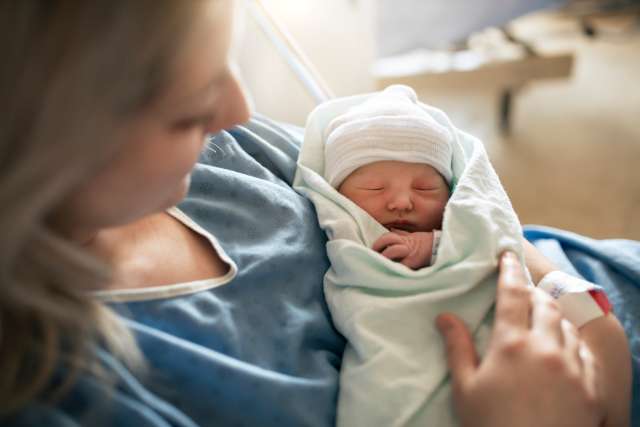
Dear Doctors: My daughter just had a baby, and we've been talking about SIDS. I remember hearing a lot about it when my own children were babies, but it doesn't seem to get as much attention anymore. Do doctors know yet what causes SIDS? What can parents do to reduce the risk?
Dear Reader: You are asking about a medical outcome known as sudden infant death syndrome. Commonly shortened to SIDS, it is the sudden and unexplained death of a baby younger than 1 year old. It was once known as crib or cot death because it often occurs while the infant is in their bed. In 1969, in order to create a universal medical diagnosis, the term sudden infant death syndrome was coined at a conference on the topic.
SIDS is a leading cause of death in infants between the ages of 1 month and 1 year. Most infants had appeared to be in good health, making the death both tragic and baffling. A diagnosis of SIDS is made only when a thorough investigation fails to identify a cause. This typically includes a review of the infant's medical history, a death scene investigation and an autopsy.
Although the cause of SIDS is still unknown, recent research offers promising clues. One study, which analyzed blood serum samples, found 35 metabolites associated with SIDS risk. These are substances produced by cells. Among them was a metabolite that affects the body's ability to dispose of ammonia in urine. It had previously been flagged for its possible connection to SIDS. This suggests that some babies have underlying -- and undetected -- vulnerabilities that can increase the risk of SIDS.
A different study focused on an abnormality in the brain circuitry that regulates breathing. It was seen more often in babies who had died of SIDS than in those with a known cause of death. This may help explain why changing infant sleep position played a large role in reducing SIDS deaths. Following a public information campaign in the early 1990s to place infants on their backs to sleep, SIDS rates dropped by 50%. The abnormality the study identified may leave some infants less able to respond to breathing challenges during sleep. This may help explain why sleep position poses a greater risk to some infants than to others.
The most effective precautions involve an infant's sleep environment. Always place an infant to sleep on their back and on a firm surface. This continues until they can roll over on their own in both directions. Keep the bed clear of pillows, loose blankets and soft toys. Dress them in just enough sleep clothing to stay comfortable throughout the night. Overheating has been suspected to play a role in SIDS, so keep the bedroom comfortably cool. It's also recommended that babies sleep in their parents' bedroom -- always in their own crib -- for at least the first six months. SIDS cannot always be prevented, but these precautions have been shown to reduce the risk.
(Send your questions to [email protected], or write: Ask the Doctors, c/o UCLA Health Sciences Media Relations, 10960 Wilshire Blvd., Suite 1955, Los Angeles, CA, 90024. Owing to the volume of mail, personal replies cannot be provided.)