The UCLA Head Start program serving families in the San Fernando Valley is using an innovative way to extend its reach into the community.
UCLA’s new “Head Start on Wheels” is a mobile classroom that brings Head Start learning and healthcare services and support to children mostly from low-income households experiencing poverty, homelessness and foster care.
The idea for the mobile program sprang from a question.
“It was a conversation amongst the management core team about reaching children who don’t have access to Head Start,” explains Magdalena Pereyra, family community engagement and disabilities manager for UCLA Head Start. “Our entire team, including our executive director, Delia Vicente, said, ‘Hey, what if instead of families coming to us, we come to them?’ And so that’s where the idea of a mobile classroom came from.”
Vicente and assistant director Erika Aviles designed the mobile unit with input from the staff. All Head Start children receive regular health screenings and the unit is fully equipped with spaces for reading and playing with puzzles. It also has a bathroom, sinks and a refrigerator.
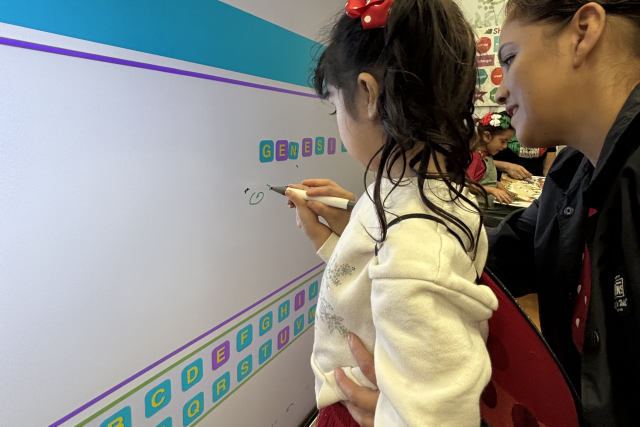
One day each week, the mobile unit arrives at an area park for three hours. The staff sets up tables and chairs outside to prepare for the routine of learning activities for 16 enrolled children and their families, developed by early childhood educator Norma Julio, who is the mobile unit’s coordinator. This routine helps prepare the young children for pre-school.
Health awareness
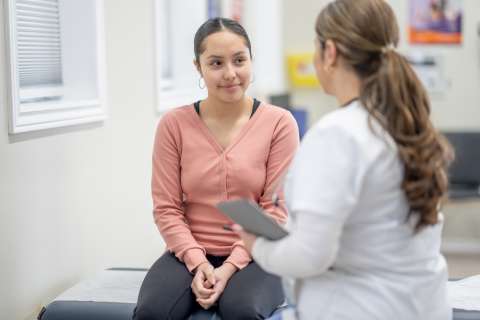
All of the Head Start children are regularly screened for vision and hearing to identify problems that could interfere with their development
When fathers and mothers who enroll children in Head Start are asked to identify their goals, many say health and well-being are priorities, says Pereyra.
In the last three years, she says, “we've seen that a lot of families want to achieve health goals, including nutrition.”
Learning opportunities
In a unique partnership, National Geographic developed a camera specifically for this mobile program, so that small children can take nature photographs — and displaying and talking about their photos is one of the organized activities during the park visit. Also included in the routine are singing, dancing, circle time and a lunch prepared by a chef, says Julio.
The park visit is the socialization piece of the Head Start program, which is key for children’s development and also enables parents to connect with other families and form a community network.
Another piece is home visits — two Head Start educators make weekly home visits to each of the enrolled families.
Most of the participating families are experiencing some form of homelessness. Some live in their cars, in shelters, in motels or are living with others temporarily, says Julia Perez, recruitment and enrollment coordinator for UCLA Head Start.
“We do follow the Head Start federal guidelines for eligibility, so we look at income, and as a part of that we assess if the families are experiencing homelessness, if the children are in foster care, or if they’re receiving any type of public assistance,” she explains. “They would get preference in enrolling.
“We do accept applications from families who may not be low income but it’s a small percentage,” she says. “We give priority to families that have the highest need.”
Head Start grew out of President Lyndon B. Johnson’s War on Poverty in 1964. It was created by a group of child development experts to address the needs of preschool children in disadvantaged communities.
Coming full circle
Pereyra and Julio first connected with Head Start as struggling new moms years ago and thrived because of the help they received at that critical point in their lives. For Pereyra, her home visitor — who happened to be Vicente, her future employer — provided the right help at the right time.
“It was just so life-changing,” recalls Pereyra. “She came in my life and I got the right resources. I was going through postpartum issues, and I really didn't understand certain fears.”
Inspired by the support, both Pereyra and Julio achieved higher education degrees and now are long-time Head Start staff members. Pereyra’s now 22-year-old son Sebastian, who attended Head Start, is a college graduate and works as a mechanical engineer. Julio’s three children also have graduated from college.
“They are both great examples of how community supports help families thrive,” says Vicente. “As we plan our services and take ideas from paper to reality, we strive to change lives, make the impossible possible, and reach families where they are, while building on their strengths to help them reach their goals.”
The UCLA Head Start mobile classroom will continue making park visits year-round, while also participating in local community events such as health fairs. As the currently enrolled children grow out of the program, new children will join and the support to families in the community will continue.