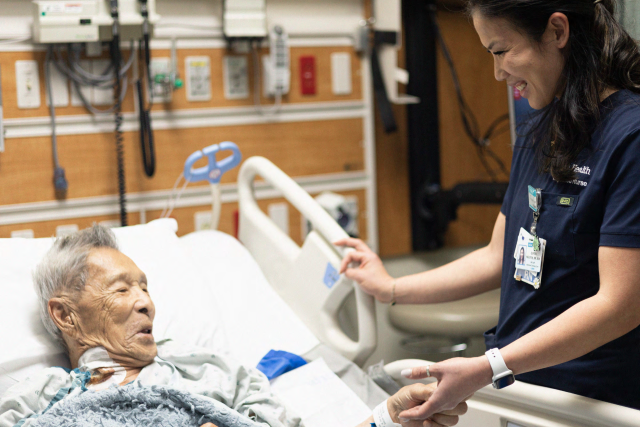
Four Chief Nursing Officers have their sights set on significant growth.
It’s an exhilarating time to be a nurse at UCLA Health. Nurses are at the peak of their professional practice, as evidenced by multiple Magnet® designations; we are working closely with our biodesign engineers to develop artificial intelligence tools that will augment patient care and improve workflows; and we’re on the verge of filling a critical need with a new, world-class psychiatric facility.
Our Chief Nursing Executive and Chief Nursing Officers are excited to share their plans and initiatives for the future, as well as the developments and improvements in nursing care that lie ahead.
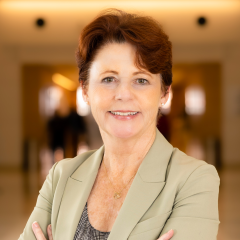
Karen A. Grimley, PhD, MBA, RN, NEA-BC, FACHE, FAAN
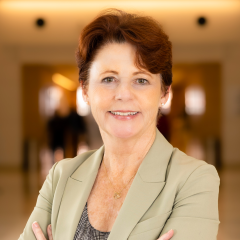
Chief Nursing Executive, UCLA Health; Chief Nursing Officer, Ronald Reagan UCLA Medical Center, Assistant Dean, UCLA School of Nursing
When you’ve just earned a fifth Magnet® designation (Ronald Reagan UCLA Medical Center), a second Magnet® designation (Stewart and Lynda Resnick Neuropsychiatric Hospital at UCLA) and are poised to earn a third Magnet® designation (UCLA Santa Monica Medical Center), what do you do for an encore? If you’re Karen Grimley, you double down on the work already accomplished and lean even harder into achieving nursing excellence. And for Dr. Grimley that begins — and ends — with keeping patients at the center of nursing practice.
“It’s about shoring up our relationship with the patient and working smarter, not harder,” she
says.
“I want to be sure that we’ve got that human connection nailed down, that we’re really
attentive to their needs — not only their physical needs but their emotional and spiritual needs
— and really helping nurses become the advocates that patients need.”
Dr. Grimley’s approach to achieving Magnet®-level excellence is threefold: understanding how caring influences outcomes and patient experience; understanding how delivering the highest-quality care often results in the lowest cost; and understanding the value of nursing in the health care environment.
“In this day and age, with the societal changes, it’s harder to be a nurse,” she says. “It’s a much more demanding environment where people are not always very nice, and there’s a tremendous burden that the health care system puts on nursing in the form of documentation or different tasks.”
Dr. Grimley hopes a new initiative aimed at reducing nurse burnout will make a difference. SupportingYou is nurse-led, peer-to-peer support that provides trained, timely intervention after challenging events such as medical errors, patient deaths, workplace violence or personal issues.
The pilot was rolled out in May at the Westwood hospitals, and Dr. Grimley anticipates it expanding to Santa Monica and West Valley medical centers and then beyond nursing to other medical professionals.
“The peer support program is almost like the last tile on the roof to really flesh out our A Safer U program, which we launched over the past couple of years,” Dr. Grimley says. “It really creates a comprehensive approach to ensuring safety and nurses’ and other members of the staff’s ability to help themselves, or know how to find others who can help them.”
Additional developments that lie ahead include:
- The introduction of generative and predictive artificial intelligence to augment care and improve workflows. “We are currently investigating two or three different opportunities for us to enhance nursing workflow and documentation through the use of ambient listening and other AI technologies,” Dr. Grimley says.
- Investing in technology such as IV pumps with interoperability that can tie into the electronic medical record to streamline documentation.
- Working with the UCLA Biodesign Fellowship Program to patent nurse-inspired innovations that will improve patient care and reduce nurse burden.
- Launching a program at Ronald Reagan UCLA Medical Center to partner with different members of the medical team— physicians, pharmacists, dieticians, physical therapist and others — to build relationships that will further strengthen collegiality and build relationships to enhance patient care.
- Getting structures, processes and policies in place at West Valley Medical Center that will support the level of clinical care practice and professional nursing practice that is representative of UCLA Health.
- Rolling out a new care model at Resnick Neuropsychiatric Hospital and adding 10 psychiatric technicians to reduce the incidence of disruptions and promote an environment of safety and belonging for psychiatric patients.
- Improving how nurses explain procedures, test results and treatment plans to their patients and their colleagues in clear, accessible language. “It will be critically important that nurses narrate their care in such a way that not only benefits the one-to-one relationship-building but also captures it accurately in the medical record,” Dr. Grimley says.
Dr. Grimley believes by continuing to bring the nursing staff and leadership teams together, significant changes in workflow around documentation and patient care can be made in the coming year. She emphasizes that maintaining nursing excellence will require the courage to challenge the status quo.
“And that is one of the true values of nursing,” she adds. “We actually see at a grassroots level what’s going on, we interact with our patients and their families on a regular basis, and we stay current in our practice. So, when things are discordant, it challenges us to ask why. And I think we want to capture more whys this year.”
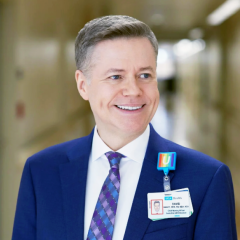
David Bailey, PhD, MBA, RN, CCRN, NEA-BC, FACHE, FAONL, FAAN
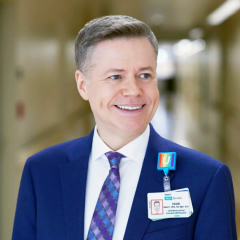
Chief Nursing Officer, UCLA Santa Monica Medical Center
Poised on the brink of earning UCLA Santa Monica Medical Center’s third Magnet® designation, David Bailey describes the feeling as “magnificent.” Fewer than 4% of U.S. hospitals have achieved a third designation, and, fittingly, celebrations are in the works.
After that, he adds, is when the real work begins: “Magnet® designation is hard to get, and it’s hard to keep, and it’s harder to keep each time you do it. The question is, how do we do all of that and continue to excel while keeping all of our nurses happy?”
For Dr. Bailey, it means a return to basics — focusing on rekindling connections between nurses and patients and nurses and their colleagues — something he believes health care teams have moved away from in recent years. A recently revived initiative called “Time with U” aims to do just that. The systemwide initiative, rolled out in partnership with the Office of Patient Experience, provides foldable stools in patient rooms to encourage eye-level patient interactions.
Dr. Bailey notes that patient satisfaction surveys show the practice is making an impact, moving UCLA Health into the top percentile in the U.S. when it’s done consistently. “Time With U” is also increasing engagement among nurses; for instance, nurses in Santa Monica’s 3 North created a friendly competition to “bedazzle” their stools.
Also topping Dr. Bailey’s agenda is embracing artificial intelligence to augment care and encouraging nurse innovation. As the executive sponsor of the systemwide Research and Innovation Council within the Professional Governance model, Dr. Bailey aims to create more opportunities to nurture ideas, such as the first-ever Nurse Innovation Sprint, in which 10 nurses presented solutions to common problems they encounter on their floors.
“If we think an idea can improve care, let’s help navigate these nurses to the right department that can help them,” he says.
Dr. Bailey is committed to keeping an open-door policy with his nurses, and he will continue to take a proactive approach to spotting and nurturing potential leaders, he says. He emphasizes the importance of finding a mentor, especially one with expertise in diverse areas. He strives to be a sounding board, helping his nurses map incremental steps toward leadership roles.
“I’m always looking for ways to create learning opportunities for people internally but
also connecting them with external resources to fund those programs that can help their
development to that next level.”
He plans to continue his quarterly “Dinner with David” program — small, informal gatherings in which nurses are encouraged to bounce ideas and suggestions for improvement around the table.
“I think they see follow-up and they see follow-through, and they say, ‘Thank you for doing this because we saw the change,’” Dr. Bailey says. “I’ve done many things across my time, and this is probably the single most popular.”
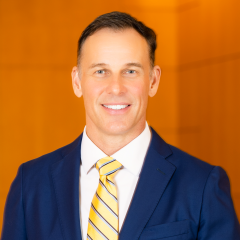
Patrick Loney, MBA, RN, NEA-BC
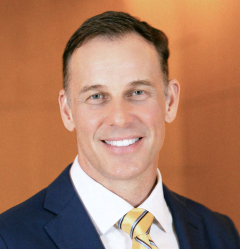
Chief Nursing Officer, Resnick Neuropsychiatric Hospital at UCLA
Patrick Loney and his staff have much to be excited about in the coming year: They recently launched an initiative to reduce the use of restraints to zero, and they’ll be presenting their findings at national conferences; their work around helping kids and adolescents on the autism spectrum receive better care will continue; and a new psychiatric nurse practitioner fellowship program will be introduced in the fall.
But what’s generating the most anticipation, Loney says, is the move to a new world-class psychiatric hospital, slated to open in late-summer 2026. Located in the mid-Wilshire neighborhood of Los Angeles, the five-story facility will house 119 beds, imaging services, labs, a pharmacy and the only crisis stabilization unit in the area.
Loney believes the new facility will position Resnick Neuropsychiatric Hospital at UCLA to be the best psychiatric hospital in the U.S.
“UCLA has invested in mental health in a way that is not often seen in our country these days. And we’re very grateful to have this wonderful new campus that will provide better access, better treatment spaces and a better work environment for staff.”
Importantly, he adds, through Nursing’s professional governance system, frontline nurses and nurse leaders continue to be involved in “every step of the design as well as the transition plan and training for when we move over there.”
Additional plans include:
- Nursing’s ongoing involvement in the implementation of ROAR (restraint opportunities for avoidance and reduction), a multidisciplinary effort to help RNPH reach zero restraints. Loney states that the hospital has already seen a significant drop in restraint use, and a key factor is the involvement of frontline nurses, who participated in focus groups with staff, patients, former patients and family members to guide restraint reduction. RNPH’s work was shared at the American Psychiatric Association in May and will be presented at the American Psychiatric Nursing Association Conference later this year.
- Continued efforts to improve RNPH’s autism care model on the child/adolescent unit. Through education, RNPH nurses are learning how to better communicate with patients on the spectrum. A new sensory modulation room on 4 West offers staff more tools to meet patients’ needs. Activities include relaxation and mindfulness, interactive gaming, sensory exploration, group activities and more.
- Implementation of trauma-informed care education for all nursing staff and a focus on increasing specialty certifications for nurses.
- Launch of a new psychiatric nurse practitioner fellowship, starting with two fellows. “We see this as an avenue for growth to meet patient needs and also the development needs of our staff,” Loney says. “The top request from our fellows was the ability to continue to grow and have options to be employed here as a psychiatric nurse practitioner. So, this is a big step, and the fellowship is a start.”
- Complete the hiring and onboarding of 10 psych techs for the float team to support the medical centers. Loney says this aligns with RNHP’s goal to work more closely with the medical centers to improve safety for patients with behavioral challenges.
Loney believes collaboration with the other hospitals at UCLA Health will result in better patient care. “The opportunity to contribute to and shape nursing care throughout the system is a frontier and something we look forward to doing more in the coming year,” he adds.
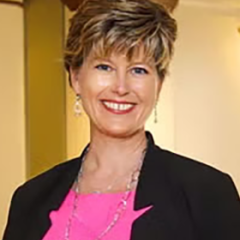
Coleen Wilson, DNP, RN, NEA-BC
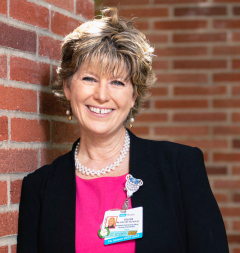
Chief Nursing Officer, UCLA West Valley Medical Center
As the “new kid on the block,” UCLA West Valley Medical Center is rife with opportunities for its nurses in the coming year — and Coleen Wilson is looking forward to “elevating the practice and integrating the UCLA way of nursing” into everything they do.
For Dr. Wilson, that starts with community engagement, with nurses acting as UCLA Health ambassadors in the community, sharing the world-class programs offered at WVUCLA — for instance, the UCLA Health Regional Burn Center, which provides specialized burn care for patients from all over Southern California, and the DNV Certified Primary-Plus (thrombectomy-capable) Stroke Center.
“One of my goals over this next year is that our stroke coordinator, along with our medical director and some of our clinical nurses from the ICU and the ED, go out into the community to start talking about what it looks like when somebody you love is having a stroke,” she says, “so they recognize that they’re saving their loved ones, and they’re coming to the hospital in a timely fashion.”
She also plans to create opportunities for her nurses to talk to high school students about nursing as a future career.
“The world is your oyster when you are a nurse,” she says. “You start at the bedside and
then if something else interests you, you’ve got education, you’ve got innovation, you’ve got
informatics. There are so many different aspects of nursing that will impact our community, no
matter what it is that you’re doing.”
Inside the hospital, opportunities will include:
- Expanding WVUCLA’s representation in professional governance by ensuring there is a nurse from every unit on a system-level council. In 2025, nurses were given an introduction to unit practice councils by the Center for Nursing Excellence, which shared the courses that will set the nurses up for success. “To help develop our teams over the next year, I’m looking at the different resources and offerings, ensuring that our team members are getting them and then getting them integrated into our UCLA way of nursing,” Dr. Wilson says.
- Integrating lean methodology into nursing workflows and initiative development, utilizing A3 or Focus PDCA formats to focus their work. The goal is for our teams to recognize the impact they have on their practice, their patients and their organization as well as celebrate this great work by presenting at national conferences. “It’s about learning, growing and driving change that impacts our patients, our teams and our environment and being proud to represent UCLA across the country,” she says.
- Integrating the clinical nurse III role on the clinical career ladder program.
- Creating a healthy work environment by demonstrating collaboration, communication and compassion with each other. Training in the basics of CICARE will be ongoing.
- Enhancing clinical practice and patient outcomes through the Wellness Bundle, led by clinicians from each inpatient unit.
Says Dr. Wilson:
“My biggest focus is going to be elevating the practice, enhancing our
community outreach and creating that healthy work environment all the way around. If we are
able to do all of that, you’re going to see exceptional outcomes. You’re going to see strong nurse
engagement and happiness in their workspace.”