UCLA Health researchers are seeking to develop a new wearable technology to catch one of the earliest but often overlooked signs of autism and other developmental conditions in infants.
Supported by a $3.1 million grant from the National Institute of Neurologic Disorders and Stroke, the five-year research project will test wearable sensors akin to tiny fitness trackers to monitor babies’ movements in their first year.
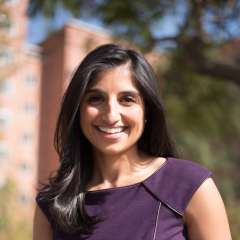
“Early detection and intervention are the two most important factors for optimal developmental outcomes in autistic individuals, yet early identification remains a major challenge in autism, despite the fact that we know changes in the brain happen as early as prenatally in those who go on to have autism,” said Dr. Rujuta Wilson, the study’s lead investigator and pediatric neurologist at UCLA Health. “Our team seeks to improve early identification by developing robust clinical predictors of autism that are scalable to the home and clinic.”
Motor concerns, such as difficulty in coordinating movements or grasping objects, are among the earliest signals that a child may have autism. While these motor difficulties are as common, if not more common, than verbal language difficulties in children with autism, studies have shown they are significantly underrecognized and undertreated, even by pediatric neurologists, for various reasons. Regular checkups often only test basic movement such as sitting up or crawling, which may overlook the more subtle movement issues that can point to autism.
Wilson said these movement difficulties can persist if untreated, creating cascading issues on the child’s ability to explore their surroundings, engage socially and develop language and communication skills as they age.
“Catching these movement issues as early as possible in a child’s life is crucial to helping clinicians know who to monitor more closely and to ensure referral to earlier intervention that can improve their functional abilities, independence and wellbeing throughout the rest of their lives,” Wilson said.
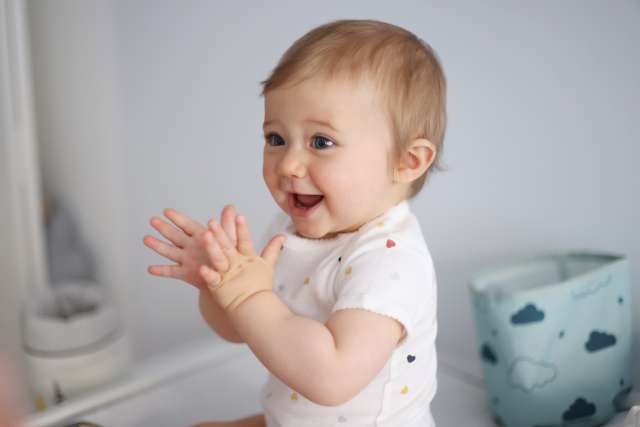
The new study will recruit about 120 infants who have an increased likelihood of having autism because they have an older sibling with autism spectrum disorder. Wearable sensors will be placed on the infants’ wrists and ankles in comfortable arm and leg warmers to capture data on how the baby moves in their homes from ages 3 months to 12 months, with assessments being made at three-month intervals. Researchers will also conduct behavioral assessments at each time point and assessments for autism spectrum disorder and other developmental conditions at ages 12 months and 24 months.
Additionally, most of the time points can occur in the infants’ homes to increase accessibility to the study for a large range of families. Families will be provided with verbal and written feedback on their infants’ development and can discuss any concerns that they may have with Dr. Wilson and the expert study team.
The new study will advance earlier UCLA research from Wilson’s lab that has already shown promising metrics of infant movement variability that are highly predictive of a later autism diagnosis.
“We are excited to really advance this work through the support of the National Institute of Neurologic Disorders and Stroke to validate these metrics, use machine learning methods to develop a battery of movement metrics that aid in early prediction of developmental concerns, and examine how we can utilize these measures in typical well child pediatric visits,” Wilson said. “Achieving these goals will allow us improve early surveillance and referral to appropriate interventions.”
The study has recently started in January and will end in December 2030.
The UCLA research team also includes Drs. David Elashoff, Alex Bui, Nicole McDonald, Catherine Lord and principle statistician Sitaram Vangala.
“This type of work can only be done with an expert multidisciplinary team, which we are lucky to have at UCLA," Wilson said.
The study is funded by the National Institute of Neurologic Disorders and Stroke (1R01NS142720-01A1).