
People living with neurological diseases such as Parkinson's disease, dementia and epilepsy face not only physical decline, but also profound questions about identity, purpose, and meaning. Yet physicians best positioned to address those concerns do not have the adequate training and tools to do so, a new paper states.
The paper, published in the journal Neurology Clinical Practice by researchers from UCLA Health, the University of Colorado, Harvard Medical School and Brown University, argues that spiritual assessment should become a routine part of neurological care, and offers practical guidance for how clinicians can make it happen.
The paper describes why neurologists are uniquely suited to engage patients on matters of spirituality, and why the field's reluctance to do so may be leaving an important dimension of patient care unaddressed.
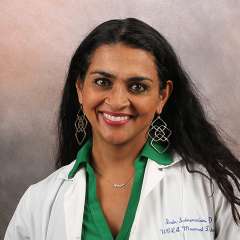
“Neurologic diseases attack the very things that define who we are: our memory, our movement, our ability to communicate,” said lead author Dr. Indu Subramanian, a movement disorders neurologist at the David Geffen School of Medicine at UCLA and the VA Greater Los Angeles Healthcare System. “In that context, a patient's spirituality isn't peripheral to their medical care. It's often central to how they cope, find meaning and make decisions about treatment.”
Research cited in the paper suggests that roughly 60% of American adults express interest in having their religious or spiritual concerns acknowledged in a medical setting. At the same time, studies consistently show that clinicians, including neurologists, are reluctant to raise the subject, citing discomfort, lack of training and time constraints.
Subramanian and the paper coauthors argue this gap can have real consequences to patients. Unaddressed spiritual distress has been associated with poorer quality of life in patients with serious illness, while spiritual support has been linked to improved coping, stronger patient-clinician relationships and better alignment around treatment goals. For patients with progressive neurological conditions, who often experience an erosion of identity and memory alongside physical decline, these factors can be especially significant.
The paper draws on a biopsychosocial-spiritual model of care, an expansion of the widely adopted biopsychosocial framework, which recognizes spirituality as a distinct and measurable dimension of health, alongside physical, psychological and social factors. This model has been endorsed by multiple major medical organizations and is increasingly recognized as relevant to neurological care.
Simple Tools for a Sensitive Conversation
A key contribution of the paper is its practical guidance for neurologists who want to integrate spiritual assessment into their practice without extensive additional training or time.
The authors recommend beginning with a brief, two-question screen that takes less than two minutes: asking whether spirituality or faith is important to a patient in thinking about their health, and whether they have or would like someone to speak with about those concerns. For clinicians who prefer a less direct approach, the paper suggests open-ended questions such as "What do I need to know about you as a person to give you the best care possible?" or “From where do you draw your strength?”
The authors also describe a Faith, Importance, Community and Address (FICA) framework, which is a structured tool for taking a more detailed spiritual history, as well as phrases clinicians should listen for that may signal unaddressed spiritual distress, such as “Why is this happening to me?” or “I've lost touch with my faith since this diagnosis.”
Subramanian emphasized that neurologists need not act as spiritual counselors but can function as “spiritual generalists” capable of identifying a patient's needs, validating their beliefs and making referrals to chaplains, psychotherapists or community faith leaders when appropriate.
A patient's perspective
The paper includes the voice of Kirk Hall, a patient living with Parkinson's disease and a paper co-author, who describes how faith has been central to navigating his diagnosis.
“It has not escaped me that this is a gift from God, even if I don't necessarily agree with His choice of gift wrap,” Hall writes. “Our belief that we will be equipped to deal with whatever happens is extremely comforting to us.”
His perspective, the authors note, illustrates what research has demonstrated: for many patients, spirituality is not a supplement to medical care, but a foundation for resilience.
Benefits for clinicians
The paper also addresses what the authors describe as an underappreciated dimension of spiritual care in medicine: its potential benefit to clinicians themselves. Studies cited in the paper indicate that spiritual care training is associated with reduced burnout, lower work-related stress and improved well-being among physicians. Practicing medicine in a way that attends to patients' full humanity, the authors argue, may help neurologists find greater meaning in their work.