Key takeaways
- Cell reprogramming, which turns one cell type into another, is often inefficient because the genes needed for the switch are tightly packed in the nucleus, making them difficult for CRISPR gene-activation tools to access.
- UCLA researchers squeezed cells for milliseconds to briefly loosen their DNA, mapped where the DNA opened and aimed CRISPR tools at those open sites to switch on genes that turn skin cells into neurons.
- In mouse cells, combining the squeeze with a priming step substantially raised the share of skin cells that became neurons, which could make it easier to produce cells for disease modeling, drug testing and personalized cell therapies.
Our cells hold about two meters of DNA, folded and compacted to fit inside a nucleus far narrower than a strand of human hair. That packing is essential for life, but it creates a problem for scientists. Some of the genes that control a cell’s identity are buried so deep in tightly packed DNA that gene-targeting tools such as CRISPR activation, or CRISPRa, struggle to reach them.
That problem lies at the heart of cell reprogramming, which converts one type of cell into another. Scientists can turn a patient’s skin cells into neurons, heart cells or other hard-to-obtain cell types to study how a disease develops, test drugs for safety and effectiveness, and potentially grow replacement tissue the patient’s immune system is less likely to reject. But the process remains stubbornly inefficient. In mouse cells, often only a few percent of cells convert, and in human cells, the success rate can fall to a fraction of a percent.
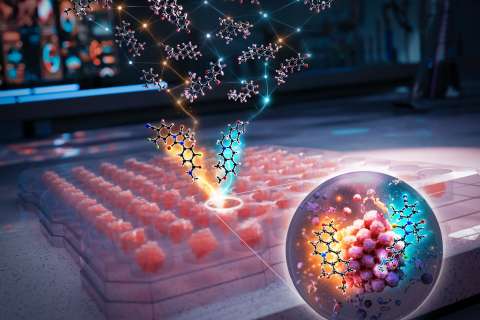
Now, UCLA researchers have found a physical way to improve those odds. In a study published in Matter, the team describes a strategy that squeezes the nucleus for just milliseconds, temporarily loosening tightly packed DNA so CRISPRa can reach and switch on genes it would otherwise struggle to access.
In mouse cells, the approach raised the share of skin cells that became neurons from about 3% with CRISPRa alone to about 40%. The biggest gains came when the squeeze was used as a priming step that made the cells more adaptable.
“Even when the reprogramming factors are inside the cell, the last mile of the problem is that they can’t get access to the sites they need to bind to activate genes,” said senior author Song Li, associate dean for graduate and professional education and a professor of bioengineering at the UCLA Samueli School of Engineering and a member of the UCLA Broad Stem Cell Research Center. “We are addressing that last-mile problem, which is accessibility.”
Why genes get locked away
Nearly every cell in the body carries the same genome, yet a neuron looks and behaves nothing like a skin cell. The difference is in the epigenome, the layer of chemical and structural controls that decides which genes are open for use and which are shut. Li compares it to a computer: The genome sequence is the hardware, and the epigenome is the operating system that determines what the machine actually does.
Genes a cell doesn’t need are packed away tightly in dense chromatin — the DNA and protein packaging inside the nucleus. A neuronal gene in a skin cell isn’t normally used, so it’s often stored this way.
That locked-away DNA is also hard for gene-targeting tools like CRISPRa to reach. Unlike conventional CRISPR gene editing, CRISPRa activates genes without cutting the DNA sequence. A short piece of RNA guides the tool to its target, but finding guides that work efficiently often requires trial and error.
Mapping where the squeeze opens DNA
In earlier work, the Li lab showed that briefly squeezing the nucleus of skin cells loosened DNA packaging and improved reprogramming. This study builds on that discovery by identifying precisely which regions of the genome become more accessible after squeezing and using that information to guide CRISPRa.
By combining genome-wide mapping with targeted gene activation, the researchers developed a strategy that not only makes DNA easier to access but also helps CRISPR tools find more effective sites for switching on genes that control cell identity.
“CRISPRa is very site-specific,” said Li, who is also a member of the UCLA Health Jonsson Comprehensive Cancer Center and the California NanoSystems Institute at UCLA. “With the map in hand, we can design guide RNAs to target those open sites.”
Turning skin cells into neurons more efficiently
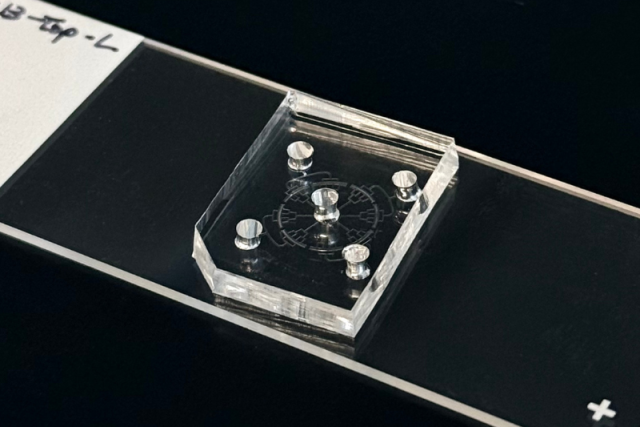
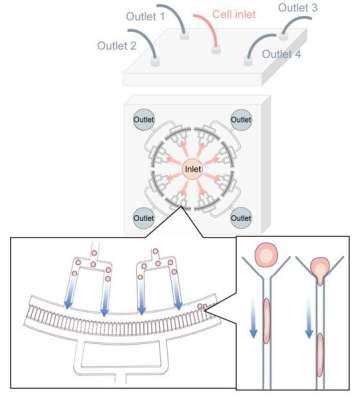
The team first delivered CRISPRa and its guide RNAs to adult mouse skin cells as short-lived RNA instead of using a virus, a common alternative that can raise safety concerns. Because the tool can’t cut DNA, the cells’ genes could be switched on without being permanently altered. A day later, the cells were passed through a microfluidic chip, a device with channels narrower than the cell nuclei, which briefly squeezed and deformed them.
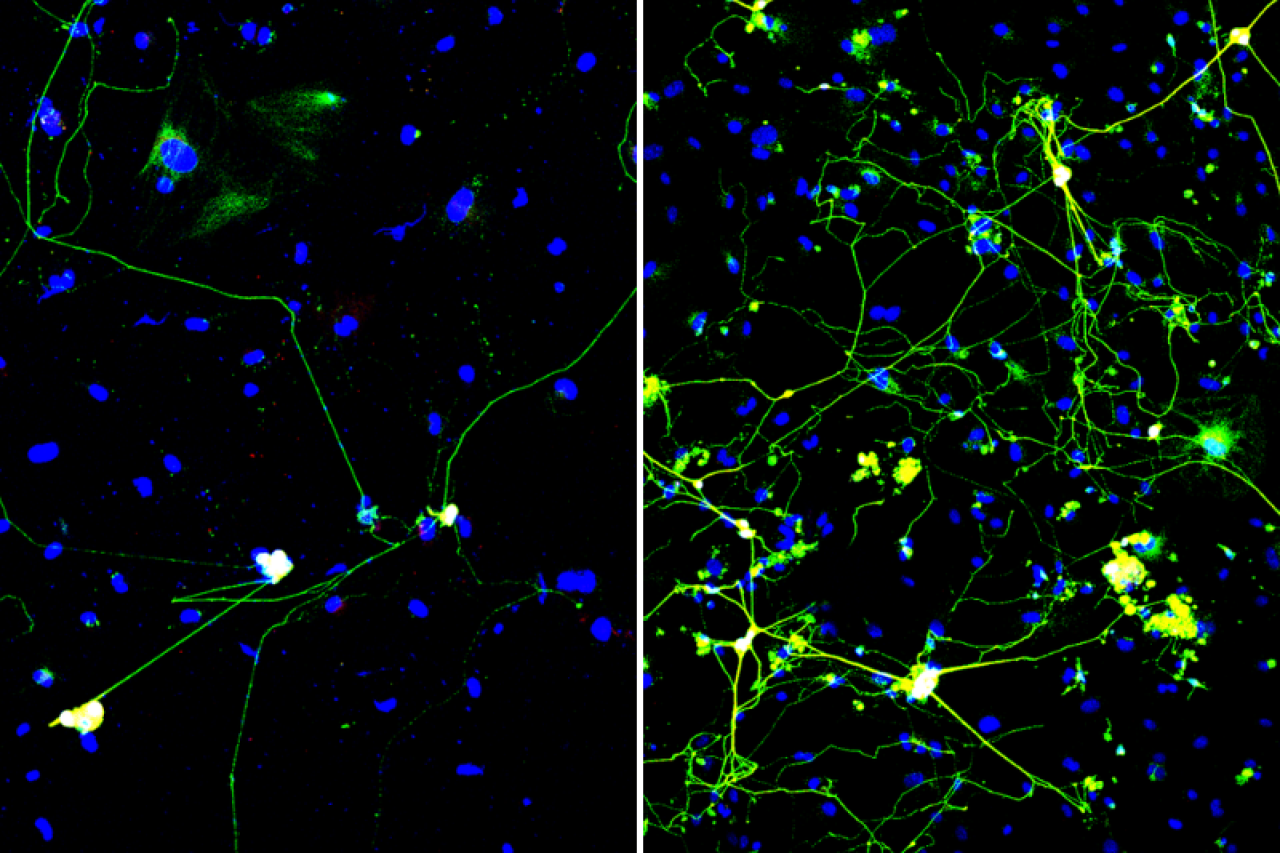
The approach, called mechanically enhanced CRISPR-mediated activation, or MECA, affected many genes, including Ascl1 and Brn2, which can steer a skin cell toward becoming a neuron. The squeeze made those genes far more active, and the effect was strongest when the guides were aimed at spots the squeeze had opened. About 10% of skin cells became neurons, compared with about 3% with CRISPRa alone.
On its own, the squeeze doesn’t change a cell’s identity. It opens a window in which CRISPRa can do that work more easily.
“It’s like giving the cell some exercise, so it has more plasticity,” Li said.
Next, the team used the same approach to switch on Oct4, a gene that helps stem cells stay flexible enough to become many cell types. With the squeeze, far more skin cells switched on Oct4, moving partway toward a stem cell-like state without fully becoming stem cells. More of them were dividing, and their DNA was less tightly packed.
That priming paid off. When the researchers then switched on Ascl1 and Brn2 in these cells, about 40% became neurons, far more than with the squeeze and CRISPRa alone.
Beyond this study
MECA isn’t tied to one way of getting CRISPRa into cells. Because it tackles a separate problem, how accessible the DNA is within cell nuclei, it could be paired with different delivery approaches. And this method gives researchers a rational way to choose targets: the spots in the genome that become reachable after the squeeze.
The team now plans to test whether the approach works for other kinds of human cell conversions and whether the resulting cells function well enough for uses like drug testing and transplantation.
The researchers also found that activating Oct4 with this approach made skin cells from aged mice appear biologically younger, based on DNA chemical patterns that scientists use to estimate age. Several other signs of cellular aging improved as well. The results suggest that mechanical gene regulation could be useful for studying how cells age and how that process might be reversed.
These findings add to growing evidence that physical forces shape how our genomes behave.
“Cells in our body feel physical forces every second, from the stretch of a muscle to the load on a bone, just as they respond to chemical signals,” Li said. “So this should be studied together with the chemical and biological factors.”
The technology described in this study is covered by a patent application filed by the UCLA Technology Development Group on behalf of the Regents of the University of California.
This work was done in collaboration with Chongyuan Luo of UCLA, Xiaojun Lance Lian of Pennsylvania State University, and Steve Horvath and Robert Brooke of the Clock Foundation. Additional authors include Yang Song, Yifan Wu, Jennifer Soto, Xiao Lin, Nasser Elhajjaoui, Kevin Abuhanna, Yi Zhang, Tahir Haideri, Erin Hu, Danielle Shin and Tyler Hoffman.
This research was supported by the National Institutes of Health.