For 30 years, the UCLA Human Gene and Cell Therapy Facility has been the quiet engine behind some of the university’s most ambitious clinical research, supporting more than 25 clinical trials and producing over 300 personalized therapy products for patients with cancer, HIV/AIDS, sickle cell disease and rare genetic disorders. But the science consistently exceeded what the space was designed for.
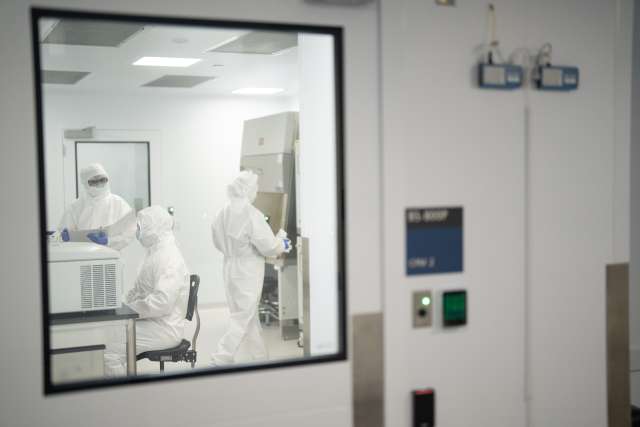
That changes with the opening of the Center for Advanced Biotherapies, or CAB, a new 14,000-square-foot manufacturing facility built from the ground up inside UCLA’s Center for Health Sciences.
The new construction was funded in part by a $7.3 million grant from the National Institutes of Health, a $2 million grant from the California Institute for Regenerative Medicine and support from Eric Esrailian, MD, MPH, founder of the California Institute for Immunology and Immunotherapy and co-chair of the university’s Second Century Council. The center is jointly supported by the David Geffen School of Medicine, the Eli and Edythe Broad Center of Regenerative Medicine and Stem Cell Research and the UCLA Health Jonsson Comprehensive Cancer Center.
The facility can produce up to 150 cell and gene therapy products per year — nearly double the capacity of its predecessor — and is equipped to support a wider range of therapies than UCLA has ever been able to produce on campus.
Unlike conventional drugs, which are manufactured in large batches and shipped to patients, cell and gene therapies are typically made individually, starting with a sample of each patient’s own cells, which are then modified, expanded or engineered in a tightly controlled environment before being returned to that patient.
The process is extraordinarily precise, and the stakes are high: a product destined for a patient, who may be facing anything from blindness to a terminal cancer diagnosis, has no margin for error. Facilities capable of producing these therapies under FDA oversight are rare; only a handful exist in California.
Having one embedded within an academic medical center allows UCLA researchers to move experimental treatments directly from the laboratory into early clinical trials — testing whether a new therapy is safe and shows signs of working — without the time and expense of contracting with outside manufacturers.
“UCLA has long been a national leader in cell and gene therapy research,” said Stephen Smale, PhD, vice dean for research at the David Geffen School of Medicine at UCLA. “The Center for Advanced Biotherapies gives our scientists and physician-scientists the infrastructure to bring transformative therapies from bench to bedside faster, and for more patients than ever before.”
The center features 10 cleanrooms, including seven manufacturing suites designed to run multiple therapies simultaneously, two bioengineering rooms built for large-scale equipment, including bioreactors and 3D printers, and a dedicated suite for viral vector manufacturing. A centralized quality control laboratory supports comprehensive product testing and release.
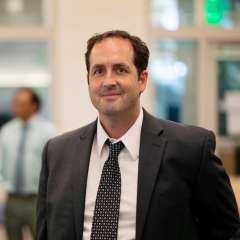
“I’m excited about the opportunity to support many more patients who need these cutting-edge therapies,” said Dawn Ward, MD, the center’s medical director, a pathologist whose background spans biotech manufacturing and laboratory medicine. “This facility will allow us to support scientists at UCLA and across the country and hopefully help move these products all the way to the patients who need them.”
Dr. Ward leads a staff of 19 — spanning manufacturing, quality assurance and quality control — and emphasizes an advantage that no commercial facility can easily replicate: proximity. The center sits steps away from UCLA Health’s hospitals, clinics, apheresis suites and operating rooms, enabling same-day delivery of manufactured products directly to patients receiving care.
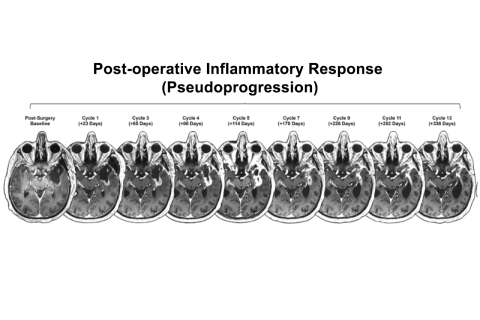
That proximity is not a trivial detail. Robert Prins, PhD, a tumor immunologist and professor of neurosurgery and pharmacology, has already been using the facility to manufacture a personalized dendritic cell vaccine for patients with relapsed glioblastoma, an aggressive brain tumor with a median survival of eight to nine months.
His trial involves collecting tumor tissue from surgery, harvesting immune cells from the patient’s blood and coaxing them into tumor-targeting dendritic cells, combining the two into a personalized vaccine and administering it alongside immunotherapy. This multi-step process depends on having surgery, cell processing and clinical care all on the same campus.
For Dr. Prins, though, what makes CAB distinctive isn’t just what it enables for his trial — it’s the range of work happening across the facility at any given time.
“The CAB doesn’t just do one thing,” Dr. Prins said. “It does dendritic cell vaccines for brain tumor patients, engineered T cells for melanoma and sarcoma patients, bispecific CAR-T cells for lymphoma patients and gene therapy for SCID patients. You’re treating all different types of diseases, in kids and adults, at this one center — that’s what distinguishes it.”
The center is also designed to expand its capabilities over time, with infrastructure in place to support more complex manufacturing as UCLA’s cell and gene therapy programs grow. Beyond manufacturing, CAB will serve as a training ground for the next generation of scientists and physician-scientists in California. Academic investigators, biotechnology companies and nonprofit institutions interested in partnering with the center can reach out at [email protected].
Watch an audio description version of the video above by clicking this link.