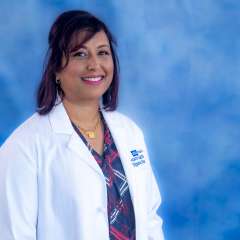
UCLA Health’s Dr. Arpana Church has received a $4 million federal grant to test whether a specific probiotic blend can influence the communication network linking the gut, its microbiome and the brain in adults with obesity, with the goal of understanding how these changes may influence food cravings and eating behaviors.
Funded by the National Institutes of Health’s National Center for Complementary & Integrative Health, the five-year project Probiotic Regulation of Gut-Microbiome–Brain Interactions in Obesity and Eating Behaviors (PROBE) will enroll 250 participants with obesity in a randomized, double-blind, placebo-controlled clinical study. Over 60 days, participants will receive either the probiotic blend or a placebo.
Rather than focusing only on whether probiotics improve clinical outcomes, PROBE will investigate how probiotics may work and which individuals are most likely to benefit. Researchers will examine changes in the gut microbiome and the molecules it produces, as well as markers of inflammation and the integrity of the intestinal and blood-brain barriers. Together, these measures are expected to provide a detailed picture of how probiotic-induced changes in the gut may be communicated throughout the body and ultimately to the brain.
Additionally, the study will conduct brain imaging using ultra high-field MRI to obtain a more detailed look at participants to obtain detailed measures of brain structure, function and connectivity. The researchers will examine brain circuits involved in reward, motivation, food cravings and eating behavior to determine whether changes in the gut microbiome following probiotic treatment are associated with changes in these neural systems.
Ultimately, the findings could help identify biomarkers that predict who is most likely to respond to microbiome-targeted interventions and inform more personalized approaches to obesity prevention and treatment. The project will include researchers from the UCLA Department of Medicine; the Division of Gastroenterology, Hepatology; and the Goodman-Luskin Microbiome Center as well as collaborators with the University of Southern California Stevens Neuroimaging and Informatics Institute.
The study is set to begin in August 2026 and end in July 2031.