Researchers at UCLA Health have received a grant expected to total $2.4 million over five years from the Eunice Kennedy Shriver National Institute of Child Health and Human Development (NICHD) of the National Institutes of Health, to develop digital biomarkers and remote testing tools for patients with neurogenic thoracic outlet syndrome (NTOS), a nerve compression disorder results in pain, numbness, tingling and weakness radiating from the neck through the hand.
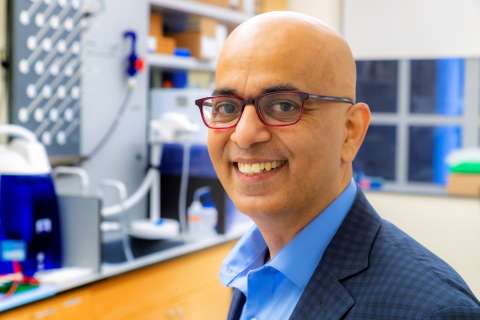
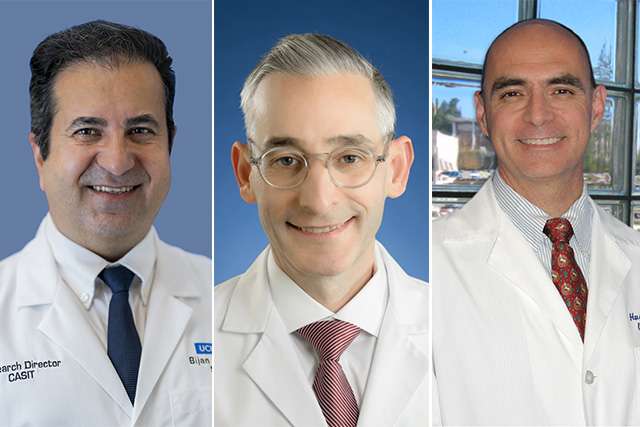
The grant is led by Bryan Burt, MD, professor and chief of the Division of Thoracic Surgery at the David Geffen School of Medicine at UCLA, Bijan Najafi, PhD, professor of surgery and research director of the UCLA Center for Advanced Surgical and Interventional Technology (CASIT), and Hugh Gelabert, MD, a leading world-expert in NTOS.
Neurogenic thoracic outlet syndrome occurs when the brachial plexus, a network of nerves that runs from the neck into the arm, becomes compressed by the first rib and surrounding muscles. It is the most common form of thoracic outlet syndrome and often limits patients' ability to work or perform everyday tasks. Diagnosis and monitoring response to therapy relies heavily on patient-reported symptoms and physical exam findings. There are currently no objective metrics that can measure the severity of NTOS, making it difficult to track improvement after treatment.
"For many patients, deciding whether to move forward with surgery comes down to judgment, because we don't have a reliable way to quantify how much this condition is really limiting them," said Dr. Burt. "Having objective data will change how we counsel patients and decide when surgery is the right option."
To address this gap, the UCLA team will first use a wearable sensor placed on the arm to collect measures of arm function during a short hand-over-head exercise, at baseline and before and after treatment with either physical therapy or surgery. In parallel, the investigators will test an AI-powered video platform that they have developed in which the patient performs the same task in front of a telemedicine video camera and without the need of a wearable sensor. Neurogenic TOS has traditionally been challenging to diagnose because its symptoms can be identical with a number of other conditions. Another objective of this project is therefore to use the same platform to create a diagnostic test with high accuracy for NTOS.
"These sensors can pick up subtle changes in shoulder and arm mechanics that are easy to miss during a short clinic exam," Dr. Najafi said. "And because our AI-powered platform lets patients perform the same test at home using only a video camera, patients and their care teams can objectively track recovery after physical therapy or surgery without needing to return to the clinic. Turning this kind of data into validated digital biomarkers brings both precision and accessibility to a condition that has long lacked objective measures."