
Open
Actively Recruiting
Substudy 06D: Combination Therapies in Second Line (2L) Gastroesophageal Adenocarcinoma (MK-3475-06D/Keymaker-U06)
About
Brief Summary
This is a phase 1/2 multicenter, open-label umbrella platform study that will evaluate the safety and efficacy of sacituzumab tirumotecan (MK-2870) plus paclitaxel versus ramucirumab plus paclitaxel, and HER3-DXD plus ramucirumab versus ramucirumab plus paclitaxel for the treatment of participants with advanced or metastatic gastric adenocarcinoma, gastroesophageal junction (GEJ) adenocarcinoma, or esophageal adenocarcinoma who have failed 1 prior line of therapy. This is an estimation study, and no formal hypothesis testing will be performed.
Primary Purpose
Study Type
Phase
Eligibility
Gender
Healthy Volunteers
Minimum Age
Maximum Age
Inclusion Criteria:
The main inclusion criteria include but are not limited to the following:
- Has histologically and/or cytologically confirmed diagnosis of previously treated, second line (2L) (received first line (1L) treatment) gastric adenocarcinoma, gastroesophageal junction adenocarcinoma, or esophageal adenocarcinoma
- Has metastatic disease or locally advanced, unresectable disease
- Has experienced documented objective radiographic or clinical disease progression during or after 1L therapy containing any platinum/fluoropyrimidine doublet with or without immunotherapy
- Tumor tissue must be confirmed as negative for HER2 expression (IHC 0/1+ or IHC2+/in situ hybridization negative) as classified by American Society of Clinical Oncology/College of American Pathologists (ASCO-CAP) guidelines
- Can provide a core/excisional biopsy of a tumor lesion not previously irradiated (collected from a biopsy performed after the most recent systemic anticancer therapy regimen)
- AEs due to previous anticancer therapies must be ≤Grade 1 or baseline (except alopecia and vitiligo). Endocrine-related AEs adequately treated with hormone replacement are acceptable
- Has Eastern Cooperative Oncology Group performance status of 0 or 1
- Has a life expectancy of at least 3 months
- Participants who are hepatitis B surface antigen (HBsAg) positive are eligible if they have received Hepatitis B Virus (HBV) antiviral therapy for at least 4 weeks, and have undetectable HBV viral load prior to allocation/randomization
- Participants with history of Hepatitis C Virus (HCV) infection are eligible if HCV viral load is undetectable at screening
- Human Immunodeficiency Virus (HIV)-infected participants must have well controlled HIV on antiretroviral therapy
Exclusion Criteria:
The main exclusion criteria include but are not limited to the following:
- Has squamous cell or undifferentiated gastroesophageal cancer
- Has experienced weight loss >20% over 3 months before the first dose of study intervention
- Has history of documented severe dry eye syndrome, severe Meibomian gland disease and/or blepharitis, or severe corneal disease that prevents/delays corneal healing
- Has Grade ≥2 peripheral neuropathy
- Has active inflammatory bowel disease requiring immunosuppressive medication or previous history of inflammatory bowel disease
- Has a serious or nonhealing wound or peptic ulcer or bone fracture within 28 days prior to allocation/randomization
- Has a bowel obstruction, history or presence of inflammatory enteropathy or extensive intestinal resection (hemicolectomy or extensive small intestine resection with chronic diarrhea)
- Has uncontrolled, significant cardiovascular disease or cerebrovascular disease
- Has experienced any arterial thrombotic event, including myocardial infarction, unstable angina, cerebrovascular accident, or transient ischemic attack, within 6 months prior to allocation/randomization
- Has uncontrolled arterial hypertension ≥150/≥90 mm mercury (Hg)
- Has accumulation of pleural, ascitic, or pericardial fluid requiring drainage or diuretic drugs within 2 weeks prior to enrollment
- Has undergone major surgery within 28 days prior to allocation/randomization, or central venous access device placement within 7 days prior to allocation/randomization or planned major surgery following initiation of study treatment
- Is receiving therapeutic anticoagulation with warfarin, low-molecular weight heparin or similar agents
- Is receiving chronic therapy with nonsteroidal anti-inflammatory agents or other antiplatelet agents
- Has a history of deep vein thrombosis, pulmonary embolism, or any other significant thromboembolism during the 3 months prior to allocation/randomization
- Has significant bleeding disorders, vasculitis, or had a significant bleeding episode from the gastrointestinal (GI) tract within 3 months prior to study entry
- Has history of GI perforation and/or fistulae within 6 months prior to allocation/randomization
- HIV-infected participants with a history of Kaposi's sarcoma and/or Multicentric Castleman's Disease
- Has received prior treatment with a trophoblast cell-surface antigen 2 (TROP2)- or HER3-targeted agent, topoisomerase 1 inhibitor-based ADC and/or a topoisomerase 1 inhibitor-based chemotherapy, or any previous systemic therapy targeting vascular endothelial growth factor (VEGF) or the vascular endothelial growth factor receptor (VEGFR) signaling pathways
- Has received prior systemic anticancer therapy within 4 weeks before the first dose of study intervention
- Has received prior radiotherapy within 2 weeks of start of study intervention, or has radiation-related toxicities, requiring corticosteroids
- Has received a live or live-attenuated vaccine within 30 days before the first dose of study intervention. Administration of killed vaccines is allowed
- Has received an investigational agent or has used an investigational device within 4 weeks prior to study intervention administration
- Has known additional malignancy that is progressing or has required active treatment within the past 3 years. Basal cell carcinoma of the skin, squamous cell carcinoma of the skin, or carcinoma in situ, excluding carcinoma in situ of the bladder, that have undergone potentially curative therapy are not excluded
- Has known active central nervous system metastases and/or carcinomatous meningitis
- Has an active infection requiring systemic therapy
- Has concurrent active Hepatitis B (defined as HBsAg positive and/or detectable HBV deoxyribonucleic acid) and Hepatitis C virus (defined as anti-HCV antibody positive and detectable HCV ribonucleic acid) infection
- History of (noninfectious) pneumonitis/interstitial lung disease that required steroids or has current pneumonitis/interstitial lung disease, or where suspected ILD or pneumonitis cannot be ruled out by imaging at screening
- Has severe hypersensitivity (Grade ≥3) to MK-2870, or HER3-DXd, any of their excipients, and/or to another biologic therapy
- Has not adequately recovered from major surgery or have ongoing surgical complications
Join this Trial
Contact our clinical trial navigators for opportunities that may be suitable for you
Share:
Study Stats
Protocol No.
24-5416
Category
Adolescent & Young Adults (AYA)
Esophageal Cancer
Principal Investigator
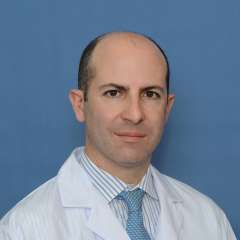
Location
- UCLA Santa Monica
- UCLA Westwood