
Microbiome Vaccine Program (MVP)
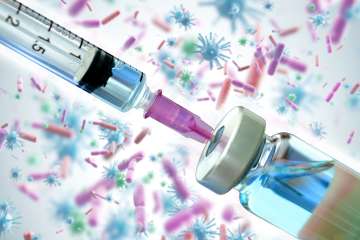
As accumulating evidence indicates that the gut microbiome exerts a central influence on host immune development and vaccine responsiveness, this represents a timely opportunity to invest in innovative microbiome-informed vaccine research. The Microbiome Vaccine Program (MVP), a collaborative initiative of the UCLA Goodman-Luskin Microbiome Center and the California Institute for Immunology and Immunotherapy, is designed to catalyze interdisciplinary investigations that integrate microbial ecology with immunological mechanisms.
Through targeted funding mechanisms, the program seeks to accelerate early-stage, high-impact research by supporting PhD and postdoctoral scientists in close partnership with program-affiliated mentors and shared core resources. Collectively, these awards are intended to stimulate novel vaccine strategies that leverage host–microbiome interactions to improve immune protection and translational outcomes.
Read more about MVP in UCLA Health News & Insights
Interdisciplinary research projects
For its initial phase, MVP has funded interdisciplinary research projects led by senior investigators while also investing in early-career scientists through the MVP Fellows Program.
| Projects | Participants |
|---|---|
| Antimicrobials | Elizabth Marcus, MD: Pediatrics Hung Ton-That, PhD: Oral & Systemic Health Sciences Z. Hong Zhou, PhD: Microbiology, Imunology & Genetics |
| Immunology | Jonathan Dr. Herman, MD, PhD: Infectious Disease Lili Yang, PhD: Microbiology, Immunology & Molecular Genetics; Bioengineering |
| Microbiome | Gregory P. Donaldson, PhD: Immunology & Molecular Genetics Elaine Y. Hsiao, PhD: Integrative Biology & Physiology Jonathan P. Jacobs, MD, PhD: Digestive Diseases Xia Yang, PhD: Integrative Biology; Molecular & Medical Pharmacology |
| Core resources | Lin Chang, MD: Digestive Diseases Jonathan P. Jacobs, MD, PhD: Digestive Diseases |
Meet our MVP fellows
Montgomery Blencowe, PhD: Integrative Biology & Physiology
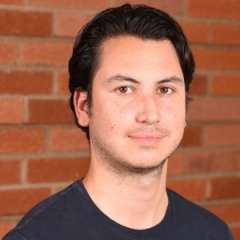
Assistant Project Scientist
Department of Integrative Biology & Physiology
College of Life Sciences
Dr. Blencowe specializes in systems biology, multi-omics integration, and translational data science. His research combines diverse omics datasets, network modeling, and real-world clinical data to uncover disease mechanisms and identify therapeutic opportunities in complex disorders. His work advances precision medicine and drug repositioning through large-scale biological and clinical data integration.
Yi-Wen Chen, MS, PhD: Dentistry
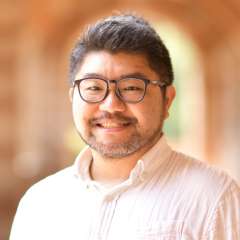
Adjunct Assistant Professor
Division of Oral and Systemic Health Sciences
UCLA School of Dentistry
Dr. Chen received a BS (2009) and MS (2011) degrees in marine biotechnology and resources from National Sun Yat-Sen University, Taiwan. He earned his PhD in basic medical sciences in 2018 from National Cheng Kung University (NCKU), Taiwan. His doctoral work focused on the pathogenesis mechanisms Aeromonas dhakensis- induced soft tissue necrotizing fasciitis, using Caenorhabditis elegans as a model organism. Following the completion of his doctorate, Dr. Chen conducted postdoctoral training in the Department of Biochemistry and Molecular Biology at NCKU. In 2019, he joined the UCLA School of Dentistry as a postdoctoral scholar, where his research examined the role of the oral commensal bacterium Fusobacterium nucleatum in cancer progression and preterm birth. Dr. Chen joined the UCLA School of Dentistry faculty in 2023 as an adjunct assistant professor in the Division of Oral and Systemic Health Sciences. His current research focuses on how regulation of hydrogen sulfide contributes to the virulence potential of F. nucleatum across multiple disease contexts. Dr. Yi-Wen Chen Profile
Poonam Kumari, PhD: Dentistry
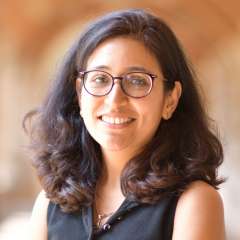
Postdoctoral Scholar
Biosystems and Function
School of Dentistry at UCLA
Dr. Kumari is a postdoctoral scholar at UCLA working on bacterial pathogenesis and antimicrobial discovery. She completed her PhD at the National Institute of Pharmaceutical Education and Research (NIPER), India, where she focused on Sortase A based strategies to reduce virulence in Gram-positive bacteria. At UCLA, her work has explored oxidative protein folding and its role in bacterial systems. She is currently focused on understanding the pathogenic mechanisms of Fusobacterium nucleatum, a bacterium increasingly linked to colorectal cancer and systemic infections, and on Helicobacter pylori, a major cause of gastric ulcers and cancer, with the goal of identifying novel inhibitors targeting bacterial virulence. Learn more about the Ton-That Lab
Yanruide (Charlie) Li, PhD: Microbiology, Immunology & Mol Genetics
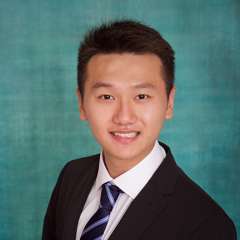
Postdoctoral Fellow
Department of Microbiology, Immunology & Molecular Genetics at UCLA (MIMG)
Dr. Li is a postdoctoral fellow at UCLA whose research focuses on advancing next-generation cell-based immunotherapies and mucosal immune regulation. His work centers on developing stem cell–engineered, allogeneic “off-the-shelf” CAR-NKT cell platforms to overcome key limitations of conventional CAR-T therapies, including scalability, cost, and limited efficacy in solid tumors. In parallel, he is expanding his research into mucosal immunology, particularly host–microbe interactions in Helicobacter pylori infection. His studies aim to elucidate how gastric mucosal immune responses contribute to persistent infection and disease progression. He is also exploring innovative mucosal vaccine and immune-engineering strategies to enhance protective immunity and bacterial clearance. By integrating stem cell engineering, immunology, and translational approaches, Dr. Li seeks to develop broadly applicable therapies for cancer and chronic infectious diseases. Visit Dr. Li’s Google Scholar webpage
Sean Xinyuan Shen, PhD Candidate: Bioengineering; MIMG
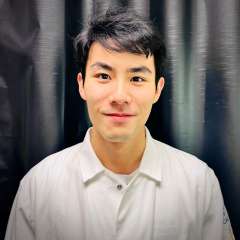
PhD Candidate
Department of Bioengineering
Department of Microbiology, Immunology and Molecular Genetics (MIMG)
Sean is a PhD candidate at UCLA working in Dr. Lili Yang's Lab. His research focuses on engineering innate-like T cell therapies and investigating microbiome-driven immune mechanisms for cancer immunotherapy. His current work centers on MAIT cell biology, microbial metabolite–mediated immunity, and the development of translational therapies. Learn more about the Lili Yang Lab
Lewis Yu, PhD: Integrative Biology and Physiology; NSIDP
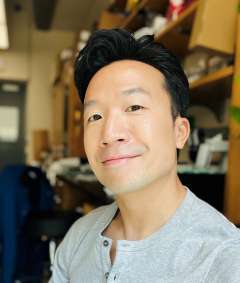
Postdoctoral fellow
Department of Integrative Biology and Physiology
Dr. Yu's research focuses on the role of serotonin-inducing microbiota and host immune responses in homeostasis and disease. His recent work describes the link between gut microbiota and colorectal cancer through serotonin, and how targeting the peripheral serotonergic system can modulate tumorigenesis. Learn more about the Hsiao Lab
Kang Zhou, PhD: Microbiology, Immunology & Molecular Genetics
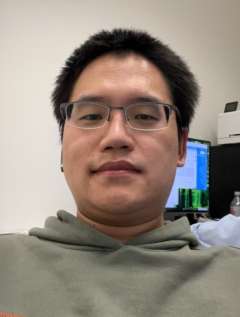
Assistant Project Scientist
California NanoSystems Institute (CNSI)
Department of Microbiology, Immunology & Molecular Genetics (MIMG)
Dr. Zhou’s research focuses on disease-associated proteins from viruses, bacteria, parasites, and humans. As a structural biologist, he uses X-ray and Cryo-EM to determine the high-resolution 3D atomic structures of these proteins, revealing the mechanisms behind and supporting the therapeutic development. He obtained his undergraduate degree and PhD degree from University of Science and Technology of China (USTC). Now he works as an assistant project scientist at UCLA in the Dr. Z. Hong Zhou's Lab.