
How AI is finding Alzheimer’s in the patients most often missed
A missed or delayed Alzheimer’s diagnosis carries real consequences: missed windows for early intervention, missed chances to plan for the future, and families left without answers for years longer than they should be. For underrepresented populations, such diagnostic oversights are far too common.
African Americans, for example, are nearly twice as likely as non-Hispanic whites to have Alzheimer’s, but only 1.34 times as likely to receive a diagnosis. Similar disparities exist for members of the Hispanic, Latino and East Asian communities. This means that too many people in underrepresented communities are living with undiagnosed Alzheimer’s.
A tool that could accurately predict whether a person has Alzheimer’s disease regardless of race or ethnicity would be life-changing, especially for groups that are at higher risk for Alzheimer’s but less likely to be diagnosed.
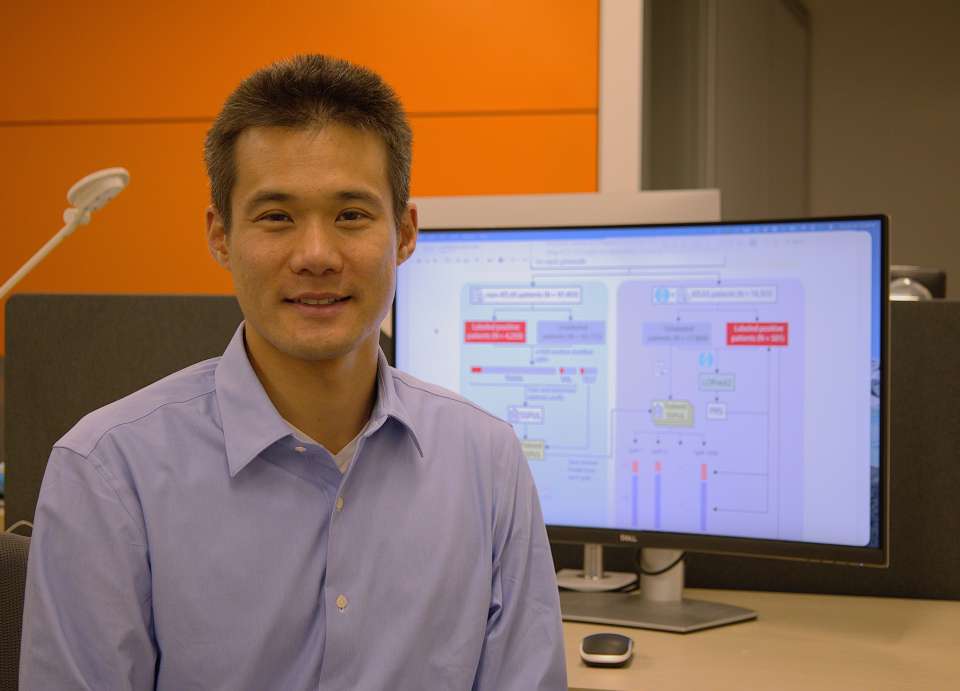
“The gap between who actually has Alzheimer’s disease and who gets diagnosed is substantial, and it’s more significant in underrepresented communities,” said Timothy Chang, MD, PhD, assistant professor of neurology at the David Geffen School of Medicine at UCLA.
To help close this gap in diagnosis, Dr. Chang has developed an AI model that very accurately identifies people who may have Alzheimer’s disease, including those in communities that have historically been missed by conventional diagnostic tools.
“Our model successfully predicted undiagnosed Alzheimer’s disease with high sensitivity and precision,” said Dr. Chang. “We’re ecstatic about its early performance and see a lot of potential for what’s next.”
An AI model built to find what other tools miss
Previous machine-learning models developed to help detect Alzheimer’s weren’t helping to close the diagnostic gap, and in some cases, widened it. These models were highly inaccurate, missing up to 61% of positive cases, and that percentage varied greatly depending on the racial or ethnic group studied.
The model developed at the Chang Lab, meanwhile, successfully identified likely Alzheimer’s cases at a rate of 77–81% — roughly double the rate of conventional models. And critically, it performed just as reliably across every racial and ethnic group studied, where other tools missed cases in non-white patients far more frequently. The result demonstrates the tool’s effectiveness and its consistency: not just catching more cases overall, but catching them equitably.
The Chang Lab model was trained on a pool of more than 97,000 health records from patients at UCLA Health, including records from patients with confirmed diagnoses of Alzheimer’s disease and others for which no diagnosis was ever made. This is another one of the model’s advantages, leveraging the widespread availability of electronic health record data across racial and ethnic groups, including underserved communities, making the tool’s use not only more equitable but more accessible as well.
Researchers are now working to build the additional evidence needed before the model can become a routine part of clinical care. In the future, it could help doctors in every community flag at-risk patients who would benefit from further evaluation.
“By ensuring equitable predictions across groups, our tool can help solve the crisis of underdiagnosis in underrepresented populations,” Dr. Chang said. “The early results are extremely encouraging, making us optimistic about its future trajectory.”
An earlier diagnosis means more options
There’s urgency behind that optimism: More than 7 million Americans are living with Alzheimer’s, a number that’s projected to nearly double by 2050. It’s the sixth leading cause of death in the U.S., according to official death certificates, and one study in the journal Neurology suggests that if the disease were more consistently reported as the underlying cause of death, it would instead rank third.
As numbers climb and new treatments and lifestyle interventions emerge, the window in which intervention is possible has become one of the most crucial times in Alzheimer’s care. Early diagnosis doesn’t just provide answers, it creates options — and for patients in communities that have long been underserved, those options have arrived too late or not at all.
Dr. Chang’s work could give those patients access to life-changing treatments at the moment they matter most.
Support our research into Alzheimer’s
Donations to the UCLA Department of Neurology allow our clinicians and scientists to continue researching advances that could transform how Alzheimer’s is diagnosed and treated across populations. Discover different ways you can give.