
Sleep Surgery
UCLA Sleep Surgery is recognized by colleagues around the world as a leader in obstructive sleep apnea surgery and snoring surgery.
Sleep surgery includes a range of procedures to open the space for breathing during sleep and improve snoring. Different snoring and sleep apnea surgery procedures work differently, so the key is finding the best procedure for each patient. UCLA Sleep Surgery offers innovative procedures that are not available at many centers and we are known for our expertise in this field.
At UCLA Sleep Surgery, we offer leading-edge and comprehensive approaches to diagnosis and treatment, beginning with conservative approaches (weight loss, sleeping on your sides instead of on your back, and avoiding alcohol before bedtime). Beyond these, most patients with obstructive sleep apnea should start with positive airway pressure therapy (such as CPAP).
Surgery can be an option for patients with snoring that does not respond to conservative approaches. Obstructive sleep apnea surgery is for patients who cannot tolerate positive airway pressure.
We work together with experts in sleep medicine, sleep neurology, weight management, sleep dentistry and oral and maxillofacial surgery to help you get relief and the deep, refreshing sleep you need to get the most out of life.
Snoring and Sleep Apnea Surgery: Patient Evaluation Is the Key
At UCLA Sleep Surgery, we take a personalized medicine approach to plan treatment based on the cause of snoring or sleep apnea in each patient. UCLA Sleep Surgery is one of the few centers in the country with sleep surgery research funded by the National Institutes of Health. We use our own research and the work of others to select treatments that can deliver results.
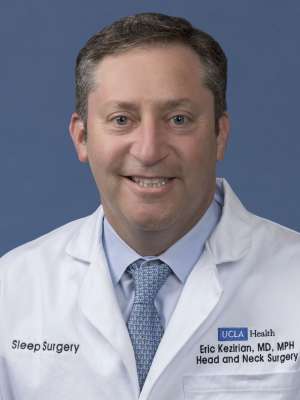
Good outcomes in sleep apnea surgery and snoring surgery depend on determining the cause(s) in each patient. Because this is so important, we often combine diagnostic evaluations in the office and operating room. Drug-induced sleep endoscopy (DISE) is the best sleep apnea surgery evaluation available today, and we are recognized around the world for our expertise in this area. With European colleagues, Dr. Eric J. Kezirian named the procedure and developed the VOTE Classification scoring system that is the international standard for describing DISE findings. With other busy centers from around the world, we have led research studies identifying certain DISE findings that can improve the selection of procedures and outcomes. In some cases, this research has shown that some patients may not be good candidates for surgery, and we think it is important to avoid surgery that will not be helpful.
Snoring and Sleep Apnea Surgery Options
We perform a wide range of procedures to treat obstructive sleep apnea and snoring. We make decisions with patients about their best choices from among these options, using scientific evidence but also our experience and, most importantly, patient preferences.
Sleep surgery procedures treat different areas of the breathing pathway. Nasal surgery includes procedures such as septoplasty, turbinate reduction, nasal valve surgery and sinus surgery.
The palate is the roof of the mouth, and it can play an important role in snoring and obstructive sleep apnea. Palate surgery has moved beyond an old-fashioned approach of simply removing tissue to include advanced techniques that generally reposition tissues of the soft palate. These procedures include the Australian-modified palatopharyngoplasty, expansion sphincter pharyngoplasty, and lateral pharyngoplasty for the soft palate and palatal advancement for treating the hard palate. For snoring and occasionally for sleep apnea, palate radiofrequency is an office-based procedure that offers an easier recovery.
The tongue, epiglottis and sides of the throat (lateral walls) also often contribute to obstructive sleep apnea and snoring in the lower area of the throat. Several procedures have been developed to address these. Genioglossus advancement, tongue radiofrequency, lingual tonsillectomy, and midline glossectomy treat the tongue by preventing it from falling backward during sleep or reducing its size. Epiglottis surgery can prevent it from falling backward or remove part of it. Hyoid suspension can treat this area of the throat in a different way.
Hypoglossal nerve stimulation has changed sleep apnea surgery and sleep apnea treatment more generally. At UCLA Sleep Surgery, we offer both technologies currently available for patients in the United States. Dr. Kezirian was the first surgeon in the Western United States to offer Inspire Upper Airway Stimulation® after Food and Drug Administration (FDA) approval in 2014, and we continue to be a major referral center. We also are a leading center using the Nyxoah Genio® system of obstructive sleep apnea surgery. With all surgical treatments, we work closely with our sleep medicine colleagues, both at UCLA Health and centers around the world.
Jaw surgery involves surgery to move the upper and lower jaw forward. This opens the space for breathing along the entire throat and can be the right sleep apnea surgery for some patients. This surgery is typically performed by oral and maxillofacial surgeons, and we refer patients for this procedure when the evaluation suggests it may be the right option.
What should you expect with snoring surgery or sleep apnea surgery?
This depends on the type of surgery that you are having. Snoring surgery is often performed in the office and has an easier recovery. Sleep apnea surgery typically takes 1-3 hours with general anesthesia. Many of these procedures are outpatient (the patient go home the same day), but the more-involved procedures require 1-2 nights in the hospital.
Other steps that you should take before sleep apnea surgery in the hospital include:
- Quit tobacco products for at least a month before and a month after surgery
- Stop taking certain medications, such as blood thinners, before and after surgery (check with your doctor on the amount of time). Many vitamins and supplements can thin your blood, so these should be stopped for 3 weeks before and at least weeks after surgery
- Wear your CPAP as much as you can before and after surgery (in most cases). Bring your CPAP with you to the hospital if you are staying overnight.
Recovery and risks of snoring and sleep apnea surgery
Recovery and risks depend on the type of surgery that you have. Some patients may not be good surgery candidates if they are significantly overweight and have substantial heart or lung conditions.
Office-based or outpatient procedures have less pain and lower risks than more-involved surgery that requires a hospital stay.
Sleep apnea surgery involving the throat generally has more pain and swelling than other kinds of surgery. You may need a special diet, starting with liquids only for a few days, and it is important to make sure you drink enough liquids to prevent dehydration and consume enough calories (especially protein) to give your body the building blocks to heal from surgery. There are a number of other potential risks, depending on the type of surgery. Some of these are short-term risks (bleeding, infection), but there are possible long-term risks, including changes in speech/voice and swallowing that we consider.
Sleep Apnea Surgery Research
We consider ourselves fortunate to be part of the major advances in sleep surgery that have occurred over the past 20-30 years. Research has been the foundation of these advances, and we have a long track record of numerous meaningful scientific contributions. Our research has been funded by numerous organizations, and we are currently conducting research funded by the National Institutes of Health. This research examines the physical causes of obstructive sleep apnea (including DISE) and also considers other potential causes that may be treatable with medications.
What are snoring and obstructive sleep apnea?
Snoring is sound produced at night during sleep from vibration of structures inside the throat. Patients with snoring may also have a condition called obstructive sleep apnea, which is blockage of breathing during sleep. Obstructive sleep apnea can cause disruption of sleep, leading to sleepiness, fatigue and other consequences. Moderate to severe obstructive sleep apnea is associated with high blood pressure and the risk of heart attack, stroke and dementia.
Sleep apnea and snoring surgery: Advanced solutions for better sleep
Meet Our Expert Team
Schedule an Appointment
To meet our team, please call 310-205-7310 (Beverly Hills) or (Santa Monica).