Aortic Aneurysms: What Patients Need to Know
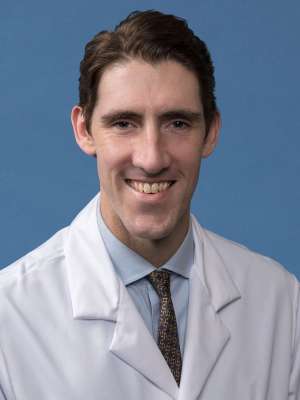
Dr. Peter Downey, an adult cardiac surgeon and Co-Director of the UCLA Health Aortic Center, discusses aortic aneurysms.
What is the aorta and what are aortic aneurysms?
The aorta is the body’s largest artery. It carries blood from the heart to the rest of the body and supplies vital organs such as the brain, lungs, stomach, kidneys, and other tissues.
In a healthy adult, the aorta is usually about 3 centimeters wide. An aortic aneurysm occurs when a portion of the aorta enlarges and bulges outward. We generally consider it an aneurysm when the aorta reaches about one and a half times its normal size, or approximately 4.5 centimeters in diameter.
What causes aortic aneurysms?
Most aortic aneurysms develop slowly over many years. They are most common in people over age 65. Risk factors include high blood pressure, high cholesterol, smoking, and a family history of aortic aneurysms. Aneurysms are more common in men, but women can develop them as well.
Some people develop aneurysms at a younger age because of inherited conditions, such as Marfan syndrome, which can weaken the wall of the aorta.
Most aortic aneurysms do not cause symptoms and are discovered by chance during imaging studies performed for other reasons, such as a chest X-ray, CT scan, or echocardiogram.
Is it necessary to screen for aortic aneurysms? How are they monitored?
Unlike some other diseases, there is no routine screening test for thoracic aortic aneurysms in the general population. However, screening may be recommended for people with a strong family history or certain genetic conditions.
The good news is that most aortic aneurysms are not emergencies when they are first diagnosed. In many cases, they have been present for years without causing problems.
When an aneurysm is found, we review prior imaging studies or obtain additional scans to determine whether it is growing. If it is small and stable, we usually monitor it with periodic imaging rather than recommend surgery.
What happens to people with aortic aneurysms? What can be done to prevent aortic aneurysms from enlarging?
Most aneurysms grow very slowly, often only about 1 millimeter per year. Many never become large enough to require treatment.
There are important steps you can take to help slow aneurysm growth and reduce the risk of complications. These include stopping smoking, controlling blood pressure, managing cholesterol levels, maintaining a healthy weight, exercising regularly, and taking prescribed medications.
Of these, quitting tobacco use is one of the most important. Smoking damages blood vessels and can accelerate aneurysm growth.
Careful control of blood pressure is also critical because it reduces stress on the wall of the aorta and lowers the risk of the aneurysm enlarging over time.
If you have questions about your risk for aortic aneurysm or whether screening is right for you, talk with your doctor or contact the UCLA Health Aortic Center.
The American College of Cardiology / American Heart Association (ACC/AHA) recommends a comprehensive approach to aortic aneurysm management encompassing screening, surveillance, medical therapy, and size-based thresholds for surgical intervention, as outlined in the 2022 ACC/AHA Guideline for the Diagnosis and Management of Aortic Disease.
Screening
- One-time ultrasound screening is recommended for men aged 65–75 years with a smoking history. Screening may also be considered for first-degree relatives of patients with AAA.
Surveillance of Abdominal Aortic Aneurysms (AAA)
- 3.0–3.9 cm: Surveillance ultrasound every 3 years.
- 4.0–4.9 cm (men) / 4.0–4.4 cm (women): Surveillance ultrasound annually.
- ≥5.0 cm (men) / ≥4.5 cm (women): Surveillance ultrasound every 6 months.
- CT is recommended when ultrasound is inadequate or when the aneurysm meets criteria for repair (for preoperative planning).
Thresholds for Repair
Abdominal aortic aneurysms:
- ≥5.5 cm in men and ≥5.0 cm in women: Elective repair is recommended.
Saccular aneurysms: Repair is generally recommended at smaller diameters, though specific size guidance is limited.
- Rapid growth (≥0.5 cm in 6 months or ≥1 cm in 1 year): Repair should be considered.
- Symptomatic aneurysms warrant prompt treatment regardless of size.
Descending thoracic aortic aneurysms (TAA):
- Repair is recommended when the diameter is ≥5.5 cm (Class 1).
- Repair may be considered at <5.5 cm in patients with risk factors for rupture (rapid growth, connective tissue disorder, saccular morphology, female sex).
- In patients at increased perioperative risk, it may be reasonable to increase the size threshold.
Thoracoabdominal aortic aneurysms (TAAA):
- Repair is recommended when the diameter is ≥6.0 cm (Class 1).
- Repair is reasonable at ≥5.5 cm when performed by experienced surgeons in a Multidisciplinary Aortic Team.
Open vs. Endovascular Repair (EVAR) of AAA
- In patients with low to moderate operative risk and anatomy suitable for either approach, a shared decision-making process weighing risks and benefits is recommended (Class 1, Level A).
- Adherence to manufacturer's instructions for use is recommended for elective EVAR.
- In patients with high perioperative risk, EVAR is reasonable to reduce 30-day morbidity and mortality.
- EVAR provides a significant early survival advantage (perioperative mortality OR 0.36 vs. open repair), but this benefit dissipates after approximately 2–3 years, with no long-term survival difference. After 8 years, EVAR is associated with higher rates of aneurysm-related death, reintervention, and late rupture compared with open repair.
Medical Management
- Blood pressure control: Target SBP <130 mmHg and DBP <80 mmHg; more intensive lowering to SBP <120 mmHg may benefit selected patients.
- Beta-blockers are recommended as first-line antihypertensives, with ARBs and ACE inhibitors added as needed.
- Smoking cessation is strongly recommended to reduce growth and rupture risk.
- Statins are recommended for cardiovascular risk reduction, though no specific medical therapy has been proven to slow aneurysm expansion in prospective human trials
References:
- 2022 ACC/AHA Guideline for the Diagnosis and Management of Aortic Disease: A Report of the American Heart Association/American College of Cardiology Joint Committee on Clinical Practice Guidelines. Journal of the American College of Cardiology. 2022. Isselbacher EM, Preventza O, Hamilton Black Iii J, et al.
- Management of Abdominal Aortic Aneurysms. The New England Journal of Medicine. 2021. Schanzer A, Oderich GS.
- Screening for Abdominal Aortic Aneurysm: US Preventive Services Task Force Recommendation Statement. The Journal of the American Medical Association. 2019. US Preventive Services Task Force, Owens DK, Davidson KW, et al.
- Abdominal Aortic Aneurysm. American Family Physician. 2022. Haque K, Bhargava P.
- Risk Stratification and Treatment Selection in Patients With Asymptomatic Abdominal Aortic Aneurysms. JAMA Network Open. 2025. Meuli L, Zimmermann A, Petersen JK, et al.
- Thoracoabdominal Aortic Disease And Repair: JACC Focus Seminar, Part 3. Journal of the American College of Cardiology. 2022. Ouzounian M, Tadros RO, Svensson LG, et al.
Find your care
Our specialists are experts in treating aortic disease. To learn more about our services, call 310-267-7001.
Related Videos
You may also like:
Related Content
Services:
Aortic Care