
Aortic Care Video Library
Education is a core component of our patient-centered care. The UCLA Health Aortic Center shares expertise through a growing series of videos covering aortic aneurysms, dissection, surgical options, minimally invasive techniques and more. These resources reflect our internationally recognized leadership in aortic disease and highlight our multidisciplinary approach, bringing together specialists in cardiac surgery, vascular surgery, cardiology, anesthesiology and radiology to deliver coordinated, personalized treatment.
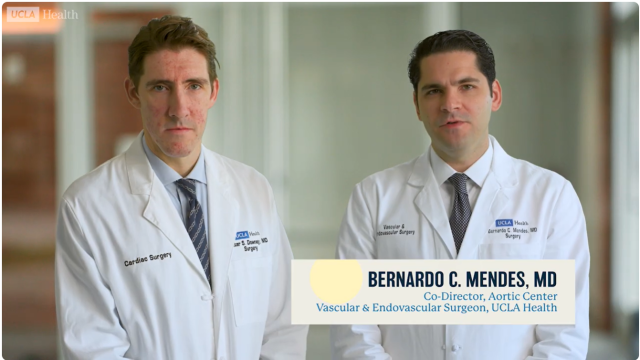
Inside the UCLA Health Aortic Center
Dr. Bernardo Mendes and Dr. Peter Downey explain what sets the UCLA Health Aortic Center apart, from hybrid operating rooms and high-quality imaging to the team-based approach between vascular and cardiac surgeons.
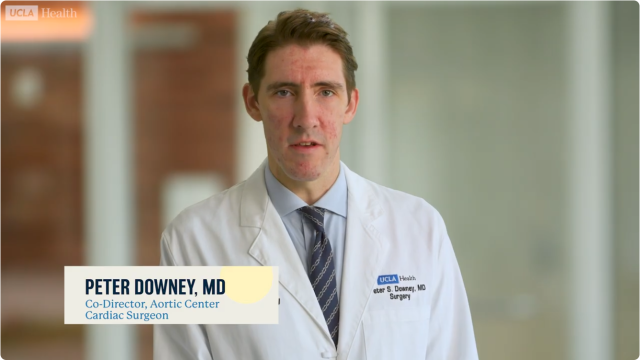
Aortic Aneurysms: What Patients Need to Know
Dr. Peter Downey of the UCLA Health Aortic Center explains what an aortic aneurysm is and why it often doesn’t cause symptoms.
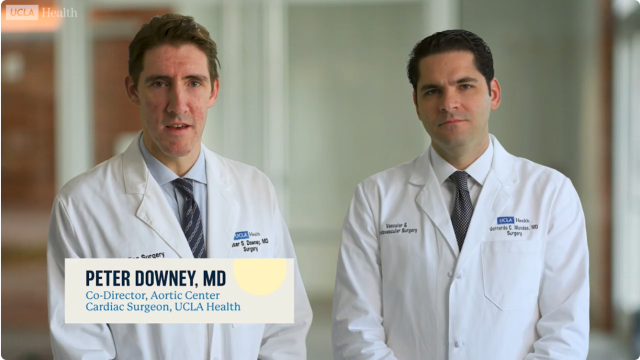
Aortic Dissection: How It’s Treated
Dr. Peter Downey and Dr. Bernardo Mendes of the UCLA Health Aortic Center explain how aortic dissections are diagnosed and treated, including stent-based procedures and open surgery.
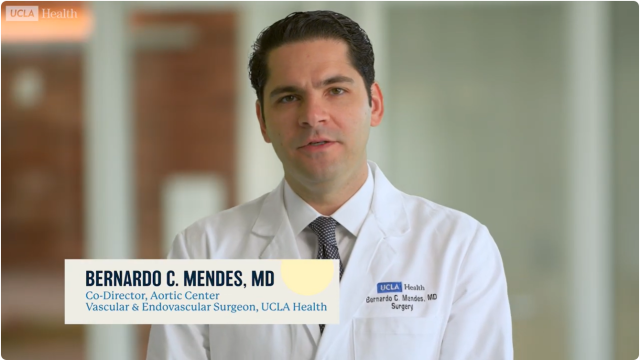
The Evolution of Aortic Surgery
Dr. Bernardo Mendes of the UCLA Health Aortic Center explains how modern stent grafts are used to repair many aortic aneurysms through a small puncture in the groin rather than a large incision.
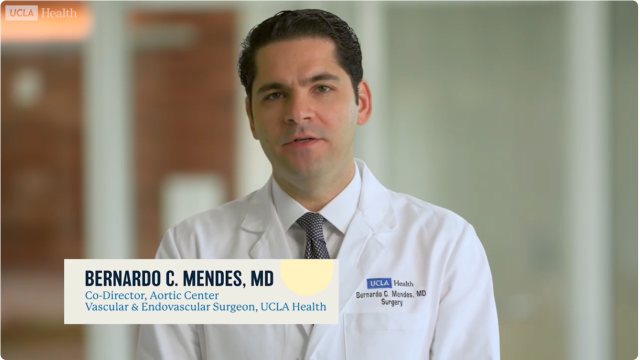
Who Is a Candidate for Endovascular Aortic Surgery?
Bernardo Mendes, MD, of the UCLA Health Aortic Center explains how specialists determine whether this minimally invasive approach is the right fit based on the aneurysm's location, the shape of the aorta and the condition of nearby blood vessels.
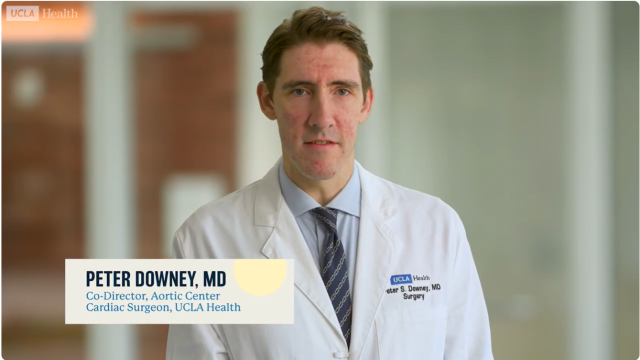
Repairing Ascending Aortic Aneurysms
Peter Downey, MD, of the UCLA Health Aortic Center explains how doctors decide when repair is recommended, including the role of aneurysm size, growth rate and underlying conditions such as bicuspid aortic valve or connective tissue disorders.
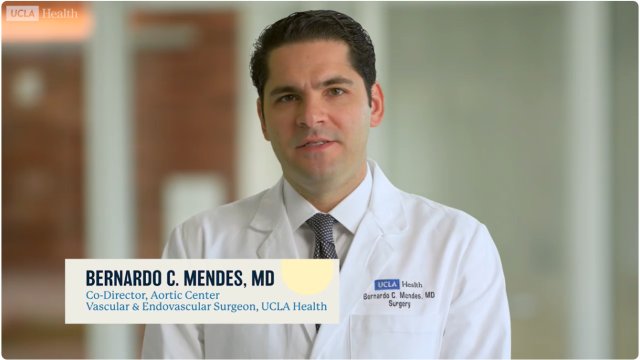
Reducing the Risks of Aortic Aneurysm Surgery
Bernardo Mendes, MD, of the UCLA Health Aortic Center explains how surgical risk depends on the aneurysm's size and location, and how the care team works to reduce complications.