Full Transcranial Magnetic Stimulation (TMS)
Who Can Benefit From Transcranial Magnetic Stimulation (TMS)?
TMS is a safe, noninvasive therapy that uses gentle magnetic pulses to stimulate targeted areas of the brain. It’s an effective treatment for major depression, obsessive-compulsive disorder (OCD), chronic pain and other conditions when other treatments haven’t helped.
Multiple TMS treatment sessions over days or weeks change brain nerve cell patterns that cause depression, pain and other illnesses. The U.S. Food and Drug Administration (FDA) has approved TMS for select conditions as a once-a-day treatment taking place over six to nine weeks.
Up to two-thirds of people with depression who receive TMS see improvements even when medications and psychotherapy have provided little benefit. TMS may cause temporary mild side effects, such as slight discomfort or fatigue. Many patients find these side effects are milder than medication side effects.
Find Your Care
We customize TMS sessions and offer accelerated treatments that ease your symptoms. To learn more about our TMS services, call 310-825-7471.
Related Stories

Why Choose UCLA Health for TMS?
UCLA Health is California’s largest, most experienced provider of TMS. A board-certified psychiatrist sees patients at every treatment session to ensure safety and maximize treatment benefits.
You have many options for TMS treatment in Southern California. The table below may help you compare our approach to that of other providers you are considering.
Our psychiatrists have years of expertise using TMS to help patients when other treatments aren’t effective. You receive care at one of the nation’s top five psychiatry and behavioral sciences programs, according to U.S. News & World Report
| Treatment Options/ Procedures Offered |
UCLA Health TMS providers* | Other providers |
|---|---|---|
| Comprehensive assessment for TMS, at-home neuromodulation, ketamine, and other treatment options | ✔ | |
| Development of a personalized treatment plan | ✔ | |
| Measurement-based care with weekly treatment planning meetings | ✔ | |
| Meeting with a psychiatrist at every treatment session in order to discuss your treatment progress | ✔ | |
| Regular communication from our treatment team to your primary mental health care provider | ✔ | |
| Sophisticated treatment protocols informed by the latest research | ✔ | |
| Customized adjustments to your treatment plan as often as needed to maximize your benefit | ✔ | |
| Combined treatment for OCD, pain, and other conditions that occur with depression, at no additional cost to you | ✔ | |
| Evidence-based and affordable treatment of chronic pain, tinnitus, and other conditions usually not covered by insurance | ✔ | |
| Affordable relapse prevention treatment protocols for depression | ✔ |
*Your doctor will help you determine the best TMS therapy for you.
Our Services
TMS can work best when combined with medications or psychotherapy. We work closely with your primary care provider, mental health professional and other health care professionals to seamlessly integrate TMS into your care plan. This collaboration helps you achieve the best treatment results.
Conditions We Treat
Most of our patients are adults, although we successfully use TMS to treat patients as young as 15. The FDA has approved TMS for:
- Major depression, treatment-resistant depression and anxious depression
- Obsessive-compulsive disorder (OCD)
- Smoking cessation
Who Else Can Benefit From TMS?
Published studies suggest that TMS may also help relieve symptoms for of other conditions, including:
- Anxiety disorders
- Chronic pain, fibromyalgia and neuropathy
- Dual conditions, such as chronic pain and depression
- Post-traumatic stress disorder (PTSD)
- Tinnitus
Who Shouldn’t Get TMS?
Almost everyone can safely benefit from TMS. However, you may not be a good candidate for TMS if you have some forms of metal or a medical device in your head, such as:
- Aneurysm clip
- Cochlear implant
- Deep brain stimulator (DBS)
- Shrapnel

Jane and Terry Semel Institute for Neuroscience and Human Behavior

Calabasas Specialty Care

Pasadena Primary & Specialty Care
Benefits of TMS at UCLA:
Precision TMS approach
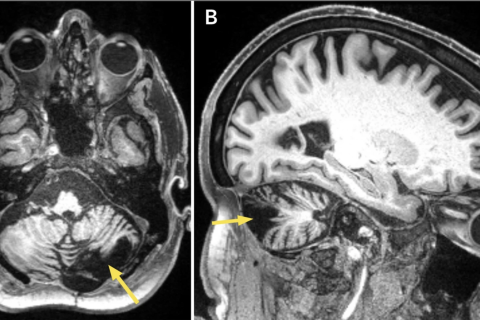
A psychiatrist sees you at each session to ensure you receive care based on your personalized treatment plan. We may also use MRI guidance to deliver your treatments with the highest degree of precision. Our team closely monitors your symptoms with weekly rating scales and holds weekly planning meetings to modify your care plan as needed.
Treatment for conditions beyond depression
We use TMS as an off-label (non-FDA-approved) treatment for chronic pain, tinnitus, stroke and other conditions. We’re among a select few providers who use TMS to treat multiple conditions that often occur together (such as depression and chronic pain) in a single treatment session.
Dedicated TMS care managers
Each of our patients has a dedicated TMS care manager who provides compassionate guidance and support throughout the course of treatment. These specialists schedule appointments, answer questions, manage insurance approvals, coordinate with outside providers and connect patients to community resources.
Convenient, comfortable locations
Our UCLA Health clinics in Calabasas, Pasadena and Westwood provide easy access to TMS treatments near where you live. A UCLA Health psychiatrist and TMS technician oversee every session wherever you receive treatment, which takes place in a dedicated treatment room equipped with Wi-Fi and TV.
High rates of success
Approximately two-thirds of our patients see significant symptom improvements from TMS, with benefits that can last for years. Many patients notice changes after just a few sessions.
Accelerated TMS program
With our accelerated TMS treatment plan, patients get five TMS treatments daily for five consecutive days. Patients finish treatment in one week versus six weeks or more. As many as eight in 10 patients get symptom relief with this off-label (non-FDA-approved) accelerated approach.
Affordable options
Research indicates that TMS and accelerated treatments help with chronic pain, tinnitus and certain other conditions. However, because most insurance plans only cover standard TMS for the treatment of depression, we offer affordable payment options.
A focus on TMS research
We’re national leaders in TMS clinical trials and research. UCLA Health experts helped develop some of the most effective TMS methods. As a patient, you have the option to participate in our efforts to make TMS even more effective through the .
TMS Treatments We Offer
To ensure TMS is right for you, you’ll complete a new patient intake with a care manager and meet with a psychiatrist to perform a comprehensive evaluation. TMS is held in an outpatient clinic every weekday for six to nine weeks. Some patients may be recommended extending treatments to maximize benefits.
The length of each treatment session varies from 10 minutes to 75 minutes, depending on the condition and symptom severity. TMS may cause discomfort, mild headaches, sleep problems or tiredness afterward. These side effects are typically mild and go away after the first few treatments. There’s an extremely low risk of seizure during treatment.
TMS treatments: What to expect
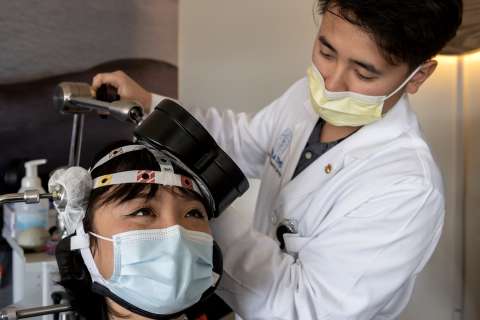
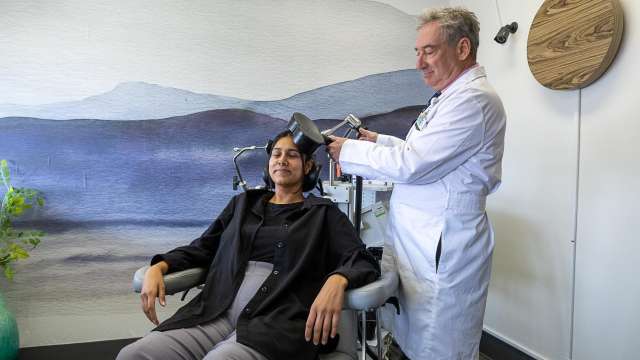
We customize each treatment session to meet your specific needs. In general, here’s what you can expect :
- A psychiatrist conducts a brief health assessment before every TMS session.
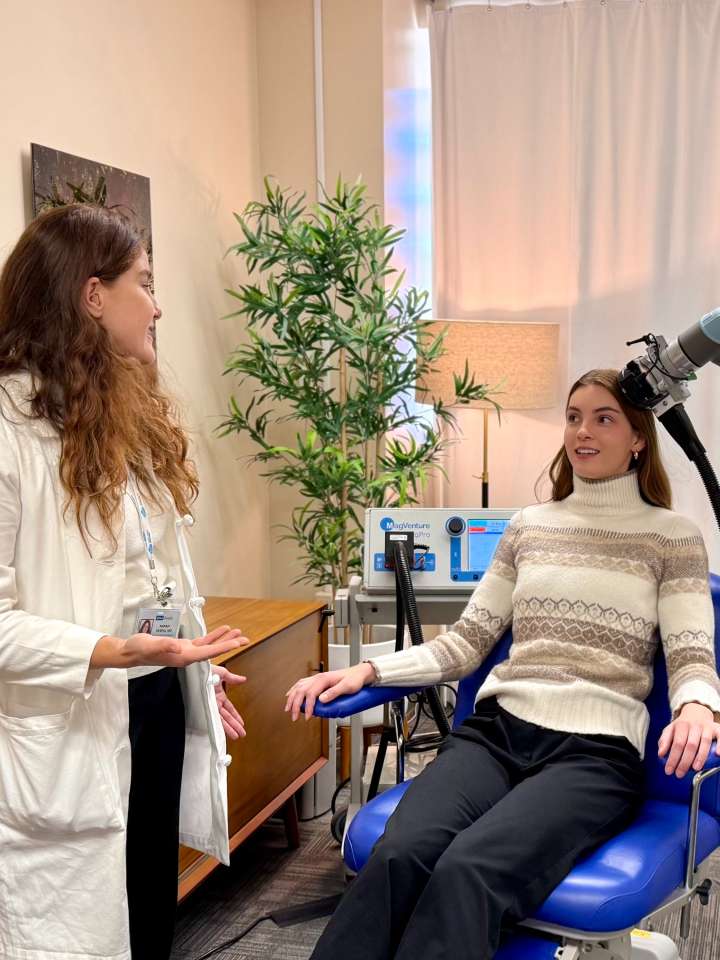
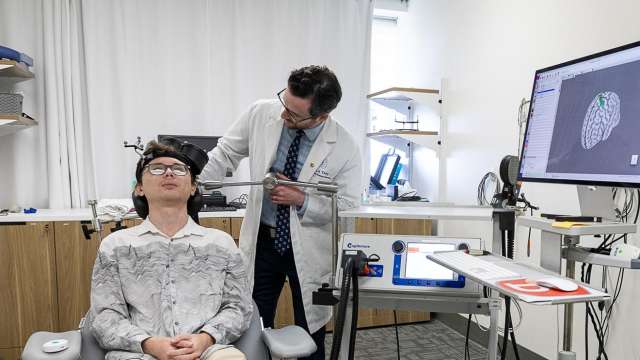
- You sit in an exam chair with a headrest (similar to a dental office chair).
- We provide earplugs to muffle the magnetic pulse sounds.
- Your technician positions a TMS magnet device against the designated area of a treatment cap on your head and reclines the chair.
- Your physician checks the device settings and starts the treatment. The device is programmed to deliver magnetic pulses based on your individualized treatment plan.
- You may hear clicking sounds or feel a tapping sensation as the device delivers magnetic pulses.
- You can watch TV, read, talk with a friend or use your smartphone or computer during the session.
- You complete a symptom evaluation questionnaire after every fifth session. We use your responses to adjust treatments and achieve the desired results.
On the first day of treatment, your care team performs a motor threshold check, which enables us to determine the optimal treatment intensity for you. You rest one arm comfortably on a cushion while gentle electromagnetic pulses are delivered to the part of your brain that controls hand movement. Your hand will twitch or move slightly as magnetic pulses are delivered. Your care team adjusts the treatment intensity based on your movements.
Accelerated TMS treatments
Our accelerated TMS treatment program condenses treatment time to five days instead of six weeks or more. You have five TMS sessions a day for five consecutive days (called a “5x5” treatment plan). Most patients experience depression relief within a few days. However, maximum benefits occur about two weeks after the end of treatment. You will meet with a psychiatrist two weeks and four weeks after treatment to determine if you might benefit from additional sessions.
This accelerated approach is safe and effective. However, insurers don’t cover accelerated TMS because the FDA hasn’t reviewed it. It is an off-label treatment.
We offer affordable payment options for patients who want to receive accelerated treatments. You may also have the opportunity to participate in research designed to demonstrate the efficacy of accelerated TMS.
Follow-up TMS treatments
Most patients who get TMS enjoy long-lasting symptom relief for months or years. You can safely get TMS again if symptoms return.
Contact Us
Call to learn more about TMS at UCLA Health. If you’re a referring physician, please complete the