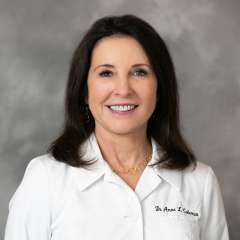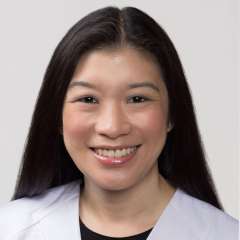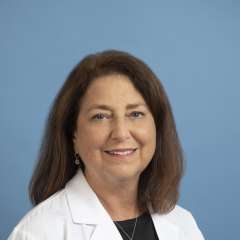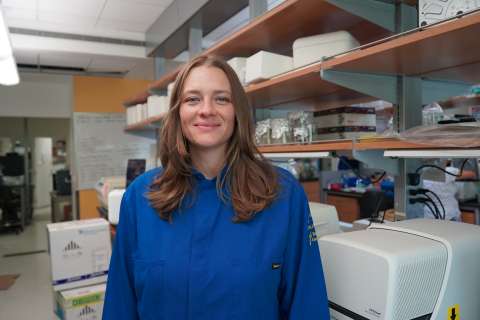
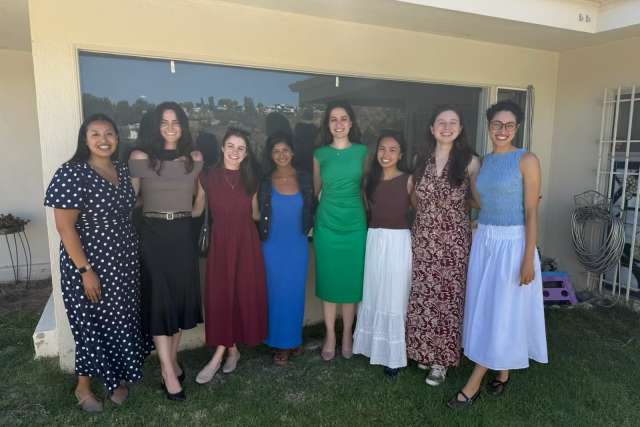
The UCLA Stein Eye Institute’s Residency Training Program has made history. In July, the institute welcomed the first all-women ophthalmology residency class since its founding 60 years ago.
The cohort of eight physicians represents not only a historic milestone but also the program’s longstanding commitment to clinical excellence, innovation and patient-centered care.
“Meritocracy and institutional integrity have been longstanding core values at UCLA,” says Bronwyn Bateman, MD, who in 1980 became the first female full-time clinical faculty member in the Department of Ophthalmology at UCLA. “It is the values of the leadership of UCLA and the Department of Ophthalmology that has made this comparatively young medical school great, and it is a real tribute to UCLA to have this entire class consist of women.”
The milestone “reflects the extraordinary talent of today’s medical students,” says Anne Coleman, MD, PhD, the Bradley R. Straatsma, MD, endowed chair in ophthalmology and chair and executive medical director of the UCLA Department of Ophthalmology. “It reflects the continued evolution of ophthalmology as a specialty where opportunity is increasingly defined by excellence, talent and dedication.”
The incoming residents were selected from a highly competitive applicant pool, reflecting the talent of the physicians joining the program.
“These are exceptional, highly sought-after candidates, and we are very excited to have them here,” says Victoria Tseng, MD, PhD, assistant professor and clinical residency program director of the Department of Ophthalmology.
“What excites me most is what this means for the field as a whole: a more diverse pool of talented physicians, trained side by side, who will go on to mentor and shape the next generation of ophthalmologists, regardless of their background or gender,” adds Stacy L. Pineles, MD, chair of the residency selection committee for the Department of Ophthalmology. “Our goal has always been to match the most outstanding applicants, and this year, that happened to result in an all-women class.”
An evolving specialty
The field of ophthalmology historically has been male-dominated. While women now comprise more than half of U.S. medical school graduates, they account for only 26.2% of practicing ophthalmologists nationwide and 38.6% of ophthalmology residents as of 2024, Dr. Bateman and others wrote in a paper published in the American Journal of Ophthalmology.

After becoming a full-time clinical faculty member at UCLA, Dr. Bateman went on to be chair of the Department of Ophthalmology at the University of Colorado School of Medicine from 1995-2005. She was also a pioneer in ophthalmic genetics, combining clinical pediatric ophthalmology with molecular genetics long before genetic testing became routine.
“In recent years, medical schools have seen progress toward greater gender balance in their classes, but we did not necessarily see that translate to the field of ophthalmology,” says Dr. Tseng. “At UCLA, our recent residency classes have generally been evenly split between men and women, so to see an all-female class is truly exciting — it is not something that many would have pictured for our field 20 to 30 years ago.”
Despite gains in residency training, women remain underrepresented in academic ophthalmology leadership, holding just 18.8% of ophthalmology department chair positions across U.S. residency programs in 2024, according to a recent report published in AJO International.
“For decades, women have worked toward becoming equitable partners in the field of ophthalmology — we are still not there yet,” says Lynn Gordon, MD, PhD, former senior associate dean for diversity affairs at the David Geffen School of Medicine at UCLA and professor emerita of ophthalmology. “So, it is inspiring to see our junior colleagues choosing ophthalmology as a specialty and earning positions in highly competitive residency programs. Those opportunities can open the door to competitive fellowships and, ultimately, leadership roles in the field.”
Power of representation
UCLA ophthalmology faculty say the residency class reflects the importance of diversity in medicine. Greater representation strengthens the profession by bringing together a wide range of perspectives that foster innovation and enhance patient-provider relationships.
“It really starts with patient-centered care — caring for patients from all walks of life, socioeconomic groups and belief systems,” says Dr. Gordon.
Representation is particularly meaningful in ophthalmology, where women are disproportionately affected by blindness and visual impairment, notes Dr. Coleman. Having physicians with diverse backgrounds helps the field better understand and address the needs of the communities it serves.
Faculty say diverse perspectives also strengthen collaboration and encourage new ideas.
“There are a lot of misconceptions about what diversity represents and how equity leads to improved outcomes for everyone,” says Dr. Gordon. “Diversity is not about taking away from someone — it is about expanding and making sure that individuals have access to the best care.”
“The strongest teams are those that reflect the diversity of the communities they care for,” adds Dr. Coleman.
“For years, ophthalmology residency classes were made up entirely of men, and that was not something people thought much about at the time,” says Dr. Gordon. “But having this all-female cohort provides greater visibility for younger women to see themselves in those roles and know they belong there.”
Dr. Coleman says her hope is that one day, an all-women residency class “won’t be considered remarkable at all.”
“Whether a residency class is all women, all men, or a mix of both, what should matter is that each trainee earned their place based on talent, hard work and potential,” she says. “I hope this class inspires future generations to pursue ophthalmology with confidence and reminds them that excellence has no gender.
“Together, we will continue advancing patient care, restoring sight and discovering new ways to prevent blindness.”