
Dear Doctors: The kids at our 8-year-old son's day camp have become obsessed with "a bug bite that turns you into a vegetarian." We think they are talking about a kind of tick bite that we have been hearing about on the news. Our son is fascinated, and any information you have is welcome.
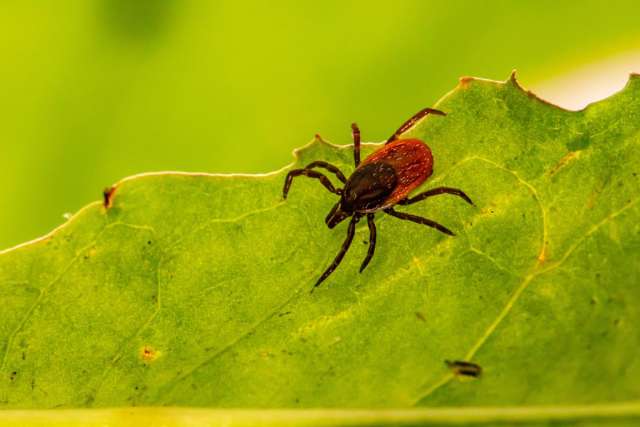
Dear Reader: Your son and his friends have been captivated by a tick-borne illness known as alpha-gal syndrome. The phrase "it turns you into a vegetarian" is not a clinical description -- but it's also not as far from the truth as you might think. The condition is getting more common in the United States and around the world. It is caused by the bite of certain ticks. Here in the U.S., it is most commonly caused by the Lone Star tick. This tiny arachnid gets its name from a white splotch on the adult female's back.
For some people, this tick bite causes the immune system to produce antibodies that target a sugar molecule found in the meat of most mammals. This sugar is known as galactose-α-1,3-galactose, which is shortened to alpha-gal. Once someone's immune system has been sensitized by the tick bite, eating red meat can trigger an allergic reaction. This includes beef, pork, lamb, venison and other meat from mammals. Dairy products and certain medications can also cause an allergic response. So can medical products derived from mammals, such as those with gelatin.
Lone Star ticks are found throughout the eastern, midwestern and southeastern states. Recent data show the tick's habitat is expanding. It has been identified as far north as Maine and as far west as Texas. The syndrome was first described in 2007. That year, researchers in Australia confirmed a link between tick bites and an allergy to mammalian meat. Two years later, the specific alpha-gal carbohydrate was identified as the allergen responsible.
Symptoms of alpha-gal syndrome can include stomach distress that ranges from mild to severe, itching, rash or hives. It can even cause anaphylaxis, a severe allergic reaction that can be life-threatening. It is common to begin having symptoms between two and six weeks after being bitten. The allergy can also take several months to fully develop. Some people become allergic after a single bite, while others require several bites to become sensitized.
Unlike most food allergies, where the reaction happens right away, alpha-gal symptoms are delayed. They typically appear three to six hours after eating. This lag makes it harder to connect a specific food to the start of symptoms. Anyone who has been bitten by a tick and later feels ill after eating meat should be evaluated for alpha-gal allergy. This is done with a blood test, which looks for specific antibodies.
Currently, there is no cure for alpha-gal syndrome. For most people, the only option is to avoid red meat. Because they do not come from mammals, poultry and fish are still on the menu. So, to tweak the words of your son and his campers, there is a bug bite that -- almost -- turns you into a vegetarian.
(Send your questions to [email protected], or write: Ask the Doctors, c/o UCLA Health Sciences Media Relations, 10960 Wilshire Blvd., Suite 1955, Los Angeles, CA, 90024. Owing to the volume of mail, personal replies cannot be provided.)