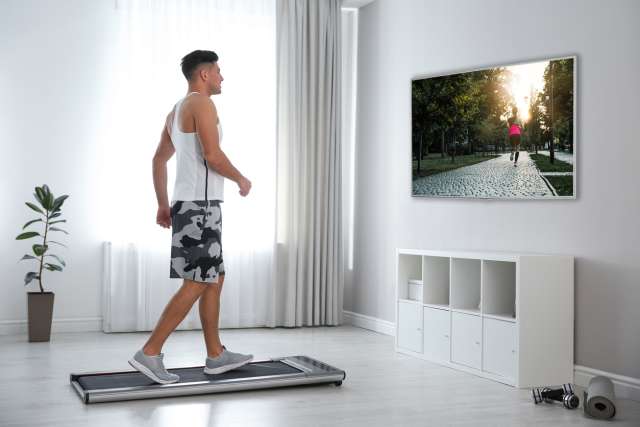
Walking is a convenient way to support your physical and mental health. But if you are strapped to a desk for eight hours a day, it can be challenging to get your steps in. A walking pad can help.
Walking pads are small and simple portable treadmills that can sit on the floor in front of a desk. They allow you to walk at a slow pace while you work at a tall desk.
But is working and working out at the same time a healthy use of time? Or is it too good to be true?
To help you decide, here's everything you need to know about walking pads and working:
How is a walking pad different from a traditional treadmill?
Walking pads are lighter, more portable and offer a smaller footprint than the machines most people know as traditional treadmills. However, the most critical difference is how walking pads and treadmills are designed to be used.
Walking pads are made for level walking at low to moderate speeds ranging from 0.5 to 4 mph, which makes them ideal for walking as you work. If you want higher-intensity exercise, such as running or high-incline walking, a treadmill is the better option.
Benefits of a walking pad
No matter where you get your steps — treadmill, walking pad or the great outdoors — walking has significant benefits. Replacing sedentary behavior with just 30 minutes of any activity daily can reduce your risk for Type 2 diabetes.
Walking at a slower pace on a walking pad provides all the benefits of light-to-moderate walking, including:
- Boosting cognition and mental health
- Helping with weight management
- Improving heart health and circulation
- Promoting better posture and balance
- Reducing joint pain
- Strengthening bones
However, research suggests that walking while working has additional advantages over sitting or standing, such as:
- Better focus
- Increased energy
- Less stress
- More task satisfaction
- Increased positivity
A walking pad also offers portability, a small footprint and a way to exercise that is not weather-dependent.
Limitations of a walking pad
The health benefits of walking more generally outweigh the restrictions of a walking pad. But there are some things to consider, such as:
- Cost: While cheaper than a treadmill, a walking pad still requires you to purchase the machine and have a desk tall enough to accommodate your walking height. Walking outside is free. If you don't have a tall or standing desk but still want to move your body while you work, consider an under-desk elliptical.
- Lack of variety: A walking pad does not offer the terrain changes or high speeds you can experience with a treadmill or walking outside. Alternate walking on a pad with other types of walks to keep things interesting.
- Limited safety features: Most walking pads do not have handrails and offer fewer safety features than a bigger treadmill. Use your desk or a stable chair to help with balance if needed.
- No exposure to nature: Walking is great for your mental health, but the biggest boost comes from walking outside. Make sure to step off the walking pad and get outside when you need a brain break.
- Speed restrictions: Walking briskly can have even greater health benefits than walking at a slower pace. But if you are just getting back into exercise, walking at 2.5 mph or faster on a walking pad may be fast enough to challenge you and provide those extra benefits.
Tips for using a walking pad under your desk
Most people who use walking pads try to get more steps in during their workday. However, any time you are planning to start a new fitness routine — including walking slowly on a walking pad — you should speak with your primary care physician first.
Once you have the green light from your doctor, use these tips to help ensure your workday walking is safe and effective:
- Check your desk setup: Not every workstation is set up ergonomically for a walking pad. Make sure the top of your monitor is slightly below eye level, and your keyboard allows your arms to bend at 90 degrees.
- Don't look down: Maintaining an upright position, relaxing your shoulders and keeping your eyes forward — not looking down — can help you with balance and posture.
- Keep water nearby: Hydration — even while walking at low intensity — is critical. Grab a sip of water often as you walk and work.
- Limit your walking sessions: If walking while you work is comfortable, don't be tempted to walk all day. Start with 10-minute sessions a couple of times daily. Work your way up to multiple 30- or 60-minute sessions, but limit your walking to no more than two to four hours a day. Walking the entire workday can lead to fatigue and back strain.
- Use your arms: When you don't swing your arms as you walk, your body relies more heavily on your core muscles. If you do not already have a strong core, you could end up developing low back pain. Try to walk when you are on a call or reading to free up your arms for movement.
- Wear the proper footwear: Change out of your slippers or work shoes before walking. You need supportive footwear to minimize the stress on your joints and prevent discomfort and injury.
A walking pad offers a wonderful way to reduce the time you are sedentary and sneak in some extra movement. But it should be just one element of a well-rounded approach to fitness that also includes strength training and higher-intensity exercise.