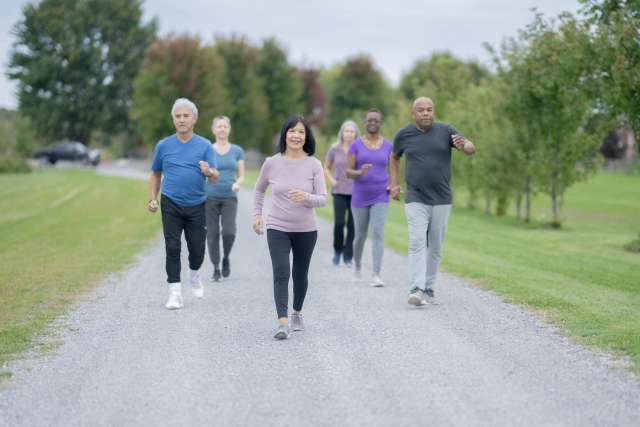
It’s no secret that walking is a great exercise that’s easily accessible, no matter your age or fitness level. It takes no equipment other than a pair of comfortable shoes. And you can do it anywhere — inside or outdoors.
There are multiple health benefits associated with walking. Working more steps into an otherwise sedentary day can improve numerous aspects of your physical and emotional well-being.
Any stroll can reap some benefits, but recent research is finding important connections between walking pace and overall longevity.
What is a brisk pace for walking?
There is no set definition for what qualifies as “fast walking.” A brisk pace can mean very different things to a fit 20-something and a mostly sedentary 80-year-old. In other words, the appropriate pace for a brisk walk is highly individualized.
You already know what a casual stroll feels like. Turning that into a brisk walk simply means picking up the pace. By moving a little faster than you normally would, you’ll notice you start breathing more heavily and your heart rate quickens.
Aim for a pace that still allows you to hold a conversation, but maybe not sing a song. You want to feel like your body is working harder, but not so hard that you feel short of breath.
The connection between fast walking and longevity
A study published in 2025 in the American Journal of Preventive Medicine analyzed data from nearly 85,000 adults ages 40 to 79. At the start of the study, participants filled out questionnaires about their health, exercise habits and walking speed.
The researchers tracked the group for 17 years. They found that the people who reported spending 15 minutes a day or more walking fast were 20% less likely to die prematurely compared to those who didn’t walk fast.
In another study, published in 2025 in the online journal PLOS One, frail older adults who increased their walking speed by 14 additional steps per minute improved their overall physical function.
The health benefits of walking faster
When you turn your stroll into a brisk exercise walk, you take the numerous benefits of walking up a notch.
Including several brisk walks in your weekly workout routine helps improve:
- Cardiovascular fitness and heart health
- Lung capacity
- Muscle strength
- Overall physical function (including balance)
- Stamina
- Weight loss or weight management
How to get started (or pick up the pace)
Before starting any exercise routine, it’s a good idea to talk to your doctor. They can help you understand any limitations and come up with a plan for exercising safely.
If you’re new to exercise, start off with short sessions and lower intensity. Once you can do that easily, it’s safe to pick up your pace.
You can increase your speed by:
- Focusing on faster footsteps: Increasing your speed can be a combination of a longer stride and faster turnover (which results in more steps per minute).
- Incorporating faster intervals: Even during a slower-paced walk, try increasing your pace for a short burst of speed every five minutes or so.
- Racing yourself: If you regularly walk the same distance, time yourself — and try to beat your own best time on your next lap.
- Using your arms: Swinging your arms (elbows bent at 90 degrees) helps increase your momentum.
So next time you lace up your sneakers for a walk, take your watch with you too. Increasing your speed can potentially lead to a longer life.