It’s no secret that your body changes as you get older. The way it looks, feels and functions in your 50s and 60s probably isn’t the same as when you were in your 20s.
To some extent, age-related changes are an inevitable part of getting older. But when it comes to losing muscle mass, there are effective ways to fight back.
What is age-related muscle loss?
Age-related muscle loss affects everyone. And it starts a lot earlier than you might think. By the time you turn 30, your muscle mass is already starting to decline.
On average, men and women lose about 3% to 8% of their overall muscle mass each decade between ages 30 and 50. Beyond 50, the rate of muscle loss increases to between 5% and 10% per decade.
As you lose more muscle mass, you also start to lose strength. This condition is called sarcopenia. Sarcopenia affects at least 10% to 20% of older adults. People with the condition can find everyday tasks more difficult. The loss of muscle strength can make it harder to walk, go up and down stairs, and carry your grocery bags.
How does menopause affect your muscles?
Age-related muscle loss and sarcopenia can affect men and women, but post-menopausal women may be at higher risk.
During perimenopause and menopause, women experience significant hormonal changes. By the time you’re officially in menopause, the amount of reproductive hormones (testosterone, progesterone and estrogen) your body produces drops substantially. These hormonal shifts play a big role in women’s risk of sarcopenia.
The loss of estrogen after menopause can be particularly detrimental to muscle strength and mass. Research has shown that a lack of estrogen causes women to lose muscle faster than men. It can also affect muscle repair, recovery and rebuilding.
The importance of strength training after menopause
The best way to fight age-related muscle loss is to work your muscles harder. Working out, especially strength training, is important at every stage of life, but it becomes even more so after menopause.
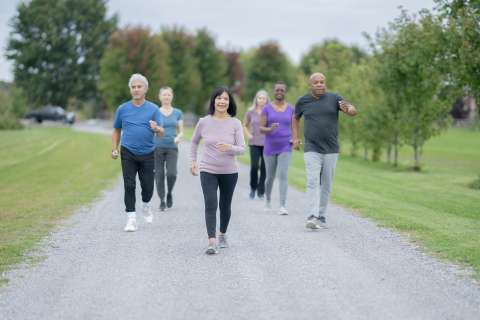
Even if you’re walking or doing other aerobic exercise on a regular basis, cardio isn’t enough to help you stay strong as you age. Strength training is the key to maintaining the muscle you have and getting stronger.
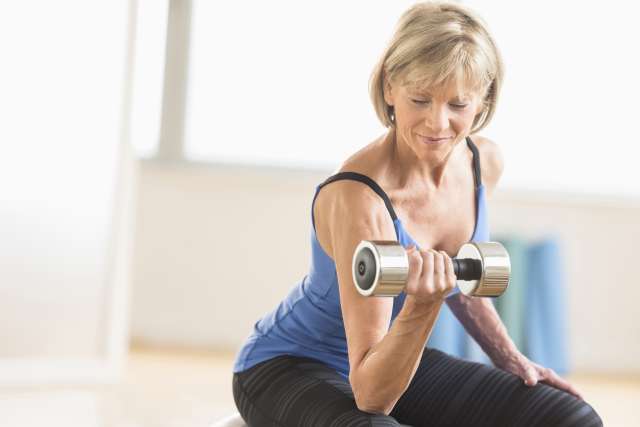
You can build muscle with a number of methods — including body weight moves (such as pushups and squats), using resistance bands, or doing yoga or Pilates. But to really see results, you should try lifting weights.
Older women often shy away from weightlifting, but most shouldn’t. Stressing the muscles by lifting weights is an effective way to build strength. It’s fine to start out slowly with lighter weights, increasing the intensity as you get stronger.
Before you start a weightlifting routine, check with your doctor to ensure you’re healthy enough to participate. Then consider working with a qualified trainer or joining a group workout class to learn safe, proper weightlifting technique.
Diet can help maintain muscle mass
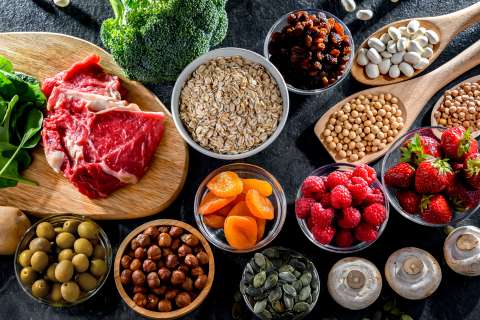
Eating a healthy diet is also important for helping to stave off menopause-related muscle loss. Overall, aim for a diet that’s packed with fruits, vegetables, whole grains and lean sources of protein.
Protein is the most muscle-building nutrient, and it’s one that a lot of post-menopausal women don’t get enough of. According to the National Resource Center on Nutrition and Aging, older adults need 1 to 1.2 grams of protein per kilogram of body weight. That means that someone who weighs 150 pounds should be eating about 80 grams of protein daily.
Healthy sources of protein include:
- Beans and legumes
- Eggs
- Fish
- Lean meats and poultry
- Low-fat dairy (milk, cheese, yogurt)
- Nuts and nut butters
- Soy products, including tofu
Maintaining and building muscle mass after menopause requires some work. But it will pay off with increased strength, mobility and a body that functions more like its younger self.