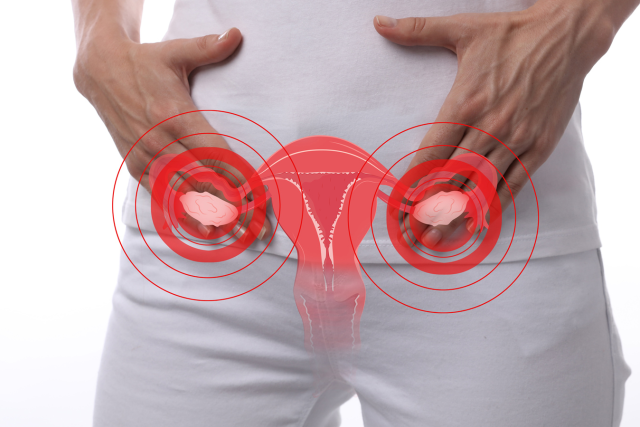
The most common hormonal disorder in those assigned female at birth who are of reproductive age has a new name to better reflect a multisystem condition that can cause irregular periods, acne and increased risk of developing diabetes.
However, the shift from Polycystic Ovary Syndrome, or PCOS, to Polyendocrine Metabolic Ovarian Syndrome, or PMOS, won’t change anything about the comprehensive care provided to UCLA Health patients.
Kathleen Brennan, MD, a UCLA Health reproductive endocrinologist and director of IVF and Assisted Reproduction, said she and her colleagues have long addressed the condition beyond the reproductive system.
A big part of that is focusing on metabolic health. For instance, patients seen in the recently opened PMOS clinic are screened for pre-diabetes and diabetes. They also can receive support for nutrition and weight loss that can ease PMOS symptoms.
“I think the most important thing for our patients to know is that nothing is changing in terms of how we’re going to treat them,” said Dr. Brennan, a clinical professor at the David Geffen School of Medicine at UCLA. “It gives a nod to what I’ve always told my patients – PCOS is a misnomer.”
The old name caused confusion by emphasizing cysts, when in fact people with PMOS may have lots of ovarian follicles, which are cyst-like structures, containing microscopic eggs.
“They don’t have a bunch of pathologic cysts in their ovaries,” Dr. Brennan said. “We’ve known for a very long time that it’s a metabolic disorder.”
The name change was reached through global consensus and announced in May in the medical journal The Lancet.
A coalition of researchers, clinicians and patient advocates wrote that the inaccurate name had contributed to delayed diagnosis, fragmented care and stigma based on the reproductive focus of the name. They said the new name was more accurate by eliminating mention of cysts and reflecting endocrine, metabolic and ovarian dysfunction that can result in type 2 diabetes, cardiovascular disease risk and obesity.
PMOS affects at least 7% to 10% of people assigned female at birth who are of reproductive age, Dr. Brennan said, resulting in widespread attention to the name change.
“It’s a disease that affects so, so many people,” she said. “Because it affects such a large number of people, we’re seeing it in the news.”
Symptoms of PMOS
Symptoms may include infrequent or no periods, acne or excessive growth of body hair, caused by unusually high levels of androgens, which are male sex hormones, such as testosterone. Dr. Brennan said patients may experience infertility because of the irregular menstrual cycles.
Patients with PMOS may struggle to lose weight or experience glucose intolerance or insulin resistance.
“The biggest thing with PMOS is that we want make sure we address the metabolic side of things,” Dr. Brennan said. “We want to make sure they aren’t pre-diabetic or diabetic. We check their cholesterol and insulin levels and we treat accordingly. We counsel on diet and exercise and weight loss.”
Another health risk associated with the condition is endometrial cancer caused by irregular ovulation. As a result, if the uterus doesn’t shed its lining, the buildup can eventually lead to cancer. Patients may need birth control or progesterone to protect the lining of the uterus.
PMOS patients may take an anti-androgen medication to address acne and hair growth. They may be prescribed metformin to manage high blood sugar and/or high insulin levels.
If patients with obesity have struggled to lose weight, they can be referred to the UCLA Health Clinical Nutrition Clinic for potential GLP-1 weight loss medications, Dr. Brennan said. She said weight loss of 5% to 10% in an obese patient can be enough to help restore ovulation.
“If you have pre-diabetes or diabetes or high cholesterol, all those things can lead to cardiovascular issues,” she said. “Making sure someone is maintaining their weight and keeping their blood sugar under control is crucial in these patients.”
While Dr. Brennan said UCLA Health gynecologists and their patients are well-versed in the complexity of PMOS, the name change may help broaden general awareness that PMOS is multifactorial and not just an ovarian syndrome.
Additionally, she said emphasis on the metabolic component could expand research opportunities, noting the broad need for more funding for women’s health studies.
“There’s always a need for a better understanding of PMOS,” she said. “We’ve been looking for a genetic mutation. We know it’s likely familial but we haven’t pinned down a certain gene.”