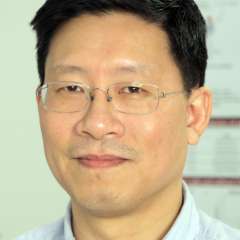
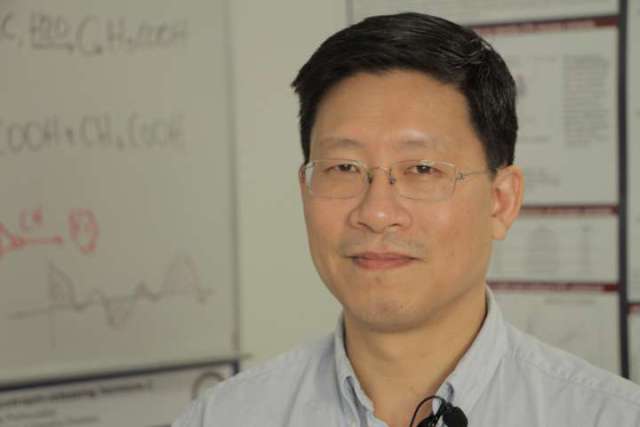
After his first-grade classmate died of leukemia, 7-year-old Otto Yang decided he would become a cancer researcher.
He held onto that vision. As a student in college and medical school, however, a new epidemic arose: AIDS. Acquired Immunodeficiency Syndrome was first reported by UCLA physicians in 1981 and would claim more than 100,000 American lives by the end of 1990, according to the U.S. Centers for Disease Control and Prevention.
While Dr. Yang was in residency at Bellevue Hospital in New York City, more than half of his patients were infected with HIV, he says: “I saw patients dying in droves.”
So he shifted his focus from oncology to infectious diseases and started studying HIV, drawn by how quickly lab discoveries could reach patients. Dr. Yang has now spent decades researching HIV and AIDS, witnessing the development of treatments that transformed the infection from a death sentence to a chronic yet manageable condition.
Today, Dr. Yang directs the UCLA AIDS Institute, a multidisciplinary research collective established in 1992 that spans virology, immunology, epidemiology and social sciences. Bridging research and patient care, it ran some of the first AIDS treatment trials, developed strategies to prevent mother-to-child transmission and demonstrated how killer T cells slow disease progression, among many other discoveries. Yet changing government priorities, reductions in grant funding and public distrust in science are “creating tremendous headwinds” for the institute, Dr. Yang says.
But, as World AIDS Day reminds us, its work is more relevant than ever — not only because more than a million people around the globe continue to be infected with HIV each year, but because AIDS research applies more broadly to viral pandemics of all kinds.
Future pandemics
COVID-19 was a perfect example of how HIV research and infrastructure serves as a template for other pandemics, Dr. Yang says: “All the pieces that were put together for HIV that took decades were compressed into months for COVID.”
For example, sequencing the HIV virus took years. SARS-CoV-2’s sequence was shared within weeks. Vaccines developed for COVID-19 — the fastest in history — drew on years of research on HIV and other viruses. The leading vaccines used mRNA technology, which had been in development for decades, and the pandemic provided the first chance to use it against a new disease.
“The technology to sequence the virus and to put it into a vaccine design that was there, that was all prompted a lot by HIV research,” Dr. Yang says. “The tracing of the spread of the virus, the epidemiology, that had a key role in terms of being applied to SARS-CoV-2.”
Laboratory methods for testing whether a drug can stop a virus from replicating were also adapted from HIV research, he adds. And a widely used antiviral drug for COVID-19, Paxlovid, is a protease inhibitor, a class of drug invented through HIV research, he says.
Clinical trials for COVID-19 vaccines and treatments relied on infrastructure created for HIV research. The AIDS Clinical Trials Group, which exists to test HIV treatments, was repurposed for COVID-19 therapies, Dr. Yang says. UCLA Health has been a participating research site in that network since it was founded in 1987, and UCLA Health researcher Judith Currier, MD, principal investigator for the UCLA AIDS Prevention and Treatment Clinical Trials Unit, is its former chair.
During the COVID pandemic, UCLA Health was among the first to run clinical trials for treating the infection and to issue vaccines, Dr. Yang says.
“The infrastructure is there, but it needs to be markedly reinforced and strengthened” to prepare for future pandemics, he says. “HIV is still absolutely critical, but we want to take all of these lessons and also broaden our focus to include other infectious diseases, because it’s clear that infectious diseases are becoming a bigger and bigger threat. So it’s only a matter of time until another pandemic.”
Pandemics are typically caused by viral infections, he says, adding that respiratory viruses spread most easily.
Beyond HIV
Like AIDS, other pandemics demand “a very, very broad array of disciplines and needs for research and implementation of research,” Dr. Yang says, “everything from social sciences to government policy to molecules and cells” — all encompassed by the UCLA AIDS Institute.
HIV research has already led to treatment advances for other conditions besides COVID-19. Gene therapies first tested in people with HIV are now widely used to treat certain types of cancer, Dr. Yang says. Research on HIV’s biology also supported the development of a gene therapy for sickle cell disease.
These discoveries and their broad application underscore why continuing and expanding the work of the AIDS Institute is so essential, he says. But cuts to federal research funding and global HIV programs mean HIV and infectious disease research is becoming more difficult to sustain. The U.S. President's Emergency Plan for AIDS Relief (PEPFAR), whose operations have been disrupted since 2025, is estimated to have saved more than 26 million lives by distributing HIV medications to resource-limited areas around the world since it was established in 2003.
Dr. Yang finds these cuts heartbreaking.
While people in the United States and other developed nations infected with HIV can live near-normal lives thanks to antiretroviral therapies, lack of access to these drugs and misinformation about the infection persist around the world, he says. The U.S. has long been a leader in biomedical research “and this is a valuable thing that we need to nurture,” he says.
“This is something where our country has a remarkable infrastructure and strength that we need to hold onto,” Dr. Yang says, “for our own good and the good of society.”
Related link
Support the UCLA AIDS Institute.