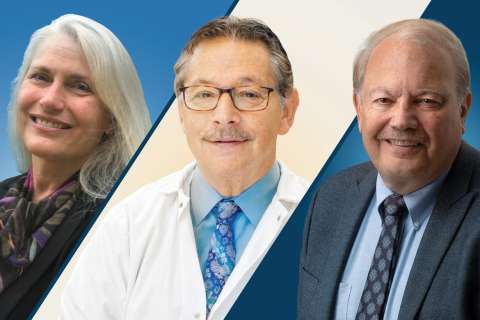
The fall of 2008 was the last time that Paul Lukac, MD, felt invincible. He was 24 years old and in his second year of medical school.
Dr. Lukac was learning about brain tumors in his neuropathophysiology course when he began experiencing strange symptoms: Headaches, low mood, searching for words.
The same nameless song played in his head with increasing frequency, provoking anxiety and blocking his ability to concentrate for a few minutes.
“To this day, I don't know what the song was,” says Dr. Lukac. “The brain works in odd ways when it's not functioning as it's supposed to.”
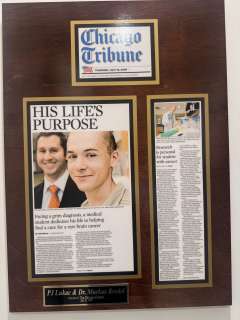
His mother scheduled a doctor’s appointment when he went home to Chicago for winter break. An MRI revealed a tumor in his left frontal temporal lobe.
The neurologist diagnosed Dr. Lukac with glioblastoma, an aggressive cancer of the brain. Surgery, chemotherapy and radiation quickly followed. He was well aware of the odds: a five-year survival rate of less than 10%.
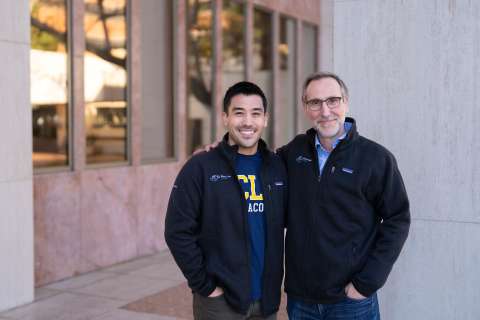
Eighteen years later, Dr. Lukac is now UCLA Health’s inaugural chief artificial intelligence officer and an assistant clinical professor in the department of pediatrics at the David Geffen School of Medicine at UCLA.
He believes AI will play an increasingly critical role in improving research and clinical care in brain cancers.
Surviving his cancer profoundly shaped him.
“It humanized me as a physician,” says Dr. Lukac. “Since then, I've always felt more like a vulnerable patient than a doctor. It gave me an extra degree of empathy for my patients and what they have to go through.”
How AI can help
Like many patients receiving a diagnosis of cancer, Dr. Lukac struggled to process his own. And even with his medical training, he found it difficult to parse the sometimes-conflicting information about his condition.
A generative AI chatbot can make this much easier, Dr. Lukac says. It can summarize and simplify the enormous amount of scientific literature on cancer, providing key takeaways in conversational language.
“I would have been able to understand the mutations in my tumor and how that correlates with existing research,” he says. “Are there profiles of people like me documented in research?”
But Dr. Lukac advises cautions using AI, especially because of its sycophantic nature.
“It will tell you what you want to hear because it wants you to keep coming back. Using open-ended questions rather than definitive statements will give you more rational outputs.”
Most importantly, Dr. Lukac says, AI should not be used for decision-making. Rather, it’s a way to better prepare for visits with a physician and then talk through any options the AI suggests.
Besides the conventional treatment his neuro-oncologist advised, Dr. Lukac also wanted to find clinical trials as a supplement to chemotherapy and radiation. Almost two decades ago, it was laborious. He remembers going to the biomedical library and printing out pages from medical journals, as well as searching rudimentary webpages.
These days, AI can help match patients with clinical trials, as Dr. Lukac saw firsthand when he did an internship with a startup while obtaining his MBA at the UCLA Anderson School of Management.
Also in research, AI may identify new molecular targets or ways to better penetrate the blood-brain barrier, a major reason why there have been no new medications developed for glioblastoma for more than 20 years.
Dr. Lukac is certain that there will be promising new treatments emerging because of AI, for which he will be “cheering on the sidelines.”
Best thing ever
Faced with his diagnosis, Dr. Lukac took a year off from medical school. While still undergoing chemotherapy, he worked in a lab researching genetic variations in glioblastomas.
And when he returned to medical school in January 2010, he was with a whole new group of students he did not know. A professor paired him with a classmate for a project. She would eventually become his wife, dermatologist Sarah Adams, MD.
About a decade after his initial diagnosis, Dr. Lukac opened a new notification in his electronic health record. Researchers had performed molecular genetic testing on his tumor and retroactively changed his diagnosis from glioblastoma to anaplastic pleomorphic xanthoastrocytoma.
aPXA is a rare, malignant tumor that is more common in children and young adults. Other than a different type of chemotherapy, his treatment would have been the same as a glioblastoma.
Dr. Lukac gets a follow-up MRI every two years both to check for recurrence and as a precaution given that the radiation he underwent puts him at long-term risk for other types of cancers.
Another consequence of radiation is deafness in his left ear, for which he wears hearing aids. That has led to shared bonding in a pediatric outpatient clinic with his patients who are deaf.
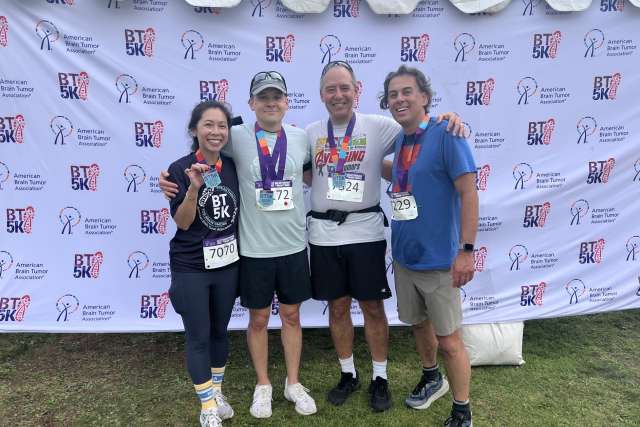
Every year, he and a team of family and friends run a 5K in both Chicago and Los Angeles to raise money for the American Brain Tumor Association.
And for the last several years, Dr. Lukac has counseled patients and family members who reach out to him after a new diagnosis. As they embark on their journeys with cancer, he reflects on his.
“It sounds weird, but honestly it was the best thing that ever happened to me – not the cancer, but everything that happened after,” says Dr. Lukac. “It opened up a lot more doors than it closed.”