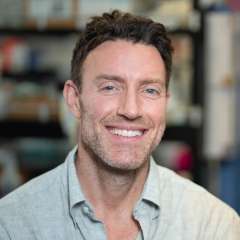
For the past two decades, David Nathanson, PhD, has approached each day with a singular purpose: understand and cure glioblastoma. That message is stated prominently on his lab’s website, serving as both a mission statement and constant reminder of the patients who depend on the work happening inside his lab.
“I want that pressure,” said Dr. Nathanson, a professor of molecular and medical pharmacology at the David Geffen School of Medicine at UCLA and a member of the UCLA Health Jonsson Comprehensive Cancer Center. “Meeting patients who’ve essentially been given a death sentence is incredibly difficult. For years, we made almost no progress, and many succumbed within a year. But that’s starting to change. Now we’re beginning to identify targets and potential drugs that could make a difference. Being able to offer patients even a glimmer of hope is inspiring, for them and for all of us working to fight this disease.”
Dr. Nathanson’s journey into science, however, wasn’t always so clear-cut. He grew up in Alaska, captivated by the mysteries of the natural world rather than molecular biology. As a teenager, he developed a love for flying small planes, a hobby that gave him both perspective and a sense of discipline and focus he would carry into his work. It wasn’t until graduate school at UCLA that he encountered cancer research, where he was immediately drawn to both the intellectual challenge and the opportunity to tackle a problem that was as complex scientifically as it was clinically.
“That combination of solving hard problems and helping people who truly need it was incredibly powerful to me,” he said.
The urgent need for new therapies
Finding new therapies for brain tumors such as glioblastoma is urgently needed. The disease is among the most lethal human cancers, with a median survival measured in months and only about 5% of patients are alive five years after diagnosis.
Progress in this area has been painfully slow. Despite decades of research, more than 90% of drugs tested in clinical trials for glioblastoma have failed.
Part of the challenge is that glioblastomas are highly heterogeneous, meaning that targeting a single pathway often isn’t enough. The tumors also reside behind the blood-brain barrier, a natural defense that prevents many drugs from reaching the tumor at therapeutic levels.
Further complicating the problem, many therapies tested in glioblastoma were originally developed for cancers outside the central nervous system.
“These drugs were designed for lung cancer, breast cancer, melanoma, and other cancers, and then tested in glioblastoma,” Dr. Nathanson said. “But these tumors are different, both in where they form and how they function. That mismatch has contributed significantly to the high failure rate.”
A personalized approach
At UCLA, Dr. Nathanson leads a translational brain tumor program that aims to better understand the unique biology of each glioblastoma and exploit those differences to design more precise therapies.
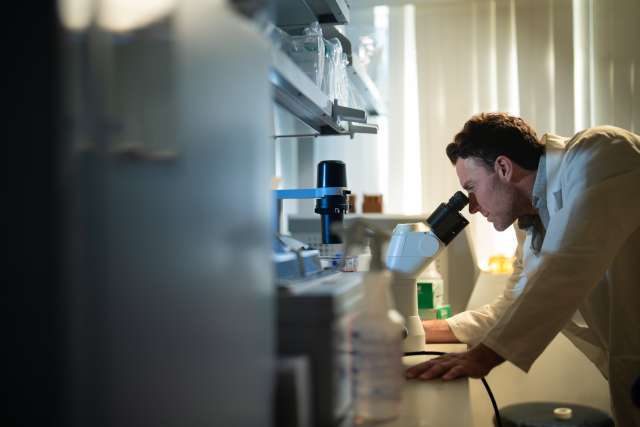
In his lab, he and his team map the metabolic features and signaling pathways that distinguish one tumor from another. Even when patients share the same diagnosis, their tumors can differ dramatically at the molecular and genetic level. These distinctions help explain why a therapy that works for one patient may fail in another.
“Each patient’s tumor is genetically distinct,” Dr. Nathanson explains. “What we’re trying to understand is how those differences drive the tumor, and how we can identify specific vulnerabilities that can be targeted therapeutically.”
One such vulnerability that Dr. Nathanson’s lab, along with several others, has identified as a critical molecular driver in many glioblastomas is the protein epidermal growth factor receptor, or EGFR. Alterations in EGFR occur in more than half of glioblastomas and play a central role in tumor growth, proliferation and metabolism.
While drugs that target EGFR already exist, they were developed primarily for cancers outside the brain. In glioblastoma, however, the mutations occur in different regions of the receptor, changing how those drugs interact with the protein. Many of these therapies also struggle to cross the blood-brain barrier, limiting their ability to reach tumors in the brain.
“These challenges mean we can’t simply repurpose existing EGFR-targeting drugs,” Dr. Nathanson said. “We need an approach designed specifically for glioblastoma, one that can reach the brain and effectively target these unique mutations.”
A drug built for glioblastoma
Rather than trying to adapt an existing therapy, Dr. Nathanson set out to design a drug engineered specifically for glioblastoma, one that could penetrate the brain, bind the relevant EGFR mutations, and do so without overwhelming toxicity.
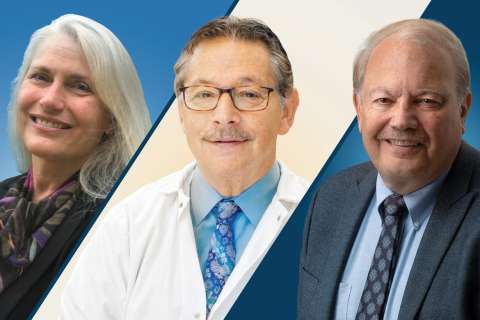
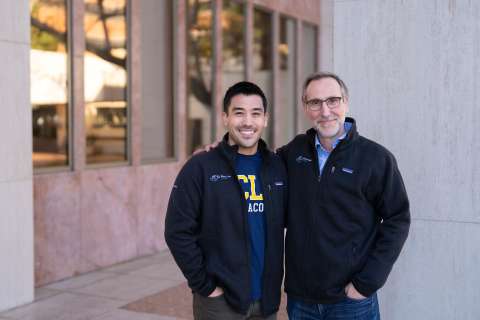
To achieve this, he partnered with neuro-oncologist Timothy Cloughesy, MD, distinguished professor and director of the Neuro-Oncology Program and co-director of the UCLA Brain Tumor Center, and chemist Michael Jung, PhD, a UCLA distinguished professor of chemistry and biochemistry, who had previously helped develop FDA-approved cancer drugs.
The collaboration combined tumor biology, clinical insight, and medicinal chemistry capable of reshaping molecular scaffolds to develop a drug tailored to target glioblastoma.
“Designing a therapy for glioblastoma means solving for both biology and anatomy at the same time,” Dr. Nathanson said. “You have to understand the mutation driving the tumor, but you also have to respect the unique environment of the brain. If you ignore either one, the therapy won’t work.”
Working closely with Dr. Cloughesy’s clinical program, the team evaluated compounds in patient-derived glioblastoma models that more accurately reflected the disease as it exists in patients. This tight feedback loop between laboratory discovery and clinical insight accelerated the identification of a candidate capable of both penetrating the brain and selectively targeting EGFR alterations.
The result was KTM-101, a purpose-built drug for glioblastoma that’s engineered to penetrate the blood-brain barrier and selectively target unique glioblastoma mutations of EGFR.
From bench to bedside
KTM-101 has now advanced into clinical testing. Phase I trials demonstrated that the drug is safe and well-tolerated, reaching levels in the brain believed to be therapeutically meaningful. Even more encouraging, researchers have observed early signs of efficacy in patients with advanced, late-stage glioblastoma, a setting where benefits are rarely seen.
“Seeing early signs of activity at that stage of the disease is incredibly rare,” Dr. Nathanson said. “It gives us confidence that the drug is hitting its target and actually making a difference.”
Next, the team hopes to move KTM-101 earlier in treatment, when tumors may be more vulnerable.
Rather than viewing KTM-101 as an endpoint, Dr. Nathanson sees it as part of an ongoing effort to stay ahead of a disease known for adaptation. His laboratory is exploring additional targeted strategies that anticipate how glioblastoma evolves, with the goal of sustaining tumor control over time.
“What we’re building is not just a single drug,” Dr. Nathanson said. “We’re building a platform for designing therapies specifically for the biology of brain tumors. Every iteration teaches us something new, and each step moves us closer to delivering treatments that are truly tailored for patients with glioblastoma.”
Ultimately, he says, the goal is straightforward but urgent — extend the lives of patients facing this devastating diagnosis.
Dr. Nathanson credits UCLA’s Brain Tumor Program for enabling the rapid translation of laboratory discoveries into clinical trials. Led by neurosurgeon Linda Liau, MD, PhD, and Dr. Cloughesy, the program brings together basic scientists, clinicians, imaging specialists and immunologists in a tightly integrated ecosystem.
“For a basic scientist, the hardest part is translating discoveries into something that truly reaches patients,” Dr. Nathanson said. “The collaborative infrastructure at UCLA makes that translation possible, allowing us to move promising therapies from the lab to patients who need them as quickly as possible.”
To watch an audio descriptive version of the video, click here.