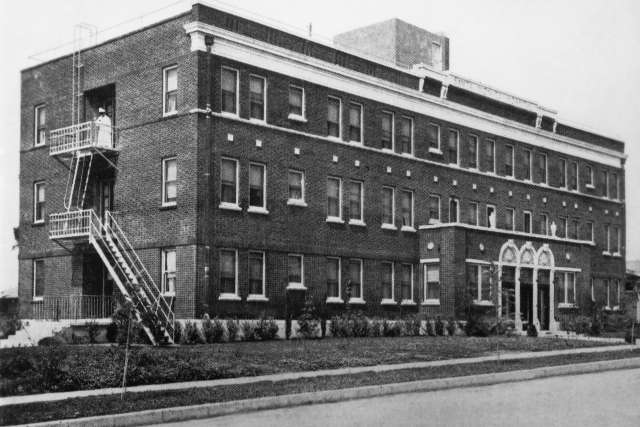
In 1925, during the boom years that followed World War I, two Santa Monica physicians who primarily made house calls to see patients foresaw rapid population growth – and the need for a modern hospital – in their sleepy beachside town.
The physicians, William S. Mortensen, MD, and August B. Hromadka, MD, identified land at 16th Street and Arizona Avenue to accommodate the hospital, then sought financial support from the city council and fellow doctors. When their outreach failed, Drs. Mortensen and Hromadka opted to do it another way. They took mortgages on their homes and secured other loans to raise the $200,000 needed for land and construction costs.
Their bold vision became reality the following year, when Santa Monica Hospital opened its doors on July 26, 1926.
The original hospital contained 60 beds over three stories and a basement. Although modest by today’s standards, it did feature many technological innovations and unique amenities, including a rooftop patio where patients could enjoy sunshine, ocean breezes and views of Catalina Island while recuperating.
Among its advanced features were radio connections in every patient room, even though the first major network radio broadcast had not happened yet. The hospital also included an X-ray lab, considered state-of-the-art then, a surgical suite with an observation area to allow physicians and visitors to watch operations, and a range of hydrotherapy and light therapies widely used back then.
Santa Monica’s local newspaper, The Evening Outlook, hailed the new hospital as a “remarkable and modern feat of workmanship.”
The hospital was almost immediately successful in attracting patients, prompting Drs. Mortensen and Hromadka to launch expansion plans for additional wings. The first expansion project, completed in 1928, included a penthouse suite for Hollywood notables and other celebrities.
Other than a brief downturn during the Great Depression, when many patients were unable to afford hospital services, Santa Monica Hospital grew rapidly in response to community needs.
Following additional expansion projects in 1936 and 1954, the hospital’s bed count climbed to 235, almost four times its original size. The latter expansion was notable for its celebrity involvement. Actor Rita Hayworth and actor and competitive swimmer Esther Williams, known as MGM’s “Hollywood Mermaid,” lent their names and notoriety to bolster fundraising for the project.
Celebrities also were instrumental in a 1967 construction project to modernize part of Santa Monica Hospital with an $8 million, eight-story patient tower. Actors Glenn Ford, Debbie Reynolds and Bob Hope played leading roles in raising awareness and support for the project by headlining a fundraiser, titled “A Night of Hope,” at Santa Monica Civic Auditorium.
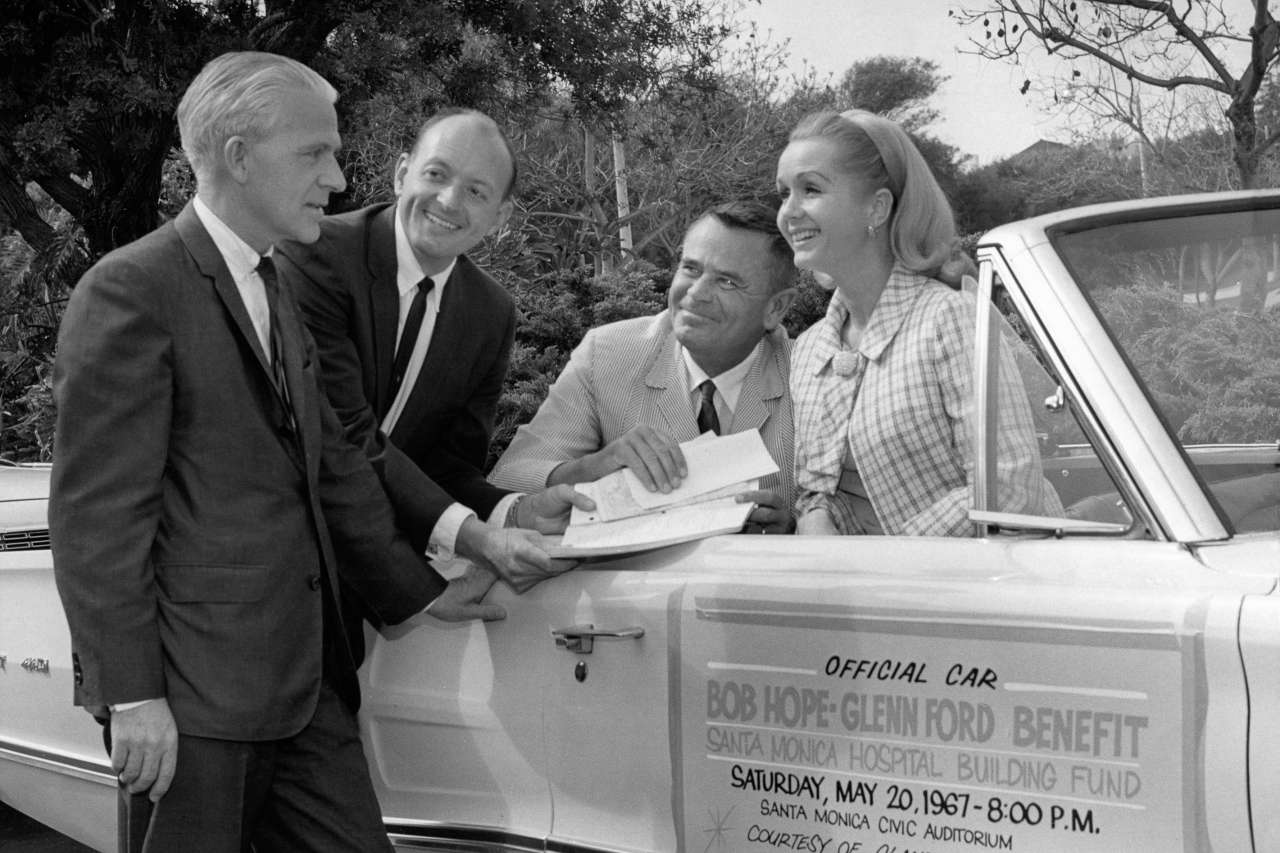
Groundbreaking for the hospital tower occurred that year and was completed in 1971. It not only modernized the campus, but also increased the hospital’s bed count to 399. Santa Monica Hospital had come a long way from its humble beginnings.
Founders’ lasting legacy
Drs. Mortensen and Hromadka had family members who would help carry on their legacies. Dr. Mortensen’s sons, Elmer and William II, as well as son-in-law Cyril Mitchell, became hospital physicians, as did Dr. Hromadka’s son, John. Another son of Dr. Hromadka, Ralph, was a longtime hospital administrator. Other family members of both founders worked in various capacities at the hospital.
Dr. Mortenson’s grandson, Thomas S. Mitchell, MD, who also became a hospital physician, published a history of his grandfather in 1987. It detailed the co-founder’s enduring impact on medicine in the Santa Monica Bay community. Another grandson, Bill Mortenson III, served as the longtime CEO of First Federal Bank of Santa Monica, a public company also founded by his grandfather during the Depression. He was a member of the hospital’s governing board for many years.
Dr. Hromadka’s grandsons, Donald and William, also served on governing and fundraising boards for the hospital in the late 1980s and 1990s.
Dr. August Hromadka died in 1939. In 1942, Dr. Mortensen decided it was time to leave the hospital business. He and Dr. Hromadka’s widow mutually agreed to give Santa Monica Hospital to the Lutheran Hospital Society of Southern California, where its ownership remained for more than 45 years. Dr. Mortensen died in 1955. In 1988, the Lutheran Hospital Society merged with the HealthWest system to form a new parent company, UniHealth America.
The early 1940s also saw establishment of the Santa Monica Hospital Clinic to aid families in need during World War II. The facility, which started a long history of outreach to the community’s underserved, would later be renamed the Les Kelley Clinic after benefactor Les Kelley, creator of the widely used Kelley Blue Book for car values. The clinic, which also served as the home of a nationally recognized Family Medicine Residency Program, was a mainstay on the hospital campus until it moved offsite in 2000 during the most recent rebuilding project.
Pioneering emergency care, rape treatment
In 1969, Santa Monica Hospital dedicated the Nethercutt Emergency Center, a specially designed facility to provide 24-hour emergency services to the Westside. It became Santa Monica’s first paramedic base station.
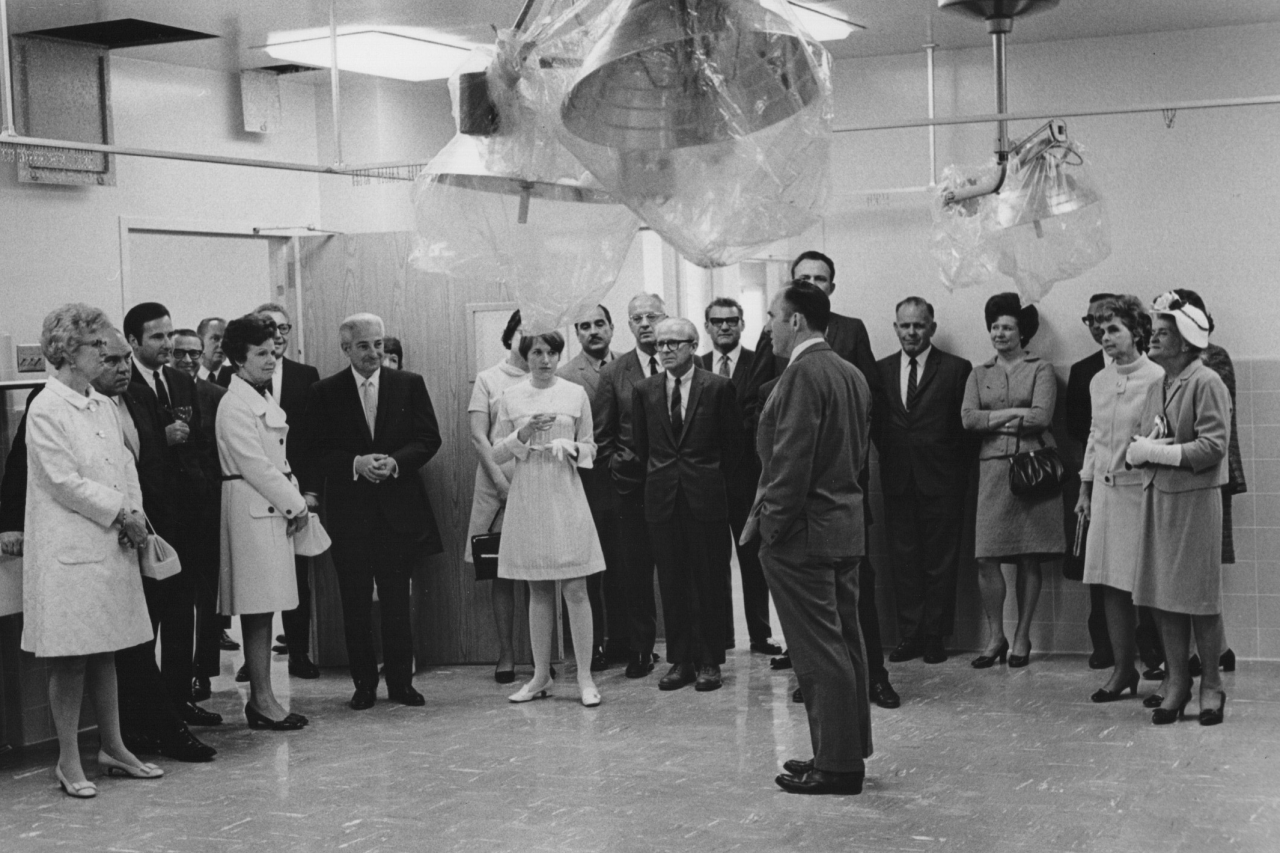
The center was named after benefactor J.B. Nethercutt, nephew of cosmetics icon Merle Norman, who started her company in her Santa Monica home. Nethercutt would use his bicycle to deliver his aunt’s makeup and face creams to local customers.
Nethercutt would later become chairman of Merle Norman Cosmetics, as well as Santa Monica Hospital’s major benefactor.
The Rape Treatment Center (RTC) opened in1974. It would become nationally and internationally renowned as a model facility for treatment of sexual-assault victims and their families. The RTC is recognized for changing the nation’s consciousness about rape and bringing compassionate care and justice to victims.
In 1988, the RTC bolstered its pioneering care with the opening of Stuart House, an adjunct facility for treatment of sexually abused children. It brings social workers, law enforcement and child protection personnel under one roof to improve services for child victims.
That was followed by the 1999 unveiling of the Verna Harrah Clinic, a high-tech medical facility for providing emergency care and forensic services to rape victims. It, too, would become a model for similar clinics nationwide.
The Merle Norman Pavilion
During the 1980s, Santa Monica Hospital was renamed Santa Monica Hospital Medical Center to reflect the broader scope of its services. In 1984, the medical center broke ground on a $40 million construction project to replace outdated structures with a more modern, seismically safe patient tower.
The six-story building was completed in phases from 1986-1988. It was named the Merle Norman Pavilion in honor of Merle Norman Cosmetics, which donated $5 million to help fund the project, and remains an integral part of the hospital campus.
A seismic shift in Santa Monica
At 4:31 a.m. on Jan. 17, 1994, the Northridge earthquake stuck the San Fernando Valley and caused widespread damage throughout the region, including across the Westside. The destruction from 20 seconds of shaking would forever change the healthcare landscape in Santa Monica.
Santa Monica Hospital had no patient injuries but sustained significant damage from the quake and one of the main buildings on its campus, the nine-story Tower on 15th Street, was closed for nine months while repairs were undertaken. Although the Tower reopened in late 1994, the earthquake necessitated plans for another rebuilding project to upgrade the entire medical campus to the latest seismic codes.
The following year, Santa Monica Hospital was acquired by the University of California Regents to become part of UCLA Health and was renamed Santa Monica-UCLA Medical Center. Plans were launched to rebuild all but the Merle Norman Pavilion on Santa Monica’s medical campus.
In 1998, UCLA Health signed a strategic alliance with Orthopaedic Hospital in downtown Los Angeles. Under the alliance, Orthopaedic Hospital moved its inpatient services to the Santa Monica campus and the hospital’s new name became Santa Monica-UCLA Medical Center and Orthopaedic Hospital.
Meanwhile, progress continued on the rebuilding project, regarded at the time as one of the most complex hospital construction projects in California. It involved hundreds of moves and constant coordination to keep the existing hospital open while the new one was being built around it.
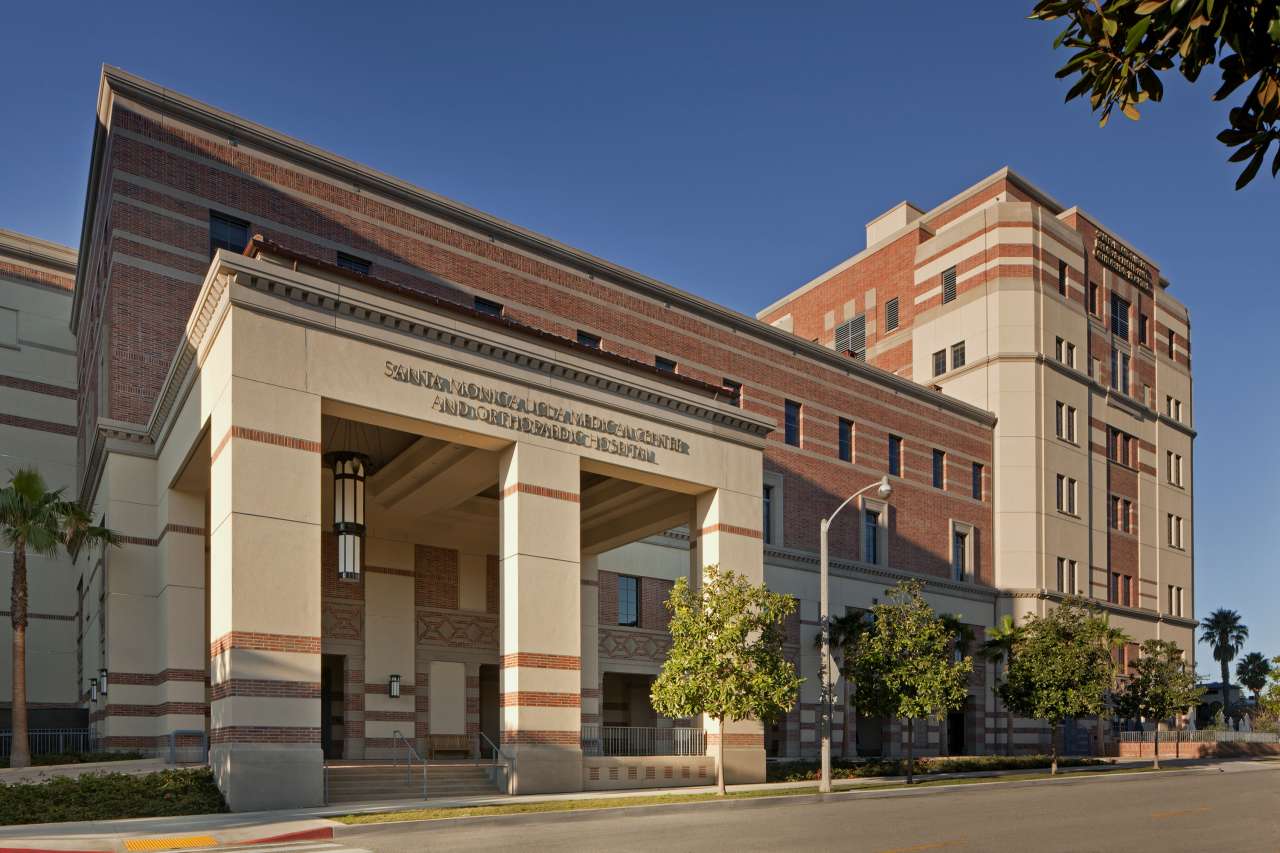
In mid-2007, the new Nethercutt Emergency Center become the first patient-care area of the new hospital to open. Other departments and buildings were brought online in phases over the next few years.
In September 2011, the new Santa Monica campus of UCLA Health was officially dedicated and it fully opened for patient care and services the following January.
A century of caring
Today, as the hospital nears its 100th anniversary, its stately yet welcoming medical campus with Northern Italianate architecture and beautifully landscaped healing gardens stands as more than a cornerstone of UCLA Health. It serves as an enduring tribute to the foresight of its founders.
Related article
A golden tribute to the first baby born at Santa Monica hospital