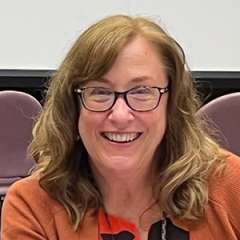
Art can give form to unspeakable feelings, says art therapist Paige Asawa, PhD.
“Sometimes what we cannot say, we can draw. What we cannot explain, we can paint,” says Dr. Asawa, who leads art therapy sessions for the Simms/Mann UCLA Center for Integrative Oncology.
“The image doesn’t necessarily provide an instant solution, but it makes an invisible experience visible,” she says. “And when something is visible, it can become something we can explore. This is one of the central, core principles of art therapy.”
Art therapy isn’t about creating aesthetic masterpieces or even making good art. It’s about wordlessly expressing and processing difficult emotions and “creating a bridge between inner experience and shared understanding,” Dr. Asawa says, adding that the act of creating also promotes emotional regulation and calms the nervous system.
What is art therapy?
Cave paintings tell us that human beings have used art to convey experiences for thousands of years. Art therapy as a formal practice, however, began in the 1940s. Early pioneers believed drawing or painting could make unconscious thoughts conscious, and that the act of artmaking was itself therapeutic.
Today, art therapy is used across medical, mental health, educational, community and wellness settings, in research and trauma-informed care, Dr. Asawa says: “It gives shape and form to unconscious process without requiring words.”
What makes art therapy different from simply making art is the therapeutic relationship, she adds. The therapist guides the process, providing grounding, empathy and “a safe space for exploring really intense emotions.”
The Simms/Mann Center offers Healing Through Art therapy groups at no cost to people who are receiving cancer care at UCLA Health. The group dynamic reduces isolation and invites empathy among people facing cancer, Dr. Asawa says: “People can coexist in group, in art, without feeling the pressure of having to explain everything because the art talks for us.”
Try your hand at neurographic art
During a recent webinar hosted by the Simms/Mann Center, Dr. Asawa guided participants in making neurographic art, a meditative drawing practice that centers on freeform lines and organic shapes.
Follow these steps to try it for yourself:
- Grab a marker and a piece of paper.
- Breathe deeply for a minute or two to begin. “It’s always important to take a breath and pause and recalibrate when you’re going to engage in the art practice,” Dr. Asawa says.
- With the marker in your hand, begin drawing in the air as if doodling in space. You might contemplate a current challenge or difficult emotion, she says.
- Bring your pen to the paper and make a freeform scribble or doodle, as loopy and wavy as you like.
- “Ground” the drawing by extending lines to the edge of the paper and drawing any additional lines “to help you feel like the image is grounded to the page,” Dr. Asawa says.
- Anywhere lines cross, draw small, curved lines to soften those intersections. “This is the part that’s really enjoyable,” she says. “As you do this, feel yourself slowing down and your breathing slowing down. You find your mind relaxing as you’re filling in those intersections.”
- Finally, add color anywhere you please. There’s no wrong way to do it. “This isn’t about having formal art supplies or making beautiful art,” Dr. Asawa says. “It’s about the process and helping to take these emotions, feelings and thoughts from inside to outside.”
This kind of drawing can be done anywhere and requires no artistic training. The practice also creates a sense of agency, Dr. Asawa says: “With illness, grief, or trauma, we feel out of control, and the art helps us feel back in control as we make choices.”
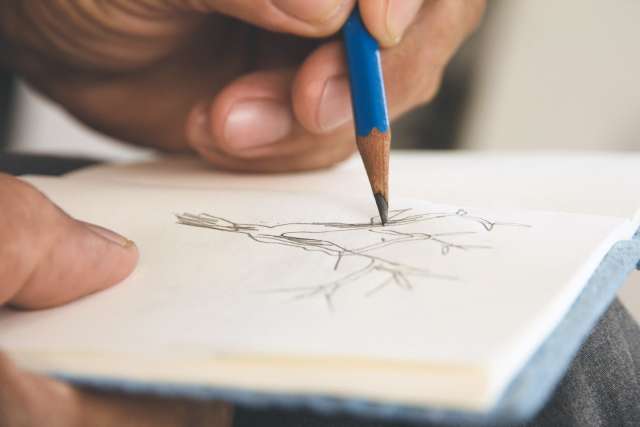
She recommends her patients keep a small notebook and marker with them so they can tap into the practice while awaiting appointments or anytime they feel overwhelmed.
“This is a process that can take you back to yourself,” she says. “It is centering and grounding and helpful when the world is spinning.”