Eric and Paige Targon knew something was amiss with their daughter Maggie even before birth.
On ultrasounds, her hands were always balled into fists and tucked under her chin. She kept them clenched even as she missed all the milestones of a baby’s first year: rolling over, crawling, standing. Her extreme irritability meant she cried 23 hours a day.
“For the first eight months, I slept on an air mattress near her crib, just me and Maggie in a dark room most of the day,” Paige recalled from their home in Richland, Wash.
After numerous rejections, Maggie was finally approved for genetic testing at 9 months old. She was diagnosed with FOXP1 syndrome, a rare neurodevelopmental disorder.
The current census of the International FOXP1 Foundation counts 938 people with the syndrome worldwide, with more than 250 in the U.S. alone. But the numbers are likely significantly higher, since diagnosis requires specialized genetic testing.
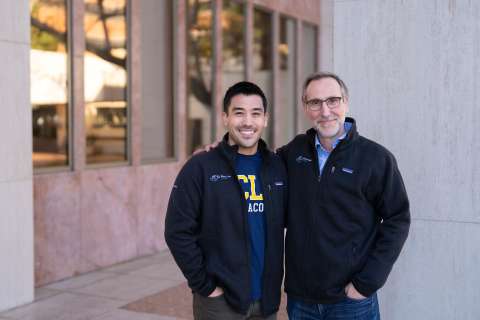
Eric and Paige became active members of the foundation. That’s how they heard about a new study and enrolled Maggie, then 2.
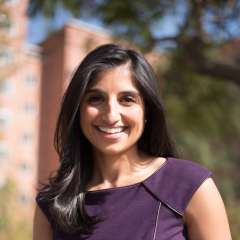
UCLA Health pediatric neurologist Rujuta Wilson, MD, is the first to measure detailed aspects of FOXP1 syndrome in ages 1 to 20, and document its natural history, meaning its progression over time.
“For a parent, the question is ‘What's my child going to be like in 10 years?’” said Dr. Wilson. “Are they going to talk? Are they going to walk? Are they going to live an independent life?”
The natural history study is a critical part of the roadmap toward an eventual treatment for FOXP1 syndrome. Its measurements will help gauge the efficacy of a precision therapy when it is tested in future clinical trials.
Tracking FOXP1 motor function
The FOXP1 gene encodes for a namesake protein that acts as a transcription factor, regulating the activity of several other genes. A mutation in FOXP1 has wide-reaching effects: cognitive deficits, language and speech delays, low muscle tone and abnormal gait.
FOXP1 is also recognized as a high-risk gene for autism spectrum disorder.
Dr. Wilson’s lab has worked to better understand the presentation and natural history study of many genetic neurodevelopmental disorders. Their team has a strong focus on motor function, which is impacted in different ways across all of these conditions.
Motor function plays a key role in how children develop “verbal and non-verbal communication, adaptive skills like feeding and dressing yourself, and mobility,” Dr. Wilson said. “Impaired motor function can have broad effects on an individual’s development and independence.”
Dr. Wilson’s lab has devised a novel computer vision analysis that provides objective metrics of key motor domains. Cameras record study subjects as they perform basic tasks like walking or playing with toys – tasks that can accommodate individuals with a range of cognitive abilities and complex neurological conditions.
Dr. Wilson explained that the program overlays anatomical landmarks on the video to measure gait: “how slow you walk, how variable you are, how coordinated you are.”
Similarly, it can analyze upper body function by quantifying the speed, strength and manner of a child’s grasp.
“We can really see variation in the skills of these individuals,” said Dr. Wilson, also an assistant professor at the UCLA Semel Institute for Neuroscience and Human Behavior. “And be able to detect even subtle changes over time, which is critical to picking up true ability and change in individuals with rare diseases.”
The setup allows video to be captured on site at UCLA Health, or remotely, greatly increasing access to the research study.
Driving drug development
Genetic testing was a gamechanger, Eric and Paige said, because it finally provided a diagnosis for Maggie. They immediately increased the supportive therapies she was already receiving: behavioral, vision, eating, physical, speech.
Maggie can now hold a crayon, spoon feed herself and walk on her own. That helped her to complete the natural history assessment when the family flew down to UCLA Health in February.
In just under three hours, Maggie sat at a kid-sized table and played with blocks, blew bubbles with Paige, and then walked back and forth 14 times in front of two sets of video cameras.
“Whatever they were doing, it seemed like we were at the X-Men academy,” Eric said. “They were very diligent on what they were looking for.”
Dr. Wilson hoped to recruit 40 participants to her study over three years. She reached her goal within six months and families are still contacting her.
The rapid signup for the natural history study is not surprising, Dr. Wilson said, because families are the main driver for research into genetic conditions like FOXP1, not only by fundraising but working hand in hand with scientists on what to prioritize.
Along with the International FOXP1 Foundation, the FOXP1 Medical Research Foundation (FMRF) is funding Dr. Wilson’s project, which has doubled in scope.
Recently, FMRF’s scientific consultants reviewed its projects and ranked their importance.
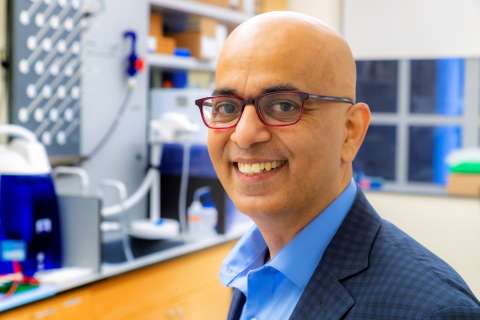
“Dr. Wilson's project was universally advised as the single most important thing that we could push forward to make sure that we end up with treatments for our kids,” said Samit Dasgupta, PhD, co-founder and co-president of FMRF, whose son was diagnosed at age 1.
“There is no drug development without a natural history study documenting the disease.”
Helping families in the future
The groundwork for a future treatment is already underway at UCLA Health. Dr. Wilson is collaborating with neurobiologists Genevieve Konopka, PhD, and Bennett Novitch, PhD, at the David Geffen School of Medicine at UCLA.
Blood samples from the study’s participants will allow them to create organoid models of FOXP1 syndrome in the lab, to determine how it affects neurodevelopment at the molecular level.
Given the long road to drug discovery, Eric and Paige are realists when it comes to the chances of treatment for their daughter. They participated in the study out of a sense of civic duty and helping other parents.
“If there was a medication, gladly we would take it,” said Paige. “I think we're going to be the foundation for somebody having that in 30 years.”
Dr. Wilson’s natural history study will have almost immediate actionable information, especially to remedy the large gaps in awareness about FOXP1 syndrome.
“We want to arm every general care provider, every pediatric neurologist, every geneticist,” she said, “so that when they see a FOXP1 child, they will have the information to know what it looks like and what to do, and the family can get the appropriate supports for their child.”