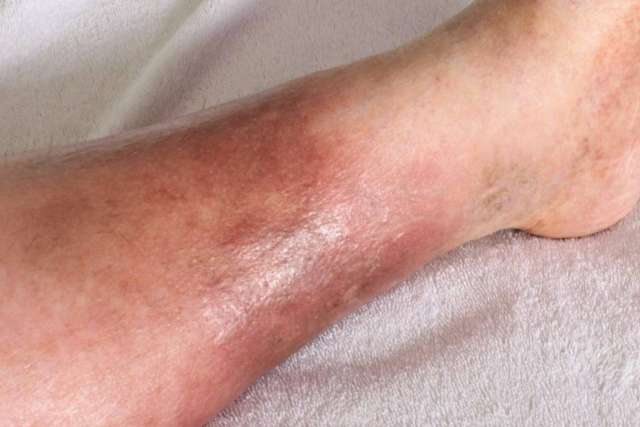
Dear Doctors: I have bruising or staining from a hospital stay during which I received five units of blood and six units of iron for low hemoglobin. I have also started my first of two cycles of iron infusions. What can I do, if anything, to lighten or get rid of this discoloration?
Dear Reader: The discoloration you have described is known as hemosiderin staining. It occurs when blood pools in a part of the body. This can lead to leakage into the tissues. The body immediately begins to break down the blood into its components. One component is iron-rich hemoglobin. This releases the iron that those red blood cells contain. Hemosiderin, a type of protein compound that stores iron in the body, then forms. It’s the iron that gives hemosiderin -- and the stain that it causes -- a rusty, brownish-yellow color.
Hemosiderin staining can arise at or near the site of a traumatic injury. The injury could be from a wound, bruise, fracture or surgical incision. It can also be linked to a circulatory problem known as chronic venous insufficiency. This happens when damage or weakening in the one-way valves in the veins prevents good circulation. When this is the cause, the staining often shows in the lower leg, the ankles and the tops of the feet.
Based on what you have described, the prolonged placement of the IV needle, the blood transfusion and the iron infusions may have each played a role. However, hemosiderin staining is a known side effect of iron infusions. When the condition develops without a specific trauma trigger, it can indicate ongoing vascular disease. But when it is linked to iron infusions, the discoloration is not medically dangerous.
In many cases, the body clears the deposited iron over time. This occurs with the help of specialized white blood cells known as macrophages. When trauma is the cause, the skin can sometimes return to its normal color as the damaged tissues heal. This process can take several months. It depends on the degree of staining and the person's skin tone. In cases linked to iron infusions, the discoloration may last longer.
Prescription creams containing hydroquinone may help keep existing discoloration from getting worse. These creams are unlikely to remove discoloration completely. Laser therapy, particularly the Q-switched laser, can fade skin discoloration. This laser, used in tattoo removal, works by delivering pulses of energy that destroy pigment-containing cells. This approach often requires multiple visits. It can also require a topical anesthetic because it can be painful.
With more iron infusions in your future, ask your health care provider what they can do to limit staining risk. This may include checking that the correct size cannula or needle is used. Choosing a well-supported vein, such as not at flexion points like the wrist or elbow, may help. They can also monitor for pain, swelling or pressure. Infusions should be stopped at any sign of leaking or pooling. With patience as existing stains fade, and careful technique in upcoming sessions, this can become less of a concern in the future.
(Send your questions to [email protected], or write: Ask the Doctors, c/o UCLA Health Sciences Media Relations, 10960 Wilshire Blvd., Suite 1955, Los Angeles, CA, 90024. Owing to the volume of mail, personal replies cannot be provided.)