Dear Doctors: I got a tuberculosis skin test for my health care job and tested positive. A follow-up blood test was also positive, and I was diagnosed with latent TB. However, I had no known exposure. Seven months later, both tests were negative. I never received any treatment. How can this happen?
Dear Reader: Your experience is a good example of some of the challenges with testing for latent tuberculosis. Let’s explore a bit about the disease and the testing process for health care workers. We hope this will help shed light on what may have happened in your case.
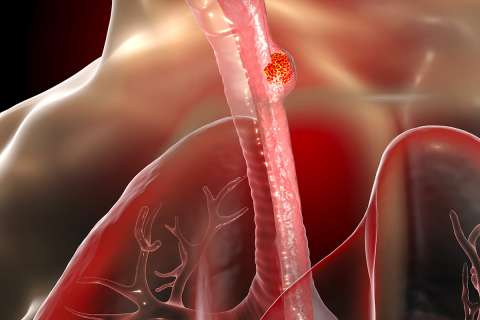
Tuberculosis (TB) is an infectious respiratory disease caused by a bacterium known as Mycobacterium tuberculosis. It spreads through droplets expelled by an infected person. This could happen when coughing, sneezing, laughing or speaking. People living with weakened immune systems, whether due to illness or medical treatment, have a higher risk of infection. Symptoms include a severe cough that lasts three weeks or more, chest discomfort or pain, fatigue, fever and chills. TB can also cause loss of appetite, night sweats and unexplained weight loss. For some people with TB, coughing will produce sputum that is tinged pink with blood.
Screening for TB is common in health care settings. The tests are meant to identify people who have been infected with tuberculosis bacteria. This includes finding those with something known as latent TB. This is when the bacteria are present in the body, but the immune system is able to contain them. Someone with latent TB is not infectious. However, it is possible for the microbe to become active and trigger an infection.
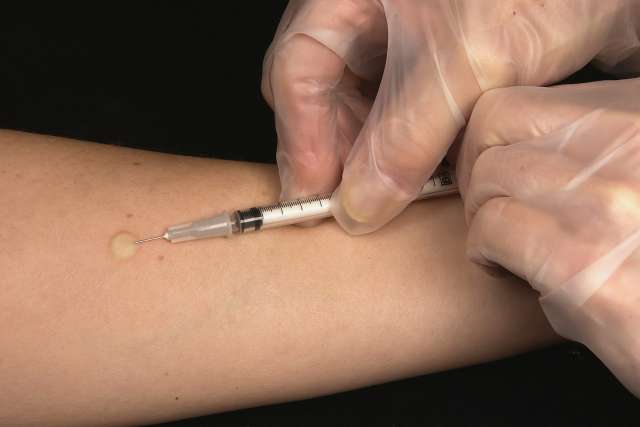
The skin test for TB is a tiny injection on the inside of the arm. It delivers a small amount of purified protein called tuberculin. The skin will have a reaction to the protein if the person's immune system has seen tuberculosis bacteria before. Bottom line: The skin test is detecting an immune memory of the bacteria, and not the microbe itself. Like the skin test, a TB blood test measures whether the immune system has a memory of the TB bacteria. If so, this would suggest a prior or existing infection. The difference is that the blood test is even more specific than the skin test. Given your lack of symptoms, the doctors overseeing your tests were led to the diagnosis of latent TB.
False positives in these types of tests, which identify immune markers rather than the disease-causing bacteria, can happen for a few reasons. One possibility is exposure to non-tuberculosis mycobacteria. These are found in water, dust and soil. They have proteins that are similar to TB bacteria. Another is a brief exposure to TB bacteria that, thanks to a strong immune response, did not result in a lasting infection. Laboratory and testing errors are also possible. In your case, you had no known exposure to TB and negative results on your repeat tests. It is likely those initial positive tests caught a borderline immune response that was not connected to a TB infection. This response had faded by the time you were retested.
(Send your questions to [email protected], or write: Ask the Doctors, c/o UCLA Health Sciences Media Relations, 10960 Wilshire Blvd., Suite 1955, Los Angeles, CA, 90024. Owing to the volume of mail, personal replies cannot be provided.)