
Dear Doctors: I just finished a tough year in grad school, and my diet hasn't been that great. I know your gut microbiome has a lot to do with good health, and I want to get mine into better shape. I'm thinking about probiotic capsules, but it's confusing. How do you know which ones to take?
Dear Reader: When life gets challenging, it can be all too easy to let healthy routines fall by the wayside. As happened to you, this can include not always making the best food choices. Diet has a direct and powerful effect on the trillions of microbes that make their homes in our gut. As you point out, the gut microbiome plays a key role in physical health.
It makes sense that you're ready to focus on getting your gut health back on track. Considering probiotic supplements also has a certain logic. The term probiotics refers to live microorganisms that can have a beneficial effect on the body. The word has also become shorthand for live microbial cultures that are available in capsule form. They differ in the types of bacteria they contain, the number of microorganisms they deliver and the purported benefits they claim. It's no small wonder you find yourself confused.
While taking probiotic supplements is generally considered safe, the benefits currently remain unclear. This is due to several factors. One is that the gut microbiome is fantastically diverse, with between 400 and 800 different species. Another is that each person's gut profile is unique. Add in the fact that the effects of probiotic supplements have been found to be modest and short-lived, and the limitations of the capsule approach become apparent.
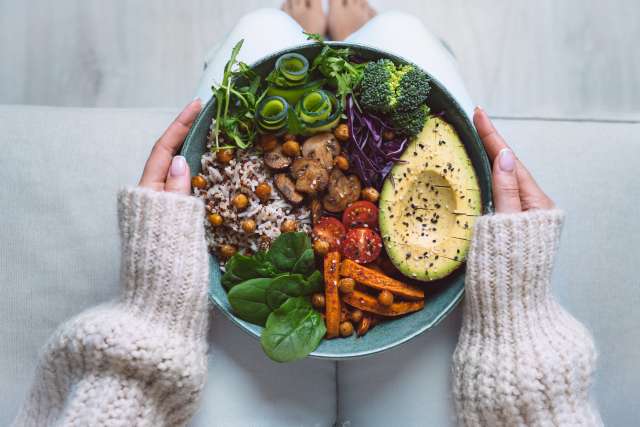
That leads us to the guidance we give our own patients. We don't advise against taking probiotic supplements, but we do strongly urge that they be part of a wider approach. Research shows that, given the chance, the gut heals itself. One of the most important things you can do to bolster that is to eat a varied, high-fiber diet. This, in turn, feeds the microbes in the gut.
Fiber goals differ depending on age and gender. For women 49 and younger, it's 25 grams of fiber per day. After age 50, 21 grams is fine. Up to age 49, men are urged to get 38 grams of fiber per day. At age 50, the goal resets at 30 grams per day.
Although fiber supplements can be tempting, we strongly encourage eating real foods. The different types of fiber they contain support gut diversity. Vegetables, leafy greens and fruit also deliver micronutrients and phytonutrients, which play important roles in metabolic health. Don't forget fermented foods, which are natural sources of probiotics: yogurt, kefir, kimchi, pickles and sauerkraut.
Interestingly, studies also show the gut microbiome needs sleep and regular exercise as much as the rest of you. Bottom line: The best path to a healthy gut lies in lifestyle changes, not in the health food aisle.
(Send your questions to [email protected], or write: Ask the Doctors, c/o UCLA Health Sciences Media Relations, 10960 Wilshire Blvd., Suite 1955, Los Angeles, CA, 90024. Owing to the volume of mail, personal replies cannot be provided.)