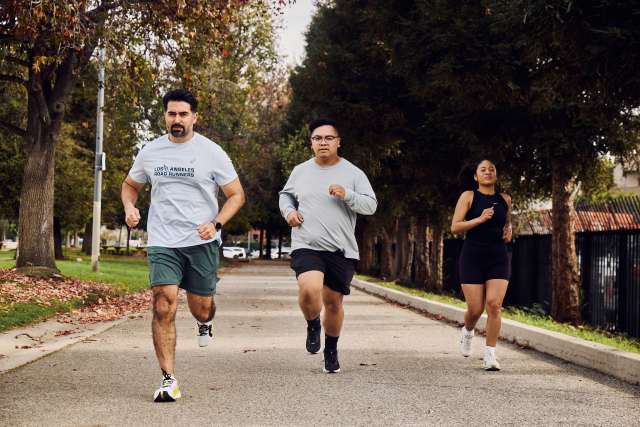
Every year, some 26,000 people lace up their sneakers and run 26.2 miles through some of Southern California’s most vibrant communities – from Chinatown to Hollywood to Beverly Hills – during the ASICS Los Angeles Marathon.
Among this year’s runners are recreational athletes who work at UCLA Health, including three you’ll meet below who on March 8 will be taking on their first marathon.
Jose Hernandez Carcamo, 38
As an exercise physiologist, Jose Hernandez Carcamo, MS, has spent years living a healthy lifestyle and encouraging others to do the same. He’s helped clients transform from sedentary to triathlete. While he’s considered himself his own client throughout his career, he took things to a new level in 2025 when he signed up for the ASICS Los Angeles Marathon.
“I think a marathon is a milestone,” says Hernandez Carcamo, program manager of health and well-being for the Department of Anesthesiology and Perioperative Medicine. “It requires a lot of healthy behavior – you need to be organized, you need to plan your activities, you need to pay attention to your diet, to your recovery time, to your sleeping time. So, I feel like this is going to help me. To be honest, I feel like this is going to be a joyful experience.”
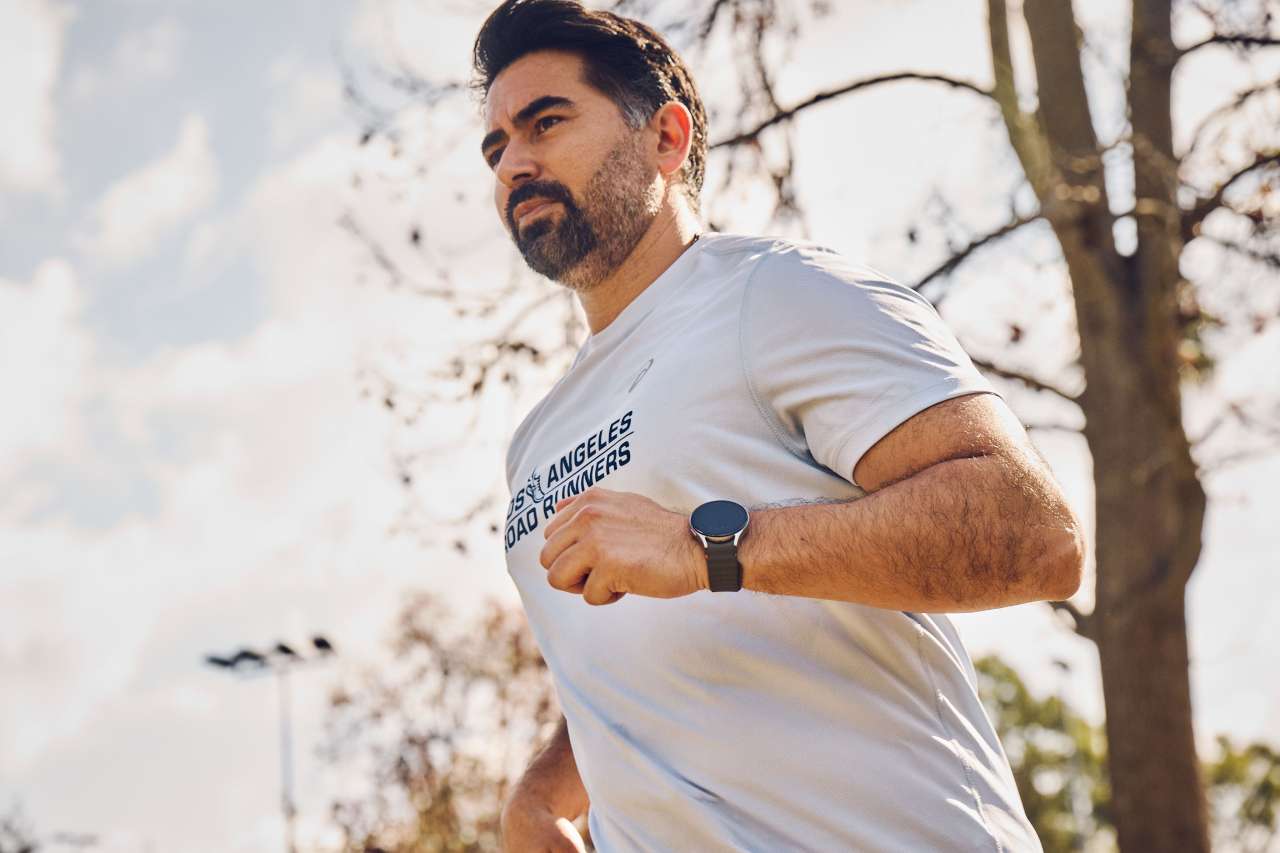
Hernandez Carcamo has long loved running, though a couple of injuries in recent years set him back. His right kneecap was broken when he was hit by a car while bicycling in 2017. After he rehabbed, he returned to running, then tore the meniscus in the same knee a few years later. He recovered by swimming and cycling, eventually returning to running again. He gradually increased his mileage beginning in 2025 but had to stop running in November because of hip pain, a reminder, he says, of the importance of listening to your body and adjusting when needed.
Yet he still managed to complete a couple of long runs – 13 to 14 miles – while visiting his native Chile over the Christmas holidays.
“Food-wise, I did not behave well,” he says with a laugh, acknowledging that he consumed more sweets during the trip than might have been ideal.
With race day approaching, Hernandez Carcamo has been focused on increasing the distance of his long runs to at least 20 miles, a feat he accomplished in early February. He’s also been training with the LA Road Runners running club, which offers a training program for the Los Angeles Marathon.
Rather than seeing his injuries and pauses as obstacles, Hernandez Carcamo considers them part of the journey.
“I wish I could be in better shape, but I’m enjoying the experience,” he says. “Initially, my goal was to do it in under four hours. But realistically, maybe I’ll go for four hours and 30 minutes. It’s my first marathon. I just want to feel my body enjoying the whole race. And if I need to stop or walk, that’s still fine.”
Dayle Silverio, 31
Dayle Silverio wanted to get back in shape. A competitive runner in high school, he slowed down once he entered the working world and was ready to recapture his former athleticism. Plus, his doctor told him his blood sugar was hovering near pre-diabetic levels.
He signed up for the Rose Bowl 5K in January of 2025 (which was pushed back to April because of the wildfires).
“It’s only 3 miles, but at that time, it was such a challenge for me,” he says.
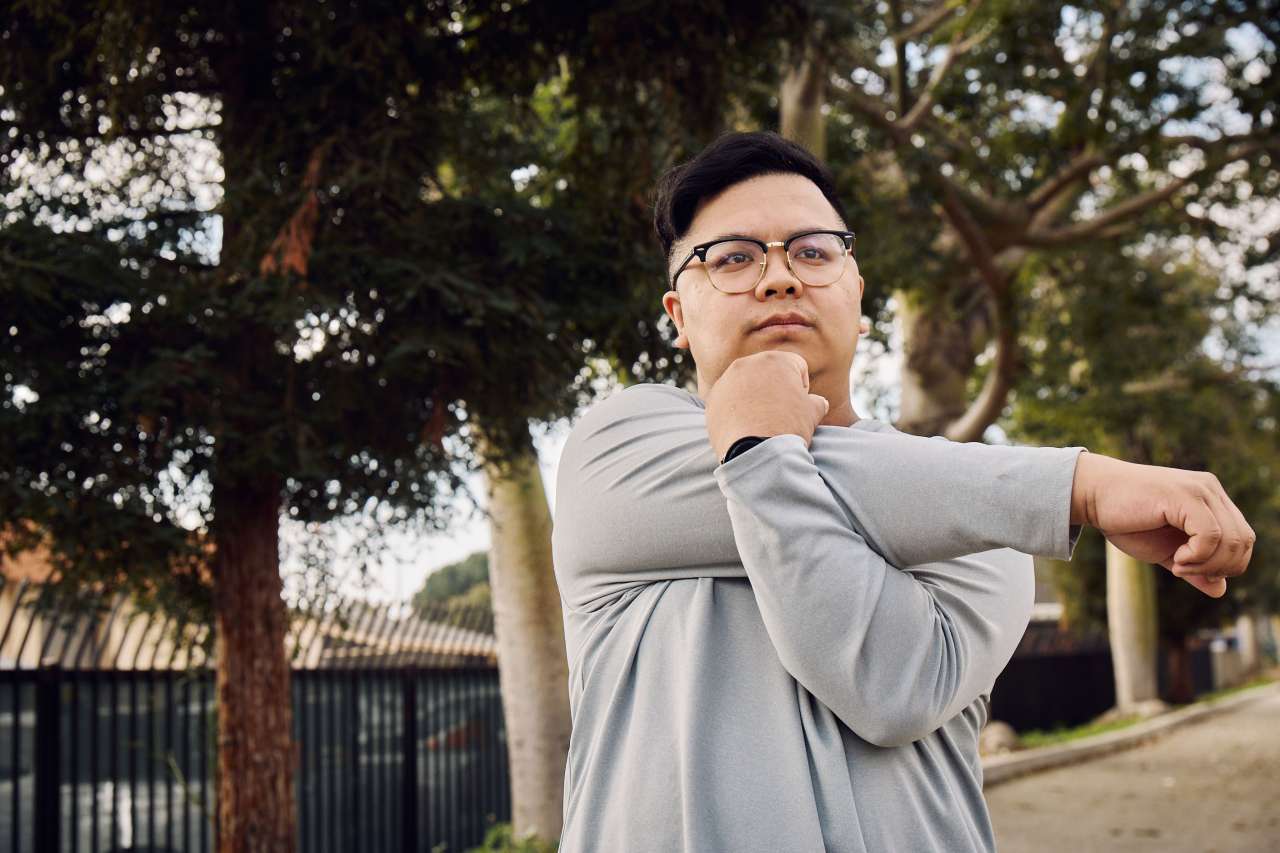
He joined the Little Tokyo Run Club, then learned about an exciting challenge: The McCourt Foundation, which puts on the ASICS Los Angeles Marathon, offers a special Conquer LA medal for runners who complete the Santa Monica 10K, Rose Bowl half marathon and LA Marathon within a 12-month period.
“I thought, that’s doable for me,” Silverio says. “It’s one year. I could do it if I really just committed and locked in.”
The challenge itself provided the training structure he needed: doubling his running distance every few months.
Silverio, a clinical research administrator for the Department of Medicine’s Office of Research Administration, started tracking his runs on an app to keep himself accountable. He made running playlists to keep himself motivated and created a minimum weekly mile schedule that he stuck to even while on vacation.
He noticed his times improving and his clothes fitting better. His blood sugar levels returned to normal. Even his dog was getting fitter thanks to their longer walks, he says.
In January, Silverio took on his longest distance yet: 13.1 miles in the Rose Bowl half marathon. The first 8 or 9 miles felt surprisingly easy, but “closer to the end, I really started feeling the burn,” he says. “That final mile felt like the longest mile ever.”
Still, he achieved his goal: finishing the race without getting hurt. His girlfriend was cheering for him at the finish line and took him to dinner at a barbecue restaurant he spotted at mile seven.
After a day of rest, Silverio was back to training for the big race in March, with knowledge gained. Completing the half marathon is helping him strategize how to best sustain his energy for an even longer distance – a challenge he’s both excited for and nervous about.
“It’s a monumental moment for someone who’s been training for a while, and I know this race will take everything I’ve learned about my body throughout this training and put it to the test,” he says. “I know I can cross that finish line. I know all that hard work is going to pay off in the end.”
Cynthia Cruz, 28
Cynthia Cruz started running during the COVID-19 pandemic, just to get her body moving. Once the world reopened, though, she set her new hobby aside.
Until 2025, when, on a whim, she signed up for a half marathon – mostly to add some activity to her largely sedentary work life as a front-desk administrator at a UCLA Health clinic in Manhattan Beach.
That half marathon reignited her love of running, she says, so she registered for a second one.
“I was like, well, two halves make a full,” Cruz says. “I might as well sign up for the full LA Marathon.”
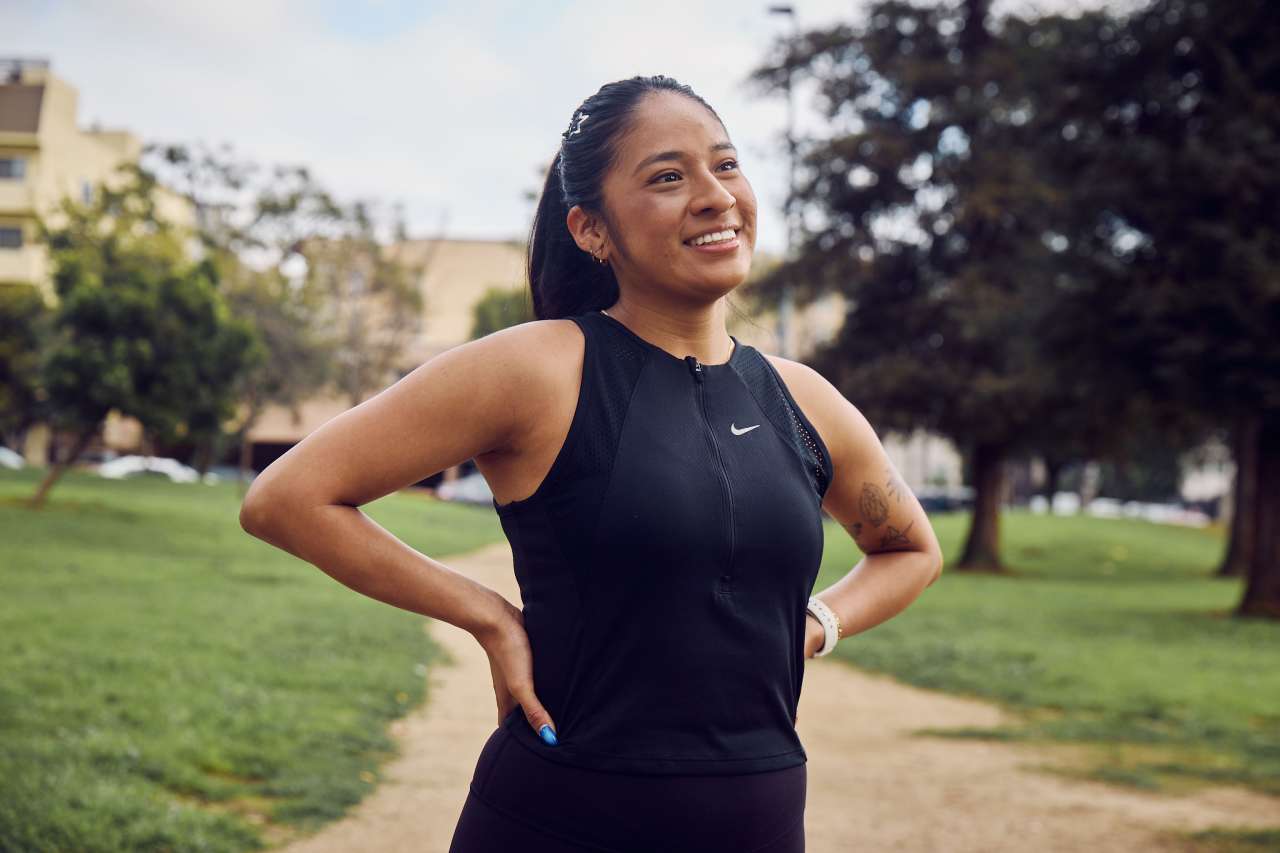
She joined a run club to prepare for the race, both for the community and the direction.
“It’s always uplifting,” she says of the club runs. “And getting advice from people who’ve done many marathons and world majors is the best thing ever, because a lot of learning goes into this.”
She committed to the club’s 17-week training plan of four to five runs a week, including long runs on weekends.
Sticking to that schedule changed her lifestyle, as she skips going out on Saturday nights in preparation for the miles she’ll log on Sundays. She also started drinking more water and noticed she craves healthier foods.
“I’ve honestly felt the difference, both mentally and physically,” she says.
Cruz has inspired others with her progress, too. Her family thought she was “insane” for taking on the challenge, she says, but they cheered her on. She’s also shared her journey on social media, where she regularly hears from friends and strangers who want to become runners.
“The amount of people that reach out to me – they’re very supportive, they're very inspired by me, and it makes me emotional because that wasn't my intention,” she says.
Cruz rang in 2026 with a 5K on New Year’s Eve. But, afterward, the pain of what she thought was shin splints forced her to put her training on pause.
A doctor’s visit revealed it wasn’t shin splints, but a stress fracture in her lower fibula. She was advised to stop training for the marathon and focus on healing. So, a month shy of the Los Angeles Marathon, she withdrew.
“It was a difficult decision, but I decided to put my safety first,” she says. “I think that’s part of what I’m learning: not everything's going to be perfect and there's always bumps in the road. But you just take it easy, listen to your body and trust the process, because it's all a journey, and this is part of it.”